
Ask questions which are clear, concise and easy to understand.
Ask QuestionPosted by Shreya Dubey 5 years, 3 months ago
- 2 answers
Posted by Mifra. M 5 years, 3 months ago
- 2 answers
Yogita Ingle 5 years, 3 months ago
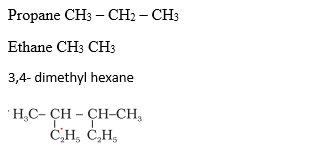
Acyclic compound
These are known as aliphatic compounds. They consist of straight chain or branched compounds.
Example
Cyclic Compounds
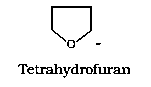
Alicyclic Compounds: Alicyclic (aliphatic cyclic) compounds contain carbon atoms joined in the form of a ring
Homo-cyclic : Only Carbon atoms in the rings

Heterocyclic : Sometimes we have atom other than carbon in the ring also
Nikhita Kartha 5 years, 3 months ago
Posted by Apoorva Singh 5 years, 3 months ago
- 1 answers
Posted by Utkarsh Ruparel 5 years, 3 months ago
- 2 answers
Dev Gupta 5 years, 3 months ago
Posted by Amir Hamza 5 years, 3 months ago
- 0 answers
Posted by G Kaur 5 years, 3 months ago
- 0 answers
Posted by Prachi Aprajita Rout 5 years, 3 months ago
- 0 answers
Posted by Sweta 11D 5 years, 3 months ago
- 1 answers
Yogita Ingle 5 years, 3 months ago
The systematic approach studies only one issue and continues to examine its spatial variations. That means related to different spaces, you study your location.
On the other hand, the regional approach studies the multiple characteristics after dividing or segmenting the location at hand, on the basis of region. Meaning you divide your location into regions, next you study characteristics of each region.
Posted by ¶P. $Ingh 5 years, 3 months ago
- 1 answers
Yogita Ingle 5 years, 3 months ago
The fossa ovalis is a depression in the right atrium of the heart, at the level of the interatrial septum, the wall between right and left atrium. The fossa ovalis is the remnant of a thin fibrous sheet that covered the foramen ovale during fetal development.
Posted by Himanshu Choudhary 5 years, 3 months ago
- 1 answers
Yogita Ingle 5 years, 3 months ago
- Primary memory is also called internal memory whereas Secondary memory is also known as a Backup memory or Auxiliary memory.
- Primary memory can be accessed by the data bus whereas Secondary memory is accessed by I/O channels.
- Primary memory data is directly accessed by the processing unit whereas Secondary memory data cannot be accessed directly by the processor.
- Primary memory is costlier than secondary memory whereas Secondary memory is cheaper compared to primary memory.
- Primary memory is both volatile & nonvolatile whereas Secondary memory is always a non-volatile memory.
Posted by Himanshu Choudhary 5 years, 3 months ago
- 1 answers
Nidhi Patidar 5 years, 3 months ago
Posted by Himanshu Choudhary 5 years, 3 months ago
- 1 answers
Yogita Ingle 5 years, 3 months ago
| 1 | Definition | System Software is the type of software which is the interface between application software and system. | On other hand Application Software is the type of software which runs as per user request. It runs on the platform which is provide by system software. |
| 2 | Development Language | In general System software are developed in low level language which is more compatible with the system hardware in order to interact with. | While in case of Application software high level language is used for their development as they are developed as some specific purpose software. |
| 3 | Usage | System software is used for operating computer hardware. | On other hand Application software is used by user to perform specific task. |
| 4 | Installation | System software are installed on the computer when operating system is installed. | On other hand Application software are installed according to user’s requirements. |
| 5 | User interaction | As mentioned in above points system software are specific to system hardware so less or no user interaction available in case of system software. | On other hand in application software user can interacts with it as user interface is available in this case. |
Posted by Gracy Choudhary 5 years, 3 months ago
- 2 answers
Aviral Goyal 5 years, 2 months ago
Yogita Ingle 5 years, 3 months ago
Dualism in geography refers to parallel theories of the same subject but exist in two different forms.
Posted by Saba Patel 5 years, 3 months ago
- 1 answers
Yogita Ingle 5 years, 3 months ago
Cells are similar to factories with different labourers and departments that work towards a common objective. Various types of cells perform different functions. Based on cellular structure, there are two types of cells:
Prokaryotes
- Prokaryotic cells have no nucleus. Instead, some prokaryotes such as bacteria have a region within the cell where the genetic material is freely suspended. This region is called the nucleoid.
- They all are single-celled microorganisms. Examples include archaea, bacteria, and cyanobacteria.
- The cell size ranges from 0.1 to 0.5 µm in diameter.
- The hereditary material can either be DNA or RNA.
- Prokaryotes reproduce by binary fission, a form of sexual reproduction.
Eukaryotes
- Eukaryotic cells are characterised by a true nucleus.
- The size of the cells ranges between 10–100 µm in diameter.
- This broad category involves plants, fungi, protozoans, and animals.
- The plasma membrane is responsible for monitoring the transport of nutrients and electrolytes in and out of the cells. It is also responsible for cell to cell communication.
- They reproduce sexually as well as asexually.
- There are some contrasting features between plant and animal cells. For eg., the plant cell contains chloroplast, central vacuoles, and other plastids, whereas the animal cells do not.
Posted by Academic 20 5 years, 3 months ago
- 0 answers
Posted by Ashwini Kumar Parida 5 years, 3 months ago
- 0 answers
Posted by Naira(奈拉)..... ?️⚡?️⚡ ??? 5 years, 3 months ago
- 1 answers
Yogita Ingle 5 years, 3 months ago
Cartilage is a thin, fibrous, flexible connective tissue, which is mainly found in the external ear, larynx, respiratory tract, and the articulating surface of the joints. These cartilages lack blood vessels; therefore, the growth and development of these tissues are slower compared to that of other tissues. Altogether, there are three different types of cartilages, namely:
- Hyaline cartilage: It serves as a shock absorber and allows the smooth movement of the bones at joints. They are mainly found in the nose, respiratory tract, and joints
- Fibrocartilage is found in the knee, and it is tough and inflexible.
- Elastic cartilage is found in-ear, epiglottis, and larynx. It is the most flexible cartilage.
Posted by Navneet Tushamar 5 years, 3 months ago
- 0 answers
Posted by Sahil Kumar 5 years, 3 months ago
- 0 answers
Posted by Tanvir Singh 5 years, 3 months ago
- 0 answers
Posted by Ishita Budhwar 5 years, 3 months ago
- 1 answers
Yogita Ingle 5 years, 3 months ago
Inheritance of Nationalist movement:
The nationalist movement was solely based on the aspect of freedom and secularism.
The ideology of the inheritance from the nationalist movement is therefore the idea brought into generation of freedom and fundamental rights with liberty of citizens of the nation.
The second most important thing was the secularism which has attained a position in the society where even the preamble got the word secular added afterwards in the constitution with the constitutional amendment.
Posted by Adeeb Raza 5 years, 3 months ago
- 1 answers
Pallavi Prasad 5 years, 3 months ago
Posted by Madina Bano 5 years, 3 months ago
- 1 answers
Yogita Ingle 5 years, 3 months ago
The Sapru Committee in 1945 suggested two categories of individual rights. One being justiciable and the other being non-justiciable rights. The justiciable rights, as we know, are the Fundamental rights, whereas the non-justiciable ones are the Directive Principles of State Policy.
DPSP are ideals which are meant to be kept in mind by the state when it formulates policies and enacts laws. There are various definitions to Directive Principles of State which are given below:
- They are an ‘instrument of instructions’ which are enumerated in the Government of India Act, 1935.
- They seek to establish economic and social democracy in the country.
- DPSPs are ideals which are not legally enforceable by the courts for their violation.
Posted by Madina Bano 5 years, 3 months ago
- 1 answers
Yogita Ingle 5 years, 3 months ago
The six Fundamental Rights recognised by the Constitution are
- Right to Equality: Right to equality guarantees equal rights for everyone, irrespective of religion, gender, caste, race or place of birth. It ensures equal employment opportunities in the government and insures against discrimination by the State in matters of employment on the basis of caste, religion, etc. This right also includes the abolition of titles as well as untouchability.
- Right to Freedom: Freedom is one of the most important ideals cherished by any democratic society. The Indian Constitution guarantees freedom to citizens.
- Right against Exploitation: This right implies the prohibition of traffic in human beings, <i>begar</i>, and other forms of forced labour. It also implies the prohibition of children in factories, etc. The Constitution prohibits the employment of children under 14 years in hazardous conditions.
- Right to Freedom of Religion: This indicates the secular nature of Indian polity. There is equal respect given to all religions. There is freedom of conscience, profession, practice and propagation of religion. The State has no official religion. Every person has the right to freely practice his or her faith, establish and maintain religious and charitable institutions.
- Cultural and Educational Rights: These rights protect the rights of religious, cultural and linguistic minorities, by facilitating them to preserve their heritage and culture. Educational rights are for ensuring education for everyone without any discrimination.
- Right to Constitutional Remedies.: The Constitution guarantees remedies if citizens’ fundamental rights are violated. The government cannot infringe upon or curb anyone’s rights. When these rights are violated, the aggrieved party can approach the courts. Citizens can even go directly to the Supreme Court which can issue writs for enforcing fundamental rights.
Posted by Madina Bano 5 years, 3 months ago
- 1 answers
Yogita Ingle 5 years, 3 months ago
II. Fundamental Duties of the Indian Citizens:
1 It is the duty of every citizen to abide by the Constitution and respect its ideals and institutions, the National Flag and National Anthem.
2. It is the duty of the citizens to cherish and follow the noble ideals which inspired our national struggle for freedom.
3. It is the duty to uphold and protect the sovereignty, unity and integrity of India.
4. It is the duty of every citizen to defend the country and render national service when called upon to do.
5. It is the duty to promote harmony and the spirit of common brotherhood amongst all the people of India transcending religious, linguistic and regional or sectional diversities to renounce practices derogatory to the dignity of women.
6. It is the duty of every citizen to value and preserve the rich heritage of our composite culture.
7. It is the duty to protect and improve the natural environment including forests, lakes, rivers and wild life and have compassion for living creatures.
Posted by Madina Bano 5 years, 3 months ago
- 1 answers
Yogita Ingle 5 years, 3 months ago
The duty means the positive or negative work that a person has to do, he/she may be willing for that or not. The Fundamental duties are those duties which are essential for every citizens for his own progress, for the progress of the society and for the well being of the nation.
The causes for the inclusion of the list of fundamental duties in the Constitution:
1. Fundamental Duties are non-controversial in nature: Politicians of different views agree on the utility and importance of Fundamental Duties. They are in the best interest of the country and awaken patriotism among the citizens.
2. The Fundamental Duties are the idealsand the guidelines for the individual: These are ideals in nature and lead the citizen in the right direction. The environment of selfishism is rampant in the country. There is no balance between the interests of the society and the individual. This tendency is harmful to the society. Fundamental Duties would serve as an ideal behaviour to all of them.
3. The Fundamental Duties will create Consciousness among the people: The fulfilment of the fundamental duties are voluntary and not compulsory. They will slowly awake the consciousness of the people to do their duties. The late Prime Minister Indira Gandhi said in the Parliament,
Posted by Aastha Goyal 5 years, 3 months ago
- 1 answers
Posted by K Preethi 5 years, 3 months ago
- 1 answers
Kinjal Jaiman 5 years, 3 months ago

myCBSEguide
Trusted by 1 Crore+ Students

Test Generator
Create papers online. It's FREE.

CUET Mock Tests
75,000+ questions to practice only on myCBSEguide app

⠀ 5 years, 3 months ago
0Thank You