
Ask questions which are clear, concise and easy to understand.
Ask QuestionPosted by Khushbu Singh 5 years, 6 months ago
- 0 answers
Posted by Riya Mahapatra 5 years, 6 months ago
- 1 answers
Meghna Thapar 5 years, 6 months ago
Restriction enzymes cut DNA bonds between 3′ OH of one nucleotide and 5′ phosphate of the next one at the specific restriction site. Adding methyl groups to certain bases at the recognition sites on the bacterial DNA blocks the restriction enzyme to bind and protects the bacterial DNA from being cut by themselves. Each restriction enzyme cuts DNA at a different restriction site. Some restriction enzymes make staggered cuts through a DNA molecule, producing. Restriction enzymes cut through both nucleotide strands, breaking the DNA into fragments, but they don't always do this in the same way. This overhanging nucleotide strand is called a sticky end because it can easily bond with complementary DNA fragments.
Posted by Himanshu :D 5 years, 6 months ago
- 4 answers
Gaurav Seth 5 years, 6 months ago
Gomukhasana :- This asana gets its name because while doing this asana body resembles a cow face pose. In English, it is called the cow face pose.
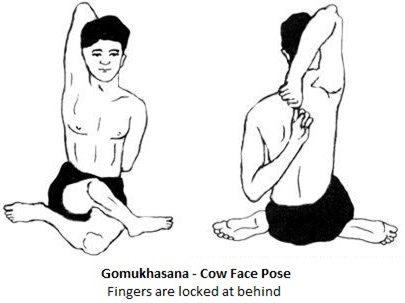
Pre stage :- Sit in sukhasana or dandasana pose.
Method :-
- Sit in sukhasana or dandasana rose.
- Place the ankle of left leg near right butt.
- Place the right leg over the left thing so that knees should place over each other.
- Sweep your left hand behind your back, facing palms upwards.
- Sweep your right hand over the right shoulder, bend your elbow and place it behind your back.
- Now inter lack fingers of both hands behind your back.
- Now stretch both hands in their respective directions.
- Look straight.
- Repeat with changing leg position.
Benefits:- Helps is curing Asthma, reduce weight makes body flexibility and attractive.
Parvatasana:- While performing this asana body resembles like a mountain that’s why its named as parvgatasana. It is a very easy asana.

Pre Stage :- Sit in padamasana pose on ground.
Method:-
- Sit in padmasana pose on the ground.
- Fingers will have to be locked firmly inhale deeply and stretch your arms and bring the finger look overhead.
- Keep it vertically above your head.
- Turns up your palms over the head.
Benefits:- Helpful is curing Asthma diseases chest is extended
Matsyasana:- If this asana is performed in a water body can flat easily that why it is called matsyasan.

Pre Stage:- Sit in padmasana pose.
Methods:- Sit in padmasana pose.
Take support of your elbow and lie on your back bend your neck with the support of your hands, and try to touch your head to the ground.
Hold toes of the feet firmly with both hands and touch the ground with the elbows.
Stretch the stomach as up as possible.
Benefits:- This asana is very useful for asthma patients provide relief from indigestion and other digestive problems keep the blood clean. Helps is curing diabetes. Helps in a cough and respiratory problems make the body and face attractive.
महाराज यश 5 years, 6 months ago
महाराज यश 5 years, 6 months ago
Akanksha Kumari 5 years, 6 months ago
Posted by Dev Arora 5 years, 6 months ago
- 1 answers
Posted by Mary Engmawii 5 years, 6 months ago
- 1 answers
Yogita Ingle 5 years, 6 months ago
I think that even after the end of Cold War, NAM is still relevant today. This is because of the following reasosn:
- NAM was based on the principle that decolonised countries share a historical affiliation and can become powerful if they all come together
- NAM stressed on the idea that it is not necessary for small and poor countries in the world to follow any powerful country if they are able to follow any independent foreign policy
- NAM is also based on the value of democratise the international system by thinking about an alternative world order to address several issues such as poverty and existing inequalities.
- With the emergence of neo colonialism ( use of economic, political, cultural or other pressure to influence former colonies), many newly independent nations were unable to take concrete decisions in the economic fields due to the pressure exerted by the powerful nations and organisations like the World Bank, WTO, IMF etc.
- Under such circumstances, NAM came forward to help these countries in trying to asserting their economic rights.
- USA off late has emerged as a powerful nation. NAM has immense potentialities and experience to prevent the dominating of USA over countries like Iraq and Afghanistan.
- Thus, NAM still remains an important and powerful force which aims at achieving international peace, disarmament and economic development.
Posted by Keshav Joshi 5 years, 6 months ago
- 1 answers
Gaurav Seth 5 years, 6 months ago
कहानी कोई कहानी नहीं है बल्कि यह एक सोच है, जो आगे चलकर कहानी का रूप ले लेती है। कहानी हमारी सोच में है, हम जो भी सोचते हैं। अगर हम उसे किसी अन्य व्यक्ति के साथ सांझा करे तो वह कहानी कहलाती है। जैसे मान लो, अपको सोते समय कोई स्वप्न आए, जो आपकी सोच के मुताबिक बहुत ही अलग हो। जिसे आप अपने परिवारजनों या मित्रों के साथ सांझा करे तो उनका ध्यान न भटक पाए, उनके मन में बेचैनी होने लगे कि अब कुछ तो अलग होगा, इसी को कहानी कहते हैं। हालांकि ये कोई कहानी नहीं बल्कि आपका स्वप्न है, आपकी सोच है। दोस्तों ये तो हो गयी कहानी।
अब बात करते हैं नाटक क्या है?नाटक भी देखा जाए तो कहानी के बिना अधूरा है। क्योंकि किसी भी नाटक को तैयार करने से पहले एक कहानी तैयार करना बहुत जरूरी होता है। जैसे कि मैंने ऊपर आपको बताया कि, अपनी सोच, स्वप्न किसी व्यक्ति के साथ सांझा करना कहानी कहलाता है। उसी कहानी को जब कुछ कलाकार मिलकर किसी रंगमंच पर अपने आव-भाव व गुणों के साथ श्रोताओं के सामने दर्शाऐं, तो उसे नाटक कहते हैं। हमेशा नाटक कहानी से जुड़ा रहता है।
नाटक और कहानी में अन्तर अगर देखा जाए तो नाटक और कहानी में कुछ ज्यादा अन्तर नहीं है, अक्सर आप बचपन में कहानियां सुनते होंगे, अगर उन्ही कहानियों को कुछ कलाकार मिलकर आपके सम्मुख प्रदर्शन करें तो वो नाटक का रूप ले लेती हैं।
Posted by Priyanka Sahani 5 years, 6 months ago
- 1 answers
Subir Kumar 5 years, 6 months ago
Posted by Keshav Joshi 5 years, 6 months ago
- 0 answers
Posted by Teesha Sharma 5 years, 6 months ago
- 3 answers
Raju Baghel 5 years, 6 months ago
Posted by Iqbal Singh 5 years, 6 months ago
- 3 answers
Tanya ?? 5 years, 6 months ago
Tanya ?? 5 years, 6 months ago
Posted by Yashika Longkumer 5 years, 6 months ago
- 1 answers
Sonal . 5 years, 5 months ago
Posted by Sheikh Sakib Anwar 5 years, 6 months ago
- 1 answers
Posted by Prabhjot Singh 5 years, 6 months ago
- 1 answers
Yogita Ingle 5 years, 6 months ago
Product managers create marketing mixes for their products as they move through the life cycle. The product life cycle is a pattern of sales and profits over time for a product (Ivory dishwashing liquid) or a product category (liquid detergents). As the product moves through the stages of the life cycle, the firm must keep revising the marketing mix to stay competitive and meet the needs of target customers.
Posted by Riya Mahapatra 5 years, 6 months ago
- 1 answers
Yogita Ingle 5 years, 6 months ago
Blunt and sticky ends areresult of restriction endonuclease action on double stranded DNA.
Sticky Ends – are staggered ends on a DNA molecule with short, single-stranded overhangs.
Blunt Ends are a straight cut, down through the DNA that results in a flat pair of bases on the ends of the DNA.
Posted by Anjali Rathor 5 years, 6 months ago
- 1 answers
Anjana Sharma 5 years, 5 months ago
Posted by Tanmay Jena 5 years, 6 months ago
- 1 answers
Gaurav Seth 5 years, 6 months ago
Biocontrol refers to the use of biological methods for controlling plant diseases and pests.
Chemicals, insecticides and pesticides are extremely harmful to human beings and also these pollute our environment.
The use of biocontrol measures will greatly reduce our dependence on toxic chemicals and pesticides.
Biocontrol agents are which are useful in controlling plant diseases and pests are-
- The ladybird, a beetle with red and black markings and dragon flies are useful to get rid of aphids and mosquitoes respectively.
- Bacteria Bacillus thuringiensis (Bt) is used to get rid of butterfly caterpillars where dried spores of Bacillus thuringiensis are mixed with water and sprayed onto vulnerable plants such as brassicas and fruit trees and these are eaten by the insect larvae and in the gut of the larvae, the toxin is released and the larvae get killed.
- Trichoderma species are free-living fungi found in the root ecosystem these are effective as biocontrol agents of several plant pathogens.
- Baculoviruses are pathogens that attack insects and other arthropods and the majority of baculoviruses used as biological control agents are in the genus Nucleopolyhedrovirus.
Posted by John Phom 5 years, 6 months ago
- 1 answers
Yogita Ingle 5 years, 6 months ago
Prejudice means to judge others in a negative way or to see them as inferior. People who are prejudiced may criticise the religious beliefs, habits, customs, dressing styles and languages of other people.
Discrimination is the result of prejudiced thinking and creating stereotypes. Discrimination occurs when people are treated unequally and are not given due respect because of the caste to which they belong or because of the work they do. In India, people are discriminated against on the basis of their caste, class, gender, religion, wealth and occupation. For example, people belonging to the lower castes are discriminated against in various ways. In many areas even today, they are neither allowed to enter into temples nor can they draw water from wells.
Posted by Aditya Singh 5 years, 6 months ago
- 1 answers
Meghna Thapar 5 years, 6 months ago
Principles of cancer immunotherapy
Clinical oncology for students > Principles of cancer immunotherapy
Export options
Create a book
Export as PDF
Information on authorship and revision
Last modified:
29 November 2016 09:57:06
Author(s):
Dr Craig Gedye — Author
Cancer Council Australia Oncology Education Committee — Co-author
Cite this page
Contents
1 Introduction
2 The immune system
3 Controlling the immune system: immune checkpoints
4 Cancer immunosurveillance and immunoevasion
5 Spectrum of cancer immunotherapy
6 Active non-specific cancer immunotherapy
7 Active specific cancer immunotherapy
8 Passive non-specific cancer immunotherapy
9 Passive specific cancer immunotherapy
10 Immune checkpoint inhibitors
11 Mechanism of action of immune checkpoint inhibitors
12 Current examples of immune checkpoint inhibitors
13 Side effects of checkpoint immunotherapy antibodies
14 Managing side-effects of immune checkpoint cancer immunotherapy
15 Managing expectations of immune checkpoint cancer immunotherapy
Introduction
Cancer immunotherapy has a long history, but has rapidly developed since 2010. The goals of cancer immunotherapy are to kill or control cancer cells by activating, or reactivating the immune system.
Back to top
The immune system
Our immune systems have evolved to a complex system involving innate and adaptive immune systems. Innate immunity starts with physical barriers (skin, mucus), and involves non-specific defences from immune cells such as neutrophils and natural killer cells. The adaptive immune system has evolved from innate immune cells, which include B-cells that produce antibodies, and is governed by lymphocytes, primarily alpha/beta, which include CD4+ helper, CD8+ killer and FOXP3+ regulatory T-cells.
The adaptive immune system is most relevant in managing the immune system, addressing viral infections, and has evolved to be the most important part of the immune system in terms of controlling and eliminating cancer.
Adaptive immune cells recognise other cells via antigen presentation. A small peptide fragment of a native, viral or cancer protein (the antigen or epitope) is “presented” on a cell surface complex made of proteins called the major histocompatibility complex (MHC). These epitopes are then recognised by proteins (e.g. the T-cell receptor, TCR) on the surface of individual T- or B-cell lymphocytes (Figure A). The repertoire of human T-cells and B-cells can recognise up to 109 individual patterns. The outcome of antigen presentation and recognition is determined by the balance of interactions between pairs of immune checkpoint costimulatory molecules (e.g. CTLA4-CD80, OX40-OX30L, CD154-CD40, PD1-PDL1; Figure B below).
Figures A and B
Back to top
Controlling the immune system: immune checkpoints
Uncontrolled immune activation leads to autoimmune diseases like ulcerative colitis, dermatitis and interstitial pneumonitis. The activity of the immune system is modulated and carefully controlled by costimulatory molecules called immune checkpoints. When antigen recognition occurs, a committee of other molecules interact on the surface of the immune cell and the target cell to determine the balance of the interaction. If the signals are largely positive, the immune cell activates and is primed to attack the antigen presented by the target cell. However if the balance of signals is negative, then the immune cell can become inactivated, sometimes permanently, and the antigen is accepted as a normal/self antigen (Figure B). Immune checkpoints of relevance to cancer include CTLA4, PD1 and PDL1 (see above).
Back to top
Cancer immunosurveillance and immunoevasion
Every cancer that becomes clinically detectable and relevant has survived elimination by the immune system. As soon as tiny cancers form, the aberrant proteins they express from mutated genes generate so-called “neoantigens” that can be recognised by the immune system by antigen presentation, targeting the aberrant cell for destruction.
Cancers are edited by this process, and may be eliminated at this point; so called immunosurveillance. Some cancers can enter a state of equilibrium with the immune system, and though present, remain clinically undetectable and irrelevant. If this balance is then later disturbed, for example by immunosuppression caused by age, illness or iatrogenic causes, the cancer can escape and evade immune control.
Cancer immunotherapies attempt to redress these escape mechanisms at many points, but a key mechanism for cancer cells to evade the immune system seems to be via negative immune checkpoint signalling (Figure C).
Figure C
Back to top
Spectrum of cancer immunotherapy
Cancer immunotherapies can be categorised by whether:
they actively stimulate the immune system, or passively alter immune system signalling or cell populations, and,
the treatment is targeted at a specific, known antigenic target, or is non-specifically stimulating the immune system.
Spectrum of cancer immunotherapy
(adapted from Davis et al., 2000)
Back to top
Active non-specific cancer immunotherapy
Bacillus Calmette-Guerin (BCG) is one of the most commonly used and earliest discovered cancer immune therapies. This live attenuated strain of Mycobacterium tuberculosis is instilled intravesically to reduce recurrence of debulked non-muscle invasive bladder cancer. The mechanism of action is a non-specific inflammatory reaction; side effects can include dysuria and other lower urinary tract symptoms.
Immunostimulatory cytokines such as interferon-alpha and interleukin-2 were previously mainstay treatments of metastatic renal-cell carcinoma and melanoma. Interferon-alpha was used as adjuvant therapy in resected high-risk melanoma, though the survival advantage was debatable. Interleukin-2 is still used in some countries in a limited highly restricted patient population. Treatment requires ICU admission due to severe systemic inflammatory responses and hypotension. A proportion of patients who took IL2 have experienced long-term remission of their cancer.
Oncolytic viruses such as T-VEC (talimogene laherparepvec) and CAVATAK® (Coxsackievirus A21) are attenuated or modified viruses that can be injected directly into tumour masses or administered intravenously. Infection of tumour cells is associated with activation of an immune response, that in some patients can even spread to other, uninjected tumour sites (the “abscopal” effect). Many viruses are being explored, but none are yet in routine clinical practice.
Back to top
Active specific cancer immunotherapy
Cancer vaccines have been trialled in many different formats, but all attempt to direct the immune system to recognise particular antigens that are then hoped to cause recognition and elimination of the cancer. Cancer vaccines can target a single peptide, a protein, or autologous or allogenic cancer cells. Unfortunately most of these vaccines have failed to improve patient outcomes. Sipeleucel-T is an allogeneic vaccine using prostate cancer cell lines that has a modest effect in prostate cancer, but is not available in Australia.
Oncogenic virus vaccines are the most common and important form of cancer immunotherapy. Vaccines that prevent infection by the hepatitis B virus (causing hepatocellular carcinoma) or the human papillomavirus (causing cervical, ****, penile and some head and neck cancers) are internationally and numerically the most effective and most cost-effective cancer immunotherapies available.
CAR-T-cells are autologous patient derived T-cells, that have been genetically modified to display cancer cell recognition molecules on their cell surface. In isolated cases these have generated extraordinary responses (e.g. CD19+ paediatric B-ALL) but with considerable toxicity.
Posted by Dhairya Jain 5 years, 6 months ago
- 1 answers
Tanisha Yadav 5 years, 6 months ago
Posted by Keshav Joshi 5 years, 6 months ago
- 1 answers
Gaurav Seth 5 years, 6 months ago
पेट की आग का शमन ईश्वर (राम) भक्ति का मेघ ही कर सकता है-तुलसी का यह काव्य-सत्य समकालीन युग में भी सत्य था और आज भी सत्य है। राम को तुलसी ने घनश्याम कहा है। तुलसी प्रभु की कृपा को पेट की आग शमन के लिए आवश्यक मानते हैं। उनकी दृष्टि में ईश्वर भक्ति एक मेघ के समान है। उनकी कृपा का जल हमें चाहिए।
तुलसी का यह काव्य-सत्य इस समय का युग सत्य तब बन सकता है जब भक्ति के साथ प्रयास भी करें। केवल भक्ति करने से फल की प्राप्ति होने वाली नहीं है। प्रभु की प्रार्थना में भक्ति और पुरुषार्थ दोनों का संगम होना आवश्यक है। केवल भक्ति के बल पर बैठा रहने वाला व्यक्ति निकम्मा हो जाता है। प्रयत्न की भी बड़ी महिमा है।
Posted by Keshav Joshi 5 years, 6 months ago
- 1 answers
Gaurav Seth 5 years, 6 months ago
पेट की आग का शमन ईश्वर (राम) भक्ति का मेघ ही कर सकता है-तुलसी का यह काव्य-सत्य समकालीन युग में भी सत्य था और आज भी सत्य है। राम को तुलसी ने घनश्याम कहा है। तुलसी प्रभु की कृपा को पेट की आग शमन के लिए आवश्यक मानते हैं। उनकी दृष्टि में ईश्वर भक्ति एक मेघ के समान है। उनकी कृपा का जल हमें चाहिए।
तुलसी का यह काव्य-सत्य इस समय का युग सत्य तब बन सकता है जब भक्ति के साथ प्रयास भी करें। केवल भक्ति करने से फल की प्राप्ति होने वाली नहीं है। प्रभु की प्रार्थना में भक्ति और पुरुषार्थ दोनों का संगम होना आवश्यक है। केवल भक्ति के बल पर बैठा रहने वाला व्यक्ति निकम्मा हो जाता है। प्रयत्न की भी बड़ी महिमा है।
Posted by Prarthana Jacob 5 years, 6 months ago
- 1 answers
Sanjana Dua?????❣️ 5 years, 6 months ago
Posted by Ansh Yadav Ansh Yadav 5 years, 6 months ago
- 1 answers
Yogita Ingle 5 years, 6 months ago
A rule is an explicit statement that tells an employee what he or she can and cannot do. Rules are “do” and “don't” statements put into place to promote the safety of employees and the uniform treatment and behavior of employees. For example, rules about tardiness and absenteeism permit supervisors to make discipline decisions rapidly and with a high degree of fairness. Hence this plan is least flexible.
Posted by Praveen Chaudhary 5 years, 6 months ago
- 1 answers
Yogita Ingle 5 years, 6 months ago
- The poet talks of the need for silence and quiet introspection and the value of calmness and quietude. He also speaks about creating a sense of shared understanding between men. By this there will be an end to all forms of conflicts. Keeping quiet will help us introspect, reflect and experience silence and peace. This will in turn assist us in finding solutions to our problems
- During these few moments of quietness and introspection all people would be unified and in harmony with nature and each other. This oneness and togetherness is desirable and essential for the Earth's survival and of human beings as well. When the people are silent for a moment, they remember their life's meaning. Even like all natural things experience a rebirth with the transition of time, so keeping quiet is a rebirth of the human soul. This gives our lives a new meaning.
- The poet wishes us to be still, to cease our confused and hurried movements and try to be calm for a change instead of being restless all the time. The poet suggests that there is life in nature under apparent stillness via the example where The Earth teaches us in what way new life evolves from the dead remains. It gives us lessons about resurrecting and sustaining life.
Posted by Shubham Mamgain 5 years, 6 months ago
- 2 answers
Siya Soni 5 years, 6 months ago
Posted by Shubham Mamgain 5 years, 6 months ago
- 2 answers
Tanisha Yadav 5 years, 6 months ago
Yogita Ingle 5 years, 6 months ago
A convex lens is a lens with an outward curve. Unlike the concave lens, the thickness at the centre of a convex lens is more than the thickness at the edges of the lens. Convex lenses are converging lenses. They have the ability to converge a parallel beam of light into a point. This point is called the focal point of the convex lens and the distance from the optical centre to the focal point is called the focal length. The focal point is on the opposite side of the lens from which the light rays originate.
Posted by Shubham Mamgain 5 years, 6 months ago
- 1 answers
Gaurav Seth 5 years, 6 months ago
A n s w e r :
‘Wedding band’ is a symbol of male authority and power. The band symbolizes her unhappy marriage, her husband and the patriarchal society that limits the freedom of women.

myCBSEguide
Trusted by 1 Crore+ Students

Test Generator
Create papers online. It's FREE.

CUET Mock Tests
75,000+ questions to practice only on myCBSEguide app
