
Ask questions which are clear, concise and easy to understand.
Ask QuestionPosted by Kanika Malik 5 years, 4 months ago
- 1 answers
Posted by Kanika Malik 5 years, 4 months ago
- 1 answers
Gaurav Seth 5 years, 4 months ago
1. The great palace of Mari was the residence of the royal family, the hub of administration, and a place of production, especially of precious metal ornaments.
2. It was so famous in its time that a minor king came from north Syria just to see it, carrying with him a letter of introduction from a royal friend of the king of Mari, Zimrilim.
3. Daily lists reveal that huge quantities of food were presented each day for the king's table: flour, bread, meat, fish, fruit, been and wine. He probably ate in the company of many others, in or around courtyard 106, paved white.
4. You will notice from the plan that the palace had only one entrance, on the north. The large, open courtyards such as 131 were beautifully paved. The king would have received foreign dignitaries and his own people in 132 a room with wall paintings that would have awed the visitors.
5. The palace was a sprawling structure, with 260 rooms and covered an area of 2.4 h
Posted by Abhinav Nithish 5 years, 4 months ago
- 1 answers
Gaurav Seth 5 years, 4 months ago
When Douglas was thrown into water, he landed in a sitting position, swallowed water, and went at once to the bottom. He was frightened, but while going downwards in the water he planned that when his feet hit the bottom, he would make a big jump, come to the surface, lie flat on it, and paddle to the edge of the pool) But, it was not as simple as he had imagined. His repeated attempts to come out failed him till he became unconscious and was pulled out of the pool. The author was first frightened, but not scared out of his wits, as he felt he could jump upwards and paddle to the edge of the pool(when he failed to do so, he was seized by sheer terror)that knew no understanding, no control. Then came a touch of reason—to remember to jump. When the jump made no difference he was seized by stark terror even more firmly. Finally, he relaxed and slipped into oblivion.
Posted by Kanika Malik 5 years, 4 months ago
- 1 answers
Gaurav Seth 5 years, 4 months ago
The royal capital of Mari flourished after 2000 BCE. Mari is situated much further upstream on the Euphrates; rather than on the fertile southern plain. Some communities in the kingdom of Mari had both farmers and pastoralists. Most of its territory was used for pasturing sheep and goats. Exchange of materials was the norm between herders and farmers. But access or denial of access to water resources often led to conflict between herders and farmers. Nomadic communities of the western desert often came to the prosperous agricultural heartland. Some of them also worked as harvest laborers or hired soldiers. Some of them became prosperous and settled down. A few gained power to establish their own rule. Akkadians, Amorites, Assyrians and Aramaeans were examples of such herders.
Posted by Kanika Malik 5 years, 4 months ago
- 1 answers
Gaurav Seth 5 years, 4 months ago
1. Mesopotamian Writing:
- The first Mesopotamian tablets, written around 3200 BCE, contained picture-like signs and numbers.
- Writing began when society needed to keep records of transactions – because in city life transactions occurred at different times, and involved many people and a variety of goods
- Mesopotamians wrote on tablets of clay.
2. Modern Writing: The greatest legacy of Mesopotamia to the world is its scholarly tradition of time reckoning and mathematics, calender.
Posted by Kanika Malik 5 years, 4 months ago
- 0 answers
Posted by Kanika Malik 5 years, 4 months ago
- 2 answers
Kanika Malik 5 years, 4 months ago
Gaurav Seth 5 years, 4 months ago
It is often said that natural fertility and high levels of food production were the causes of early urbanization. It is because of the following reasons:
- Natural fertility encourages settled life and agricultural production.
- It paved the way for animal husbandry.
- Fertility of the soil was also helpful in the beginning of new occupations.
- Flourishing trade and commerce is also another major factor for urbanization.
- The development of art of writing and administration played a very critical role in the development of urbanization.
Posted by Kanika Malik 5 years, 4 months ago
- 1 answers
Gaurav Seth 5 years, 4 months ago
Geography:
- City life began in Mesopotamia (Mesopotamia is derived from the Greek words ‘mesos’, meaning middle, and ‘potamos’, meaning river.)
- It is a flat land between the Euphrates and the Tigris rivers that is now part of the Republic of Iraq.
- In the north, there is a stretch of upland called a steppe, where animal herding offers people a better livelihood than agriculture
- Agriculture began between 7000 and 6000 BCE.
- Soil was very fertile here but agriculture was threatened because of natural causes.
- Ur, Lagash, Kish, Uruk and Mari were some of its important cities.
- The excavation work started 150 years ago.
Posted by Kanika Malik 5 years, 4 months ago
- 1 answers
Gaurav Seth 5 years, 4 months ago
The south is a desert - and this is where the first cities and writing emerged. This desert could support cities because the rivers Euphrates and Tigris,which rise in the northern mountains, carry loads of silt. When they flood or when their water is let out on to the fields, fertile silt is deposited.
Posted by Kanika Malik 5 years, 4 months ago
- 2 answers
Kanika Malik 5 years, 4 months ago
Gaurav Seth 5 years, 4 months ago
The Mesopotamians believed in several gods. Each city had its own special god. People performed ceremonies each month. The theme of the rituals and festivals for each month was determined by the phases of the moon. The king was the chief priest and thus occupied an important position in the society. He was conisdered as the representative of God on the earth.
the Mesopotamians buried their deads with various objects such as weapons, ornaments and vessels. This shows that they believed in life after death.
Posted by Kanika Malik 5 years, 4 months ago
- 1 answers
Gaurav Seth 5 years, 4 months ago
(i) The division of the year into 12 months according to the revolution of the moon around the earth, the division of the month into four weeks, the day into 24 hours, and the hour into 60 minutes - all that we take for granted in our daily lives has come to us from the Mesopotamians.
(ii) These time divisions were adopted by the successors of Alexander and from there transmitted to the Roman world, then to the world of Islam, and then to medieval Europe.
(iii) Whenever solar and lunar eclipses were observed, their occurrence was noted according to year, month and day. So too there were records about the observed positions of stars and constellations in the night sky.
Posted by Kanika Malik 5 years, 4 months ago
- 1 answers
Gaurav Seth 5 years, 4 months ago
Role of kings in Construction and maintenance of temples in Mesopotamia
1. As the archaeological record shows.villages were periodically relocated in Mesopotamian history because of food in the river and change in the course of the river. There were man-made problems as well. Those who lived on the upstream stretches of a channel could divert so much water into their fields that villages of downstream were left without water.
2. When there was continuous warfare in a region, those chiefs who had been successful in war could oblige their followers by distributing the loot and could take prisoners from the defeated groups to employ in the temple for various works. 3. In time victorious chiefs began to offer precious booty to the gods and thus beautify the community's temples.
They would send men out to fetch fine stones and metal for the benefit of the god and community and organise the distribution of temple wealth in an efficient way by accounting for things that came in and went out.
4. War captives and local people were put to work for the temple or directly for the ruler. This rather than agricultural tax, was compulsory. Those who were put to work were paid rations. It has been estimated that one of the temples took 1,500 men working 10 hours a day, five years to build.
5. With rulers commanding people to fetch stones or metal ones to come and make bricks or lay the bricks for a temple, or else to go to a distant country to fetch suitable materials.Hundreds of people were put to work at making and baking clay cones that could be pushed into temple walls, painted in different colours, creating a colourful mosaic
Posted by Kanika Malik 5 years, 4 months ago
- 1 answers
Gaurav Seth 5 years, 4 months ago
The facts of the Mesopotamia seal:
1. In Mesopotamia until the end of the first millennium BCE, cylindrical stone seals, pierced down the centre, were fitted with a stick and rolled over wet clay so that a continuous picture was created.
2. They were carved by very skilled craftsmen, and sometimes carry writing : the name of the owner, his god, his official position, etc.
3. A seal could be rolled on clay covering the the string knot of a cloth package or the mouth of a pot keeping the contents safe. When rolled on a letter written on a clay tablet, it became a mark of authenticity. So the seal was the mark of a city dweller's role in public life.
Posted by Rajnandani Chouhan 5 years, 4 months ago
- 0 answers
Posted by Seema Saw 5 years, 4 months ago
- 2 answers
Jay Tanwani 5 years, 4 months ago
Muhammad Shoaib 5 years, 4 months ago
Posted by Anurag Rauniyar 5 years, 4 months ago
- 1 answers
Gaurav Seth 5 years, 4 months ago
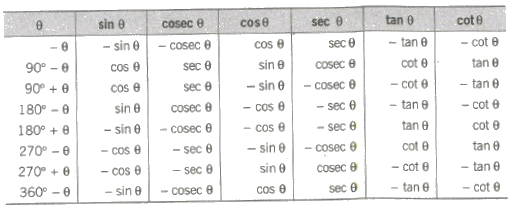
Trigonometric Ratios of Allied Angles
Two angles are said to be allied when their sum or difference is either zero or a multiple of 90°. The angles — θ, 90° ± θ, 180° ± θ, 270° + θ, 360° —θ etc., are angles allied to the angle θ, if θ is measured in degrees.
Posted by Palak Awasthi 5 years, 4 months ago
- 2 answers
Sriram Nagarajan 5 years, 4 months ago
Gaurav Seth 5 years, 4 months ago
- The name Cnidaria is derived from the cnidoblasts or cnidocytes , which contain the stinging capsules or nematocytes present on the tentacles and the body.
- Cnidarians exhibit tissue level of organisation and are diploblastic, digestion is extracellular and intracellular, and have a central gastro-vascular cavity with a single opening, hypostome.
- Cnidarians like corals have a skeleton composed of calcium carbonate and exhibit two basic body forms called polyp and medusa, polyp is sessile and cylindrical form like Hydra, whereas, the latter is umbrella-shaped and free-swimming like Aurelia.
- Cnidarian which exist in both polyp and medusa forms exhibit alternation of generation called as
- Polyps produce medusae asexually and medusae form the polyps sexually (e.g., Obelia).
- Examples- Physalia (Portuguese man-of-war), Adamsia (Sea anemone).
Posted by Rohit Thakur 5 years, 4 months ago
- 0 answers
Posted by Akshay Gill 5 years, 4 months ago
- 0 answers
Posted by . . 5 years, 4 months ago
- 1 answers
Gaurav Seth 5 years, 4 months ago
Nek Chand is the untutored genius who created a paradise years ago. The little patch of a jungle that he began clearing to make himself a garden, sculpted with stone and recycled material is known to the world as the 'Rock Garden' at Chandigarh. Nek Chand has taken the notion of raw art to dizzying heights. His art is, "an outstanding testimony of the difference a single man can make when he lives his dream".
Posted by Shivani Kumari 5 years, 4 months ago
- 1 answers
Posted by Shavitaj Kaur 5 years, 4 months ago
- 1 answers
Sanchita Sharma 5 years, 4 months ago
Posted by Sairaj Killedar 5 years, 4 months ago
- 1 answers
Gaurav Seth 5 years, 4 months ago
HRD Minister Ramesh Nishank announced a major CBSE syllabus reduction for the new academic year 2020-21 on July 7 which was soon followed by an official notification by CBSE on the same.
Considering the loss of classroom teaching time due to the Covid-19 pandemic and lockdown, CBSE reduced the syllabus of classes 9 to 12 with the help of suggestions from NCERT.
The CBSE syllabus has been rationalized keeping intact the learning outcomes so that the core concepts of students can be retained.
<font color="#FF6600"><font style="box-sizing: border-box;">Revised Curriculum for the Academic Year 2020-21</font></font>
<div class="panel-group" id="accordion" style="margin-bottom:5px; text-align:start; -webkit-text-stroke-width:0px"> <div class="panel panel-default" style="border:1px solid #dddddd; margin-bottom:0px; border-radius:4px"> <div class="panel-heading" style="border-bottom:0px #dddddd; padding:10px 15px; border-top-left-radius:3px; border-top-right-radius:3px; border-top-color:#dddddd; border-right-color:#dddddd; border-left-color:#dddddd"></div> </div> <div class="panel panel-default" style="border:1px solid #dddddd; margin-bottom:0px; border-radius:4px; margin-top:5px"> <div class="panel-heading" style="border-bottom:0px #dddddd; padding:10px 15px; border-top-left-radius:3px; border-top-right-radius:3px; border-top-color:#dddddd; border-right-color:#dddddd; border-left-color:#dddddd">
<a data-toggle="collapse" href="http://cbseacademic.nic.in/Revisedcurriculum_2021.html#collapse1" style="box-sizing:border-box; color:inherit; text-decoration:none; display:block; font-weight:bold">Revised Senior Secondary Curriculum (XI-XII)</a>
</div> </div> </div>Posted by Matt Ralte 5 years, 4 months ago
- 1 answers
Gaurav Seth 5 years, 4 months ago
Answer:
Industrial Revolution is the name given to a series of changes that brought about a transition from production by hand to production by machine.
Posted by Kunal Kumar 5 years, 4 months ago
- 0 answers
Posted by Nikhil 526 5 years, 4 months ago
- 2 answers
Sriram Nagarajan 5 years, 4 months ago
Syed Ali Shbeeh 5 years, 4 months ago
Posted by Anushya K 5 years, 4 months ago
- 0 answers
Posted by Anushya K 5 years, 2 months ago
- 0 answers

myCBSEguide
Trusted by 1 Crore+ Students

Test Generator
Create papers online. It's FREE.

CUET Mock Tests
75,000+ questions to practice only on myCBSEguide app

Gaurav Seth 5 years, 4 months ago
Earlier the task of transportation of goods, food grains and other essential commodities were carried by the beasts of burden or bullock-carts. It was time consuming activity and a lengthy process. The river Euphrates helped the people to get rid of this task. It flows almost through the entire region of Mesopotamia. It provided people one of the cheapest means of transport, which made possible to transport bulk goods with any difficulty. The boats guided by the direction of winds were available free of cost. Several stream emerging of it provided an excellent source of water transportation. Most of the trade began to carry out on this route. Hence, we can say that the river of Euphrates was a well renowned trade-route.
1Thank You