
Ask questions which are clear, concise and easy to understand.
Ask QuestionPosted by Mr Alex2Op 5 years, 4 months ago
- 1 answers
Posted by Sudhanshu Prajapati 5 years, 4 months ago
- 0 answers
Posted by Natasha Mishra 5 years, 4 months ago
- 1 answers
Yogita Ingle 5 years, 4 months ago
Disadvantages of WTO
- However, the WTO has often been criticised for trade rules which are still unfavourable towards developing countries. Many developed countries went through a period of tariff protection; this enabled them to protect new, emerging domestic industries. Ha Joon Chang argues WTO trade rules are like 'pulling away the ladder they used themselves to climb up' (Kicking away the ladder at Amazon)
- Free trade may prevent developing economies develop their infant industries. For example, if a developing economy was trying to diversify their economy to develop a new manufacturing industry, they may be unable to do it without some tariff protection.
- WTO is being overshadowed by new TIPP trade deals. These deals are negotiated away from WTO and focuses mainly on US and EU. It excludes China, Russia, India, Brazil and South Africa. It threatens to diminish the global importance of WTO
- Difficulty of making progress. WTO trade deals have been quite difficult to form consensus. Various rounds have taken many years to slowly progress. It results in countries seeking alternatives such as TIPP or local bilateral deals.
- WTO trade deals still encompass a lot of protectionism in areas like agriculture. Protectionist tariffs which primarily benefit richer nations, such as the EU and US.
- WTO has implemented strong defense of TRIPs ‘Trade Related Intellectual Property’ rights These allow firms to implement patents and copyrights. In areas, such as life-saving drugs, it has raised the price and made it less affordable for developing countries.
Posted by Natasha Mishra 5 years, 4 months ago
- 1 answers
Yogita Ingle 5 years, 4 months ago
Following are the objectives of WTO
(i) To ensure reduction of tariffs and other trade harriers imposed hy different countries.
(ii) To engage in such activities which improve the standards of living, create employment, increase income and effective demand and facilitate higher production and trade.
(iii) Facilitate the optimum use of world’s resources.
(iv) Promote an integrated more viable and durable trading system.
Functions of WTO:
Facilitate international trade
- It facilitates international trade through the removal of tariff and non-tariff barriers.
- It provides greater market access to all member countries.
Formulation of rules
- It establishes a rule-based trading regime, in which nations cannot place arbitrary restrictions on trade.
Protecting the interest of developing countries
- It frames fair global rules, regulations.
- It safeguards and advocates the interests of the developing world.
Posted by Natasha Mishra 5 years, 4 months ago
- 1 answers
Yogita Ingle 5 years, 4 months ago
Three features of SEZ :
1. It is a duty free enclose which is treated as foreign territory.
2. Units of SEZ are exempted from routine examination of import and export by custom authorities.
3. Sub-contracting of production is allowed.
Posted by Natasha Mishra 5 years, 4 months ago
- 0 answers
Posted by Natasha Mishra 5 years, 4 months ago
- 0 answers
Posted by Natasha Mishra 5 years, 4 months ago
- 1 answers
Yogita Ingle 5 years, 4 months ago
The various incentives and schemes provided by India are as follows :
1. Export Processing Zones : Export Processing Zones (EPZs) have been set up to provide an internationally competitive duty free environment for export production. Infrastructural facilities are created in the zones to manufacture the products at lower cost. Customs clearance and facilities needed for financial transactions are also provided inside the zones. Import licence is not needed for import of capital goods, raw materials etc. The units located in the zones are expempted from payment of excise duty on capital goods and raw materials bought from the domestic market. 50% produce has been permitted for domestic sale at concessional rate of duty. There are 8 EPZs in India.
2. 100% Export Oriented Units : Export Oriented Units have been set up for the export of entire product expect those which are specially permitted to be sold in the domestic market. These units can be established any where in the country. They can avail of all benefits provided to the units in the EPZ.
3. Special Economic Zones : Special Economic Zones (SEZ) has been created to encourage free trade. It is a specially delineated duty free enclave. It is deemed to be foreign territory for the purpose of trade operations and duties and tariffs. Goods going into the SEZ area from Domestic Tariff Area (DTA) are treated as deemed exports. Goods coming from the SEZ area into DTA are treated as imported goods.
4. Export Houses, Trading Houses, Star Trading Houses and Super Star Trading Houses : Various categories of export houses have been recognized with a view to building marketing infrastructure and expertise required for export promotion. These houses are given national recognition so that they could make greater efforts for export promotion. They are required to operate as highly professional and dynamic institutions and act as an important instrument of export growth. The recognition is granted on the basis of the export performance of the firm.
5. Export of Services : In order to boost the export of services, various categories of service houses have been recognised. These houses are recognised on the basis of the export performance of the service providers. They are named as Service Export House, International Service Export House, International Star Service Export House, International Super Star Service Export House based on their export performance.
6. Export Promotion Capital Goods (EPCG) Scheme : The main objective of this scheme is to encourage the import of capital goods for export promotion. New capital goods including computer software systems may be imported under this scheme. Under this provision, the capital goods may be imported at 5% customs duty. The import is subject to an export obligation equivalent to 5 times CIF value of capital goods on FOB basis or 4 times the CIF value of capital goods on net foreign exchange basis. This obligation may be fulfilled over a period of 8 years from the date of issuance of license.
Posted by Natasha Mishra 5 years, 4 months ago
- 1 answers
Yogita Ingle 5 years, 4 months ago
It is a guarantee letter issued by the importer’s bank stating that it will honour the export bills to the bank of the exporter upto a certain amount.
Commercial Letter of Credit
This is a standard letter of credit that’s commonly used in international trade, and may also be referred to as a documentary credit or an import/export letter of credit. A bank acts as a neutral third party to release funds when all the conditions of the agreement have been met.
Standby Letter of Credit
This type of letter of credit is different: It provides payment if something fails to happen. Instead of facilitating a transaction, a standby letter of credit provides compensation when something goes wrong.
Back-to-Back Letters of Credit
A back to back letter of credit allows intermediaries to connect buyers and sellers
Posted by Natasha Mishra 5 years, 4 months ago
- 1 answers
Yogita Ingle 5 years, 4 months ago
Bill of lading is a document wherein the shipping company gives its official receipt of the goods put on board its vessel and at the same time gives the undertaking to carry them to the port of destination. It is also a document of title of the goods and as such is freely transferable by the
endorsement and delivery.
Bill of entry contains information such as name and address of the importer, name of the ship, number of packages, marks on the package, description of goods, quantity and value of goods, name and address of the exporter, port of destination and customs duty payable.
Posted by Mehak Dhicka 5 years, 4 months ago
- 0 answers
Posted by Simran Shikha 5 years, 3 months ago
- 2 answers
Posted by Sintu Prajapat 5 years, 4 months ago
- 2 answers
Jyoti ⊙.☉ 5 years, 3 months ago
Posted by Sintu Prajapat 5 years, 4 months ago
- 2 answers
Yogita Ingle 5 years, 4 months ago
When Howard Carter finally reached the mummy he ran into trouble, because he could not raise the mummy out of the coffin. The ritual resins had hardened, cementing King Tut's body to the bottom of his solid gold coffin. No amount of force could pull it out.
Posted by Aishwarya Rajesh 5 years, 4 months ago
- 0 answers
Posted by Rishav Kumar 5 years, 4 months ago
- 2 answers
Yogita Ingle 5 years, 4 months ago
It was founded in 1987 as Special Olympics India, and changed its name to Special Olympics Bharat in 2001. it is recognized by the government of India as a National Sports Federation for the development of sports opportunity for the people with intellectual disabilities.
Posted by Dinkal Patel 5 years, 4 months ago
- 1 answers
Drashti Sanghvi 4 years, 11 months ago
Posted by Natasha Mishra 5 years, 4 months ago
- 1 answers
Yogita Ingle 5 years, 4 months ago
Following steps are taken to export goods from one country to another :
1. Receipt of enquiry and sending quotations.
2. Receipt or order of indent.
3. Assessing importer’s credit-worthiness.
4. Obtaining export license.
5. Obtaining pre-shipment finance.
6. Production or procurement of goods.
7. Pre-shipment inspection.
8. Excise clearance.
9. Obtaining certificate of origin.
10. Reservation of shipping space.
11. Packing and forwarding.
Posted by Natasha Mishra 5 years, 4 months ago
- 1 answers
Gaurav Seth 5 years, 4 months ago
(1) Trade Enquiry and Sending Quotations
- The domestic buyer who wishes to buy the goods from the other country sends an inquiry relating to price, desired quality, terms, and conditions for the export of goods.
- The exporter sends a reply to the inquiry in the form of ‘Quotation’.
- The quotation is also known as ‘Proforma Invoice’ which contains information about the selling price, quantity, quality, mode of delivery, etc.
(2) Procurement of Import License
- Goods can be imported only upon the license, the importer requires to obtain an import license.
(3) Obtaining Foreign Exchange
- The overseas supplier asks payment in a foreign currency.
- Payment requires the exchange of Indian currency into foreign currency.
- In India, transaction related to foreign exchange are governed by Reserve Bank of India (RBI) under the Exchange Control Department.
(4) Placing Order or Indent
- After the receipt of the ‘Quotation’, if the prospective buyer finds the information suitable to him, he places the ‘Order/Indent’ for the import of goods.
(5) Obtaining Letter of Credit
- The importer must get the receipt of credit from his concerned bank and send it to the foreign supplier.
(6) Arrangement of Finance
- The importer makes the finance settlements in advance to remunerate to the exporter when the shipment arrives at the destination.
(7) Receipt of Shipment Advice
- After storing the consignment on the ship, the foreign supplier sends the shipment advice to the importer.
- The shipment advice includes data about the shipment of products such as:
- Invoice number
- The landing or airways bill date and number
- Name of the ship with date
- Port or Destination of export
- Classification of goods and quantity
- Date of the sailing of the vessel.
(8) Arrival of Goods
- The overseas supplier dispatches the Goods as per the contract.
(9) Customs Clearance and Release of Goods
- In India, all the imported goods have to have a clearance from customs after they pass the Indian borders.
- When the ship arrives at the port, the importer has to obtain a delivery order/endorsement for delivery on the back of the bill of lading from the concerned shipping company.
Posted by Natasha Mishra 5 years, 4 months ago
- 0 answers
Posted by Natasha Mishra 5 years, 4 months ago
- 1 answers
Gaurav Seth 5 years, 4 months ago
(a) Difference in languages and problem of distance : Each country has its own language in which its traders wish to prepare their trade documents right from trade enquiry or the letter of quotation to the payment documents. This works as a serious barrier between the traders of the different countries. Moreover, the distance between the trading countries increases the cost of transportation of goods, making the price high and also creating risk of fraud, etc. as the traders may not have face to face contact between them.
(b) Import-export restrictions: At times many countries put certain restrictions on their foreign trade to make their B.O.P. (balance of payment) favourable. They impose heavy tariffs or import duties, volume restrictions on both of their imports as well as their exports. This hampers the smooth conduct of IT.
© Lack of proper information about foreign market: In most of the cases new traders do not have adequate information about foreign markets what ever information is provided by different agencies are either unadequate or does not fulfil their requirements. Thus, they fail to have clarity about the opportunities available to them for exports and imports.
(d) Heavy documentation : IT requires so many legal formalities and many documents, which makes the trade procedure very cumbersome as well as complex. That’s why most of the small traders trade only through third parties rather than going directly and have to pay commissions to them which reduces their profit margins, increases the cost of transactions.
(e) Payment problems : IT, traders of an importing
country wish to make payment in their own currency and the traders of exporting country want payments in their legal tender. In both the situations there may come the problem of foreign exchange. The fluctuations in the exchange rates may create problems and risk to the traders of both the countries.
Posted by Natasha Mishra 5 years, 4 months ago
- 1 answers
Gaurav Seth 5 years, 4 months ago
nature of International Business.
(i) Exchange of Goods : It involves purchase of goods and sale of goods. Purchase of goods, from a foreign country is known as import trade and sale of goods to another country is known as ‘export trade’. But when the goods are imported from a country with the objective of exporting them to some other country is known as ‘entrepot trade’.
(ii) Involvement of two countries : International trade is carried on mostly in large quantities both on government to government account and on private account involving individuals and business houses.
(iii) Foreign Currency : Payment for imported goods is made in foreign currency. Similarly, payment for export of goods is received in foreign currency. In India conversion of money is regulated by RBI.
(iv) Restrictions : International business is not as free as international trade. In case of several items, license is also required for import or export many goods are subject to import and export duties.
(v) Lengthy procedure : Because of geographical distance and physical barriers, transport of goods between nations is a difficult and time consuming process. Moreover, permission of appropriate authorities for import and export of goods also take time.
(vi) Language Barrier : Each country has its own language. Because of differences in languages of two countries there may be problem in entering into import and export transactions.
(vii) Risks : International business is exposed to several risks such as fluctuations in the relative price of two currencies, perils of sea, fear of obsolescence etc.
Posted by R. Prasad 5 years, 4 months ago
- 1 answers
Gaurav Seth 5 years, 4 months ago
- Organ system level of organization
- Bilaterally symmetrical
- Triploblastic
- Segmented body
- Body is divisible into head,thorax and abdomen
- Jointed appendages
- Respiratory organs- gills,book gills,book lungs or tracheal systems
- Circulatory system- open
- Body cavity- haemocoel
Posted by Natasha Mishra 5 years, 4 months ago
- 1 answers
Gaurav Seth 5 years, 4 months ago
|
Basis of Differences |
Departmental Store |
Multiple shops |
|||
|
1. |
Nature |
• |
There is one store with many departments. |
• |
There are several shops under this system and the shops are scattered over several places. |
|
2. |
Variety of Goods |
• |
Deals in a large variety of goods. |
• |
Deals in one commodity. |
|
3. |
Purpose |
• |
It provides all types of goods to satisfy all requirements of customers. |
• |
They meet only the limited requirements of customers. |
|
4. |
Customers |
• |
High class rich people. |
• |
Belong to higher and middle income groups. |
|
5. |
Advertisement |
• |
It is carried only locally. |
• |
The chain stores are organized on a wide scale or on a nation wide basis. |
|
6. |
Window display |
• |
Done in an artistic decorative style which is unique. |
• |
Done in an identical manner. |
|
7. |
Risk |
• |
Risk is more and concentrated on the store. |
• |
Risk is divided over all the shops. |
|
8. |
Credit facility. |
• |
May be allowed to reputed customers. |
• |
All sales are on cash basis. |
Posted by Natasha Mishra 5 years, 4 months ago
- 1 answers
Gaurav Seth 5 years, 4 months ago
| Wholesale | Retail |
| Definition | |
| Sale of goods in bulk but cheaper rates | Sale of goods to the end-users in higher rates and limited quantity |
| Cost | |
| Less | High |
| Business size | |
| Large | Small |
| Capital | |
| Higher | Less |
| Business outreach | |
| Spread across the state, different state | Limited space |
| Art of selling | |
| Not required | Required |
| Promotion | |
| Not required | It is important |
| Attractive display to good | |
| Doesn’t matter | It is required to attract the customers |
Posted by Sudhanshu Prajapati 5 years, 4 months ago
- 3 answers
Dεερακ Ȿιηɠꜧ 5 years, 4 months ago
Dεερακ Ȿιηɠꜧ 5 years, 4 months ago
Posted by Neil Modi 5 years, 4 months ago
- 2 answers
Gaurav Seth 5 years, 4 months ago
Phases of Cell cycle
Human cell divides once in approximately 24 hours, which may vary in different organisms. In yeasts it takes about 90 minutes to complete the cell division process.
Cell cycle is divided into two basic phases-
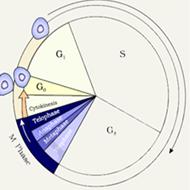
- Interphase– it is the phase between two successive M phases. Interphase lasts for 95% of a cell cycle. This phase is called as resting phase but during this period the cells prepare itself for nuclear division by cell growth.
- M Phase– when the actual cell division or mitosis occurs. It starts with karyokinesis (nuclear division) or duplication of chromosome and end with cytokinesis or division of cell matrix (cytoplasm division).The interphase is divided into three further phases:
- G1 phase represents the interval between mitosis and initiation of DNA replication. Cell is continuously active and grows in size.
Click on the given link for more:
<a href="https://mycbseguide.com/blog/cell-cycle-cell-division-class-11-notes-biology/#:~:text=CBSE%20Class%2D11%20Biology,cells%20is%20called%20cell%20cycle." ping="/url?sa=t&source=web&rct=j&url=https://mycbseguide.com/blog/cell-cycle-cell-division-class-11-notes-biology/%23:~:text%3DCBSE%2520Class%252D11%2520Biology,cells%2520is%2520called%2520cell%2520cycle.&ved=2ahUKEwjlpYry46ztAhUVxzgGHYoDA2UQFjAGegQIBBAC" rel="noopener" target="_blank">Cell Cycle and Cell Division class 11 Notes Biology ...</a>
Yogita Ingle 5 years, 4 months ago
Right before prophase, the cell spends most of its life in the interphase, where preparations are made before the beginning of mitosis (the DNA is copied). However, since the actual process involves the division of the nucleus, prophase is technically the first stage of this process.
The different stages of mitosis occurring during cell division are given as follows-
Interphase
Before entering mitosis, a cell spends a period of its growth under interphase. It undergoes the following phases when in interphase:
- G1 Phase: This is the period before the synthesis of DNA.
- S Phase: This is the phase during which DNA synthesis takes place.
- G2 Phase: This is the phase between the end of DNA synthesis and the beginning of prophase.

myCBSEguide
Trusted by 1 Crore+ Students

Test Generator
Create papers online. It's FREE.

CUET Mock Tests
75,000+ questions to practice only on myCBSEguide app

Yogita Ingle 5 years, 4 months ago
Mr Braun was Albert's history teacher. He was grumpy and arrogant, believing that his method of teaching, of memorising dates and useless facts rather than ideas was the correct way to study. He is egotistic and does not care to listen to Albert's views on the matter of how to study. He is also short tempered, as he would not listen to Albert at all.
2Thank You