
Ask questions which are clear, concise and easy to understand.
Ask QuestionPosted by Arshad Hussain 6 years, 6 months ago
- 1 answers
Posted by Happy Singh 6 years, 6 months ago
- 0 answers
Posted by Avtar Singh 6 years, 6 months ago
- 0 answers
Posted by Aryan Rana 6 years, 6 months ago
- 0 answers
Posted by Gaurav Gupta 6 years, 6 months ago
- 1 answers
Yogita Ingle 6 years, 6 months ago
1 mole of ammonia weighs 17 g.
1 molecule of ammonia = (17 / 6.023 x 10²³) = 2.82 x 10⁻²³ g = 2.82 x 10⁻²⁰ kg.
Posted by Rahul Dalal 6 years, 6 months ago
- 0 answers
Posted by Rahul Dalal 6 years, 6 months ago
- 1 answers
Sia ? 6 years, 6 months ago
Posted by Manish Kumar 6 years, 6 months ago
- 1 answers
Sia ? 6 years, 6 months ago
Posted by Ayush Kumar 6 years, 6 months ago
- 1 answers
Sia ? 6 years, 6 months ago
Posted by Rahul Dalal 6 years, 6 months ago
- 1 answers
Sia ? 6 years, 6 months ago
Posted by Apan Debbarma 6 years, 6 months ago
- 1 answers
Posted by Preet Kaur 6 years, 6 months ago
- 0 answers
Posted by Nidhi Kalwani 6 years, 6 months ago
- 0 answers
Posted by Ankush Garg 6 years, 6 months ago
- 0 answers
Posted by Anjali Maurya 6 years, 6 months ago
- 1 answers
Sia ? 6 years, 6 months ago
Posted by Divyansh Jain 6 years, 6 months ago
- 1 answers
Sia ? 6 years, 6 months ago
Posted by Palak Agrawal 6 years, 6 months ago
- 1 answers
Sia ? 6 years, 6 months ago
A-B=A∩Bc (A intersect B complement)
pick an element x
let x∈(A-B)
therefore x∈A but x∉B
x∉B means x∈Bc
x∈A and x∈Bc
x∈(A∩Bc)
x∈(A-B)
therefore A-B=A∩Bc
Posted by Piyush Bothra 6 years, 6 months ago
- 0 answers
Posted by Naveen Parnwal 6 years, 6 months ago
- 1 answers
Yogita Ingle 6 years, 6 months ago
(1) Two or more individuals or enterprises, either private or government, owned or a foreign company joining together through participation in equity capital for achieving a common target and mutual benefit is known as joint venture.
(2) Joint venture involves pooling of resources and expertise as well as sharing of risks and rewards by these enterprises.
(3) These enterprises agree to join together for the expansion of business, development of new products or for penetrating into new foreign markets.
(4) Joint ventures are formed either for long-term projects or for short-term projects.
(5) The basic purpose of joint ventures is to attain a strong position for both the enterprises.
Posted by Aman Sharma 6 years, 6 months ago
- 1 answers
Posted by Harshdeep Singh 6 years, 6 months ago
- 1 answers
Sia ? 6 years, 6 months ago
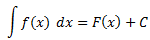
The integration of a function f(x) is given by F(x) and it is represented by:
Posted by Harpreet Singh 6 years, 6 months ago
- 2 answers
Sia ? 6 years, 6 months ago
tan(A - B) = [tan(A) - tan(B)]/[1 + tan(A)tan(B)].
Thus:
tan(13π/12)
= tan(4π/3 - π/4), from the hint
= [tan(4π/3) - tan(π/4)]/[1 + tan(4π/3)tan(π/4)], from the above formula
= (-1 + √3)/(1 + √3)
= -(1 - √3)/(1 + √3)
= -(1 - √3)^2/[(1 + √3)(1 - √3)], by rationalizing
= -(1 - √3)^2/(1 - 3), via difference of squares
= (1/2)(1 - √3)^2
= (1/2)(1 - 2√3 + 3)
= (1/2)(4 - 2√3)
= 2 - √3.
Posted by Prashant Kumar 6 years, 6 months ago
- 2 answers
Dhama ...? 6 years, 6 months ago
Sia ? 6 years, 6 months ago
Posted by Harpreet Singh 6 years, 6 months ago
- 0 answers
Posted by Kshitiz Chaudhary 6 years, 6 months ago
- 1 answers
Sia ? 6 years, 6 months ago
since,sin60=√ 3/2
= √ 3/2( sin20sin40sin80)
=√ 3/2( sin20sin80sin40)
=√ 3/4 [(2sin20sin40)sin80]
on applying [cos(A-B)-cos(A+B) = 2sinAsinB]
we get,
= √ 3/4 (cos20-cos60)sin80 [since,cos(-a)=cosa]
= √ 3/4(cos20sin80-cos60sin80)
= √ 3/8(2sin80cos20-sin80)
= √ 3/8(sin100+sin60-sin80)
= √ 3/8( √ 3/2+sin100-sin80 )
= √ 3/8( √ 3/2+sin(180-80)-sin80 )
= √ 3/8( √ 3/2+sin80-sin80 ) [since,sin(180-a)=sina]
= √ 3/8( √ 3/2)
= 3/16
Posted by Harpreet Singh 6 years, 6 months ago
- 1 answers
Sia ? 6 years, 6 months ago
Posted by Pushpendra Pratap 6 years, 6 months ago
- 1 answers
Posted by Tejaa Su 6 years, 6 months ago
- 0 answers
Posted by Yash Goswami????? 6 years, 6 months ago
- 1 answers
Sia ? 6 years, 6 months ago
Let P(n) = {tex}1 \cdot 2 \cdot 3 + 2 \cdot 3 \cdot 4 + .... + n(n + 1)(n + 2){/tex}{tex} = \frac{{n(n + 1)(n + 2)(n + 3)}}{4}{/tex}
For n = 1
{tex}P(1) = 1 \times 2 \times 3 = \frac{{1 \times 2 \times 3 \times 4}}{4} \Rightarrow 6 = 6{/tex}
{tex}\therefore {/tex} P (1) is true
Let P(n) be true for n = k.
{tex}\therefore P(k) = 1 \cdot 2 \cdot 3 + 2 \cdot 3 \cdot 4 + ...{/tex}{tex} + (k + 1)(k + 2) = \frac{{k(k + 1)(k + 2)(k + 3)}}{4}{/tex} ... (i)
For n = k + 1
{tex}P(k + 1) = 1 \cdot 2 \cdot 3 + 2 \cdot 3 \cdot 4 + ... + {/tex}{tex}k(k + 1)(k + 2) + (k + 1)(k + 2)(k + 3){/tex}
{tex} = \frac{{k(k + 1)(k + 2)(k + 3)}}{4}{/tex} + (k + 1) (k + 2) (k + 3) [Using (i)]
{tex} = (k + 1)(k + 2)(k + 3)\left[ {\frac{{k + 4}}{4}} \right]{/tex}
{tex} = \frac{{(k + 1)(k + 2)(k + 3)(k + 4)}}{4}{/tex}
{tex}\therefore {/tex} P(k + 1) is true.
Thus P(k) is true {tex} \Rightarrow {/tex} P (k + 1) is true.
Hence by principle of mathematical induction, P(n) is true for all {tex}n \in N{/tex}.
Posted by Kartik Sharma 6 years, 6 months ago
- 3 answers
Dev Chauhan 6 years, 6 months ago

myCBSEguide
Trusted by 1 Crore+ Students

Test Generator
Create papers online. It's FREE.

CUET Mock Tests
75,000+ questions to practice only on myCBSEguide app

Shiv Pratap Mishra 6 years, 6 months ago
1Thank You