
Ask questions, doubts, problems and we will help you..
Ask questions which are clear, concise and easy to understand.
Ask Question
CBSE, JEE, NEET, CUET
Question Bank, Mock Tests, Exam Papers
NCERT Solutions, Sample Papers, Notes, Videos
Posted by Sunita Sharma 5 years, 3 months ago (9820201)
- 1 answers
Posted by Rakhi Singh 5 years, 3 months ago (8756342)
- 2 answers
Posted by Anselam Toppo 5 years, 3 months ago (9698950)
- 1 answers
Gaurav Seth 5 years, 3 months ago (2898529)
The Bhakti and Sufi thinkers used the languages of the common people to expressh their opinions. They often spoke in local languages. So they were well-understood by the common people. Had they used a few distinct languages, they would not have reached to all the people. They would have gone extinct. Hence their use of the local languages proved very significant.
(i) Sanskrit was used by traditional Bhakti saints to sing hymns at different occasions, places of worship and ceremonies.
(ii) The Alvars and Nayanars of Tamil Nadu travelled from place to place singing hymns in Tamil in praise of their Gods. These developed as centres of pilgrimage. Singing compositions of these poet-saints became part of temple rituals in these shrines, as did worship of the saint images.
(iii) Kabir’s poems have survived in several languages and dialects, and some are composed in the special language of nirguna poets, the sant bhasha. Others, known as ulatbansi (upside-down sayings), are written in a form in which everyday meanings are inverted.
(iv) Baba Guru Nanak, Baba Farid, Ravidas (Raidas), composed their hymns in various languages such as Punjabi and Hindi etc.
(v) Amir Khusrau wrote and sang in Hindavi or Persian, Punjabi, Urdu and some other form oflanguages.
(vi) It was not just in sama that the Chishtis adopted local languages. In Delhi, those associated with the Chishti Silsila conversed in Hindavi, the language of the people. Other sufis such as Baba Farid composed verses in the local languages, which were incorporated in the Guru Granth Sahib.
(vii) Other writers, thinkers, saints etc. composed long poems or masnavis to express ideas of divine love using human love as an allegory. For example, the prem-akhyan (love story) Padmavat composed by Malik Muhammad Jayasi revolved around the romance of Padmini and Ratansen, the king of Chittor. Their trials were symbolic of the soul’s journey to the divine. Such poetic compositions were often recited in hospices, usually during sama.
(viii) The poets of Bigapur and Karnatana wrote short poems in Dakhani, a variant of Urdu.
Posted by Nisha Baghel 5 years, 3 months ago (9684230)
- 0 answers
Posted by Sabreena Sabreena 5 years, 3 months ago (9341334)
- 2 answers
Gaurav Seth 5 years, 3 months ago (2898529)
Q u e s : What was opium primarily know for ?
A n s w e r :
Opium was primarily known for medical properties and used in minuscule quantities for certain types of medicine.
Shivani Khandelwal 5 years, 3 months ago (9374568)
Posted by Anusha. R Anu 5 years, 3 months ago (9515659)
- 2 answers
Vivek Thapa 5 years, 3 months ago (8526648)

Posted by Suhana Sharma 5 years, 3 months ago (3171840)
- 1 answers
Gaurav Seth 5 years, 3 months ago (2898529)
| Public-sector industry | Joint-sector industry |
|
Owned and operated by the government |
Jointly owned and operated by the government and individuals or a group of individuals |
|
Example: Hindustan Aeronautics Limited, Steel Authority of India Limited |
Example: Maruti Udyog Limited |
Posted by Anselam Toppo 5 years, 3 months ago (9698950)
- 1 answers
Gaurav Seth 5 years, 3 months ago (2898529)
The need of a strong centre was one of the heated debates in the Constituent Assembly. Jawaharlal Nehru argued for a strong centre along with Dr B. R. Ambedkar. K. Santhanam from Madras however favoured more powers to the state. But the Constituent Assembly realised the importance of having a strong centre. It protected the powers of the centre in the following ways:-
- The Drafting Committee provided three lists of subjects—Union, State and Concurrent Lists. While subjects of key importance such as defence, home and finance were placed under the Union List, subjects such as agriculture and irrigation were placed under the State List. Both union and state governments had the right to make laws in the Concurrent List. However, the union government was more powerful while making laws on the subjects included in the Concurrent List.
- The union government was given control over mineral and key industries.
- Article 356 gave the union government absolute power over the state government as it could then take over the administration of the state during an emergency.
- The central government had all powers while levying taxes such as custom duties and company taxes. The union government shared income tax and excise duties with the state governments.
Thus, the Constituent Assembly of India protected the powers of the central government.
Posted by Pushpadant Katrale 5 years, 3 months ago (9027625)
- 1 answers
Gaurav Seth 5 years, 3 months ago (2898529)
Let the production last year be x kg .
Production this year =8/5×last year production
=8/5×x
Ratio of last season to this season = x/8/5x
= 1/8/5
= 5/8
So the ratio is 5:8
Posted by Anselam Toppo 5 years, 3 months ago (9698950)
- 1 answers
Gaurav Seth 5 years, 3 months ago (2898529)
Change in discourse of national movement:
- Gandhi rejected violent nationalism.
- Gandhi used terms like swaraj, swadeshi, and Indian civilization instead of nation.
- Gandhi’s nationalism was based on satya, ahimsa, karmayoga, ramarajya, tapasya, and moksha etc.
- Class movements to mass movements: champaran satyagraha (1917), Kheda movement (1918), Khilafat movement (1919), non- cooperation movement (1920), civil-disobedience movement (1930), Quit India movement(1942) – these all were mass movements.
- Gandhiji boycotted foreign goods.
- Passive resistance and non-violence became motto.
- Love the enemies and voluntary surrendering to authorities became norm.
National movement was inclusive and representative:
- Women participation: thousands of women came out of their homes and participated in salt satyagraha.
- Working class and professionals participated: lawyers, teachers, professors also joined the national movement.
- Students also boycotted class and participated in the movement in large scale.
- All religion participated: irrespective of religion and caste all people took part in mass movement.
- Business class participated: gave financial assistance and rejected imported goods.
Some of the flaws in Gandhi’s ideology:
- Alliance with Muslim league on religious grounds during non-cooperation movement strengthened the Muslim league as an independent entity, though it brought leaders together but failed to bring Hindus and Muslims together.
- Support of Gandhiji to WW-I – British government didn’t do anything substantial instead brought Black act. Failure to commute death sentence of Bhagat singh, Sukhdev and Rajguru to Life imprisonment. Though cause of opposition to communal award was good but system of joint electorate didn’t let true representatives of depressed classes to lead.
Conclusion:
Gandhi’ arrival was watershed in the national movement; it changed the discourse in significant way. It can be holistically said national movement was inclusive and representative as it covered whole India and its people
Posted by ?? ? 5 years, 3 months ago (2366894)
- 2 answers
Gaurav Seth 5 years, 3 months ago (2898529)
Major steps that were taken towards decentralisation in 1992 were:
- It was made obligatory to hold elections for choosing members of local governmental institutions
- Seats were reserved for people belonging to scheduled castes and scheduled tribes and other backward classes in local bodies.
- One-third of the seats are reserved for women.
- State Election Commission was constituted in the states for holding elections in government bodies.
- It was made mandatory for the State Governments to share powers and revenues with local bodies.
Aryan Dargan??? 5 years, 3 months ago (9597858)
Posted by Anselam Toppo 5 years, 3 months ago (9698950)
- 0 answers
Posted by Trisha Singh 5 years, 3 months ago (9820028)
- 2 answers
Ishaan Srivastava 5 years, 3 months ago (9819435)
Trisha Singh 5 years, 3 months ago (9820028)
Posted by Foodie Raipur 5 years, 3 months ago (9819805)
- 5 answers
Aditi S. Inavalli 5 years, 1 month ago (10086783)
Yangzee Sherpa 5 years, 3 months ago (9448445)
Gaurav Seth 5 years, 3 months ago (2898529)
Skeleton
The hard structures inside our body are the bones.The bony framework inside our body is called skeleton. In human beings ,the Skeleton is inside the body, so it is called as endoskeleton.
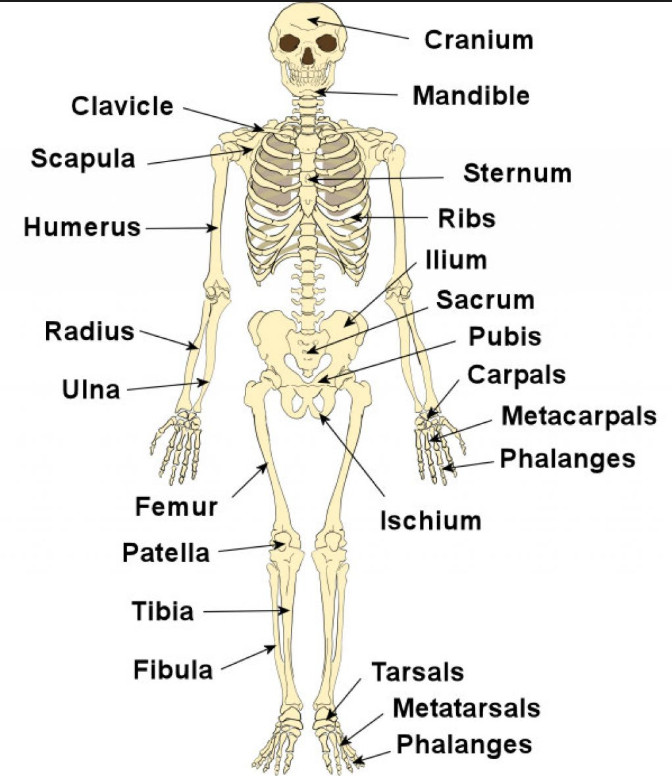
The bones of skeleton provides a framework which holds our body together.
The skeleton also gives a shape to our body.
The Skeleton is made of bones of many different shapes and sizes.
The X-ray images show the shape and number of bones in the various parts of our body. There are 206 bones in the human skeleton. Our skeleton has movable joints between various bones which allow the muscles to move the head, shoulders, arms ,legs and other parts of the body.
The Skeleton consists of skull, backbone, ribs, breastbone, shoulder, bones ,hip bone, arm bone and leg bones.
Posted by Anselam Toppo 5 years, 3 months ago (9698950)
- 0 answers
Posted by Anselam Toppo 5 years, 3 months ago (9698950)
- 1 answers
Gaurav Seth 5 years, 3 months ago (2898529)
Buddha’s teachings and philosophy have been reconstructed from stories, found mainly in the Sutta Pitaka. Although some stories have described his miraculous powers, others have suggested that the Buddha tried to convince people through reason and persuasion and not by displaying his supernatural powers. In one story narrated in the Sutta Pitaka, a griefstricken woman whose child had died came to Buddha. Buddha politely convinced her about the death rather than bring her son back to life. According to the Buddhist philosophy, the world is transient and constantly changing. It is also soulless and there is nothing permanent. With this transient world, sorrow is intrinsic to human beings.
After the death of Buddha, his followers compiled his teachings. These scriptures came to be known as the Tripitakas. Vinay Pitaka has laid down rules for nuns and monks residing in monasteries, Sutta Pitaka contains Buddha’s teachings and Abhidhamma Pitaka contains philosophical debates.
Posted by Trisha Padhan 5 years, 3 months ago (9813218)
- 3 answers
Sahiti Laxmi Chittam 5 years, 3 months ago (9129721)
Gaurav Seth 5 years, 3 months ago (2898529)
Computer is an electronic device that is designed to work with Information. The term computer is derived from the Latin term ‘computare’, this means to calculate or programmable machine. Computer can not do anything without a Program. It represents the decimal numbers through a string of binary digits. The Word ‘Computer’ usually refers to the Center Processor Unit plus Internal memory.
Posted by Anselam Toppo 5 years, 3 months ago (9698950)
- 1 answers
Gaurav Seth 5 years, 3 months ago (2898529)
The statement of eminent epigraphist D.C Sirkar has highlighted the important of inscription as single sources of information that touch upon all areas of our life. Following are the main areas we get information about from the inscriptions.
(i) Determination of states’s boundaries: The inscription were cared in the territories of the kings and even more important is not often close to the borders. This helps us find out boundaries of kingdoms and their expansion thereto.
(ii) Names of kings: the names of the kings are mentioned in the inscriptions. The names and titles used by Asoka the great got revealed through inscription only.
(iii) Historic events: the important historical events are mentioned in the inscriptions. The best example is how the event of the killing war is mentioned in the inscription and how Asoka takes to Dhamma.
(iv) Information about conduct of kings: inscription describe the conduct a character of the kings quit well. It is through the inscription only that we know Asoka worked for the welfare of the masses.
(v) Informed about administration: inscription gave information about administration. It is through the inscription. We know that we know Asoka appointed his son as a viceroy.
Posted by Shivam Tiwari 5 years, 3 months ago (9289290)
- 3 answers
Posted by Royal Thakur ? 5 years, 3 months ago (9579994)
- 1 answers
Priya Yadav 5 years, 3 months ago (9272213)
Posted by Akash Naik 5 years, 3 months ago (8520550)
- 1 answers
Gaurav Seth 5 years, 3 months ago (2898529)
The main features of Mauryan administration were:
- There were five important political centres in the Mauryan Empire: Patliputra (the capital city) and the provincial centres of Taxila, Ujjayini, Tosali and Suvarnagiri.
- It was not possible for such a large empire to have a uniform administrative system so historians believe that the administrative control was perhaps strongest in the capital and in provincial centres.
- Communications along the land and riverine routes were developed to administer the Empire.
- The army was an important tool for not only extending the territories of the empire but also for administering them.
- Committees and sub-committees were formed for coordinating military activities. They looked after the navy, horses, chariots, elephants, recruiting soldiers and managing transport and food supplies for soldiers.
- Asoka held his Empire together by propagating the doctrine of Dhamma, whose principles were simple and universally applicable. The doctrine propagated the ideas of peace, non-violence and respect towards elders. Dhamma mahamatt as were appointed to spread the principles of Dhamma.
- The last feature of the Mauryan administration is evident in the Asokan inscriptions that we have studied. It is because Ashoka inscribed the main features of his policy of ‘dhamma’. According to the inscriptions, he had also appointed Special officers called Dhamma Mahamtras to spread Dhamma.<button aria-label="like this post" title="like this post">
</button>
<button aria-label="like this post" title="like this post"></button>
</nav> </section> </article>Posted by Deependra Raja 5 years, 3 months ago (9800788)
- 0 answers
Posted by Jatin Dhiman 5 years, 3 months ago (5993622)
- 2 answers
Gaurav Seth 5 years, 3 months ago (2898529)
Power is consumed across the resistor when current flows through it.
The formula for Power consumed, P = VI
P = V x (V/R) {because according to Ohm’s Law, V = IR}
So let = Power consumed across resistor
Power consumed across resistor
Therefore ratio of the electric power consumed by R and 2R,
Posted by Anselam Toppo 5 years, 3 months ago (9698950)
- 2 answers
Smriti Sharma 5 years, 3 months ago (7477633)
Gaurav Seth 5 years, 3 months ago (2898529)
There are many reasons put forth by the scholars regarding end of the Harappan civilization:
(i) Climatic change, Deforestation, Excessive Flood, Drying up of rivers, Earthquake, Landslide etc. These reasons could explain end of one or two settlements. Hoever it cannot explain the end of whole civilization.
(ii) some scholars believes that it was the invasion of Aryan that lead to the end of Harappan civilization. As there are mentions in Rigveda how Lord Indra also known as Puramdar or the "destroyer of fort"has destroyed forts. R E M Wheeler believes that it is not possible such civilization could just vanish unless it was destoyed and was taken over by a new one. There also was evidence of large number of skeleton to prove the point. However this argument has been refuted and no longer holds true.
(iii) Other scholars believe that it was due to the end of one unifying element, it could be state or a ruler. Because after 1800 BCE we find that there are sudden disappearance of seals, weights and other uniform productions. Which scholars believe could be possible if there was an unifying element because such uniformity in size, weights etc could not coincident.
However the mentioned points are all hypothesis and we are still not sure of what could have brought such civilization to an end.
Posted by Avaina Nixon 5 years, 3 months ago (5359280)
- 3 answers
Posted by Anselam Toppo 5 years, 3 months ago (9698950)
- 1 answers
Gaurav Seth 5 years, 3 months ago (2898529)
The Buddhist stupas are said to be stories in stone. This is because many story scenes from Buddhist texts have been depicted on the stupas. On the Sanchi stupa, art historians have identified some scenes which are based on stories in Vessantara Jataka.
Posted by Anselam Toppo 5 years, 3 months ago (9698950)
- 0 answers
Posted by Premal Shah 5 years, 3 months ago (7481967)
- 4 answers
Posted by Nidhi Nidhi 5 years, 3 months ago (9819746)
- 1 answers
Gaurav Seth 5 years, 3 months ago (2898529)
Main source of income of No-for-Profit organisation is legacies, donations and subscriptions. A non-for-Profit organisations is set up for promoting science, commerce, social cause etc.
The main purpose is not to earn profits but to provide services.
Legacy the income received due to the death of a person who has mentioned the transfer of certain income in the will.
Donations are the major sources of such organisations. People usually donate a certain portion of their income for the welfare of the organisation.
Subscriptions are the side income of the not-for-profit organisation when a person subscribes for any activity in the various clubs inaugurated for societies's welfare.
Posted by Asmi Hingole 5 years, 3 months ago (9300643)
- 4 answers
Shivam Tiwari 5 years, 3 months ago (9289290)
myCBSEguide
Trusted by 1 Crore+ Students

Test Generator
Create papers online. It's FREE.

CUET Mock Tests
75,000+ questions to practice only on myCBSEguide app

Gaurav Seth 5 years, 3 months ago (2898529)
A n s w e r
उसके पास पिंजड़े में हरा-हरा तोता, गेंद, मोटरगाड़ी, गुड़िया आदि खिलौने हैं। रेलगाड़ी चाबी भर देने पर चलने लगती है। खिलौनेवाले के पास छोटे-छोटे धनुष-बाण भी हैं।
0 Thank You