
Ask questions, doubts, problems and we will help you..
Ask questions which are clear, concise and easy to understand.
Ask Question
CBSE, JEE, NEET, CUET
Question Bank, Mock Tests, Exam Papers
NCERT Solutions, Sample Papers, Notes, Videos
Posted by Nishant Ramji Patel 5 years ago (10167925)
- 1 answers
Posted by Shivam Rawat 5 years ago (6251980)
- 2 answers
Posted by Mahak Sadhya 5 years ago (10210925)
- 3 answers
Aanya Jain 5 years ago (9589271)
Account Deleted 5 years ago (1038483)
Posted by Kritika Verma 5 years ago (10200364)
- 1 answers
Posted by Sawan Sharma 5 years ago (10160858)
- 1 answers
Gaurav Seth 5 years ago (2898529)
Page Margins are the space that is present in the between the page edge and the text. The page margins allow the user to control where the text is to be printed on the page. Paragraph Indent is the distance or the blank space that is needed to separate a paragraph from the left or right page margins.
Posted by Satyam Singh Rajput 5 years ago (10213970)
- 3 answers
Khushi Vats 5 years ago (9955699)
Aiims Delhi Bhai Bhai 720 5 years ago (7557664)

Posted by Srinidhi Ganesh 5 years ago (10195500)
- 2 answers
Posted by Srinidhi Ganesh 5 years ago (10195500)
- 1 answers
Posted by Sawan Sharma 5 years ago (10160858)
- 1 answers
Yogita Ingle 5 years ago (2577571)
Paragraph formats control the formatting of paragraphs in SAPscript whereas Character formats are used for text formatting within paragraphs.
Character formats will have Standard attributes like Bold, Italic, Underline, Font family, Font size etc.
Paragraph formats will standard attributes of Character formats and in addition to this, they will margins, Indents, tabs, Alignments, Line spacing and delimeters.
Posted by Khiyati Dhillon 5 years ago (10012577)
- 2 answers
Yogita Ingle 5 years ago (2577571)
Some of the major features of a democracy are:
- The final decision making power rests with those elected by the people.
- It must be based on a free and fair election.
- Each adult citizen must have one vote and each vote must have one value.
- It should rule within limits set by constitutional law and citizens’ rights.
Posted by Komal Bhadauria 5 years ago (10213763)
- 0 answers
Posted by Komal Bhadauria 5 years ago (10213763)
- 0 answers
Posted by Geetha Bhat Geetha 5 years ago (10213681)
- 1 answers
Posted by Dimple Sahu 5 years ago (9949055)
- 1 answers
Gaurav Seth 5 years ago (2898529)
The process of photosynthesis occurs when green plants use the energy of light to convert carbon dioxide (CO2) and water (H2O) into carbohydrates. Light energy is absorbed by chlorophyll, a photosynthetic pigment of the plant, while air containing carbon dioxide and oxygen enters the plant through the leaf stomata.
Posted by Geetha Bhat Geetha 5 years ago (10213681)
- 2 answers
Gaurav Seth 5 years ago (2898529)
The chapter, ‘The Making of a Scientist’ is a story about the famous scientist Richard Ebright. Richie as his mother used to call him was a very curious child right from his childhood. He had started collecting butterflies in his childhood and when he was 2 years old, he had already collected all the 25 species found near his hometown. He thought it to be an end of butterfly collection until one day his mother bought him a book named ‘The Travels of Monarch X’. This was a turning point in his life and he got much more interested in dealing with science. He started with tagging butterflies which a task given at the end of the book that his mother bought for him. Then, when he first entered the county science fair with a slide of the frog tissue he lost. Everybody won something but his project did not win any prize. He was sad but also understood that to win, he needed to do real experiments and not just make neat and clean models. Then he wrote down to Dr. Urquhart at the University of Toronto, asking him for ideas to make projects. He stayed busy during his high school, working on the long list sent to him by Dr. Urquhart. Then, for the next year’s fair, he chose the project of looking at the viral disease that killed nearly all the monarch caterpillars every few years. He thought that the reason for this could be a beetle, so he started raising caterpillars in the presence of beetles but could not get any results. So, when he showed his trial experiment at the county science fair, his project won a prize. Then for the next year he made an experiment to show that the viceroy butterflies copied monarchs. This project also made him win prizes. Then he started his research as to the purpose of the 12 golden spots on the back of a monarch pupa. Everybody believed that it was just a design but Dr. Urquhart thought otherwise. Then Ebright and another brilliant science student got together and made a device that could show that the gold spots were responsible for releasing a hormone that was necessary for its growth. With the help of sophisticated instruments at one of the labs, he got a chance to work and found the chemical structure of the hormone in the gold spots. Then, one day, while looking at the photo of the chemical structure, he solved one of the biggest puzzles of life. He came to know how a cell blueprints its DNA. It was a big breakthrough and was published in a magazine. He also had many other interests and also admired his social studies teacher as he was the one who used to give him new ideas. He was good at debating, public speaking and a great canoeist. He never used to win for the sake of winning or for prizes but because he wanted to be the best at whatever he used to do. It is shown in this chapter that with the right amount of curiosity, a bright mind and the will to win for right reasons are the qualities needed to be a scientist. His mother also played a big role in making him what he was as it was she who supported him throughout his journey and bought him the book ‘The Travels of Monarch X’ which aroused his curiosity in the field of science.
Posted by Mahak Aggarwal 5 years ago (10208682)
- 5 answers
Maxtern .Op 5 years ago (6728427)
Mayank Rauthan 5 years ago (10201183)
Posted by Rohit Chhetri 5 years ago (5721067)
- 0 answers
Posted by Geetha Bhat Geetha 5 years ago (10213681)
- 1 answers
Gaurav Seth 5 years ago (2898529)
Determiners are the words that modify nouns.
Determiners function like adjectives. They are also called as fixing words.
Characteristics of Determiners
▪︎ A determiner may identify two or more persons or things.
▪︎ A determiner may indicate a quanity or amount.
▪︎ A determiner may determine or fix a place, person or things.
▪︎ A determiner may precede numberals or objects.
Classification of Determiners
Determiners can be classified into
1. Article : A, An, The.
2. Demonstrative Adjectives : this, that, these, those.
3. Quantifiers : This is a word or phrase which is used before a noun to indicate the amount or quantity.
The types of quantifiers are as follows
i. Definite
ii. Indefinite
iii. Distributive
iv. Difference
v. Comparative
4. Possessives: my, your, his, her, its, our, their, mine etc..
Examples of Articles- A, An, The
A women, A tree, A dog
An orange, An egg, An horse
The People, The Pen, The sen times
Examples of Demonstrative Adjectives- This, That, These, Those
▪︎My bat is better than that of my friend.
▪︎ Our soldiers are better equipped than those of Pakistan.
▪︎ This book is very interesting.
▪︎ Those flowers are very beautiful.
Examples of Quantifiers
▪︎ There are some books on the desk.
▪︎ How much money have you got?
▪︎ He's got more friends than his sister.
Examples of Possessive
▪︎ He is my brother.
▪︎ She is her friend.
Posted by Geetha Bhat Geetha 5 years ago (10213681)
- 3 answers
Maxtern .Op 5 years ago (6728427)
Mayank Rauthan 5 years ago (10201183)
Gaurav Seth 5 years ago (2898529)
(a) Joule's law of heating states that heat produced in joules when a current of I amperes flows in a wire of resistance R ohms for time t seconds is given by H = I2Rt.
Thus the heat produced in a wire is directly proportional to:
(i) Square of current
(ii) Resistance of wire
(iii) Time for which current is passed
(b) Given: R1=40ohms, R2=60ohms (in series), V=220V, t=30sec
We know that
Total resistance, R=40+60=100ohms
By Ohm's law,
V = IR
I = V/R
I = 220/100 = 2.2amp
Putting the values of I, R and t in eq. H = I2RT
H = 2.22 X 100 X 30
H = 14520 J
Posted by Noah Coutinho 5 years ago (9208384)
- 1 answers
Gaurav Seth 5 years ago (2898529)
tradition of Orientalism
- For this, it was necessary to study Indian history, philosophy, and law. William Jones, an expert in law and a linguist, took this task. He began to study ancient Indian texts on law, philosophy, religion, morality, arithmetic, medicine and the other sciences.
- Englishmen like Henry Thomas Colebrooke and Nathaniel Halhed were also busy discovering the ancient Indian heritage, mastering Indian languages and translating Sanskrit and Persian works into English.
- Together with them, Jones set up the Asiatic Society of Bengal, and started a journal called Asiatick Researches.
- Jones and Colebrooke shared a deep respect for the ancient culture. Both Indian and the West Indian civilisation, they felt, had attained glory in the ancient past but had subsequently declined.
- In order to understand India, it was necessary to discover the sacred and legal texts written in the ancient times.
- Jones and Colebrooke went about discovering ancient texts, understanding their meaning, translating them and making their findings known to others.
- Several company officials felt that Hindus and Muslims ought to be taught what they were already familiar with, and what they valued and treasured, instead of subjects that were alien to them.
- It was thought that this was the only way the British could win the hearts of the natives and could earn their respect.
- A madrasa was set up in Calcutta in 1781 to promote the study of Arabic, Persian and Islamic law; and the Hindu College was established in Benaras in 1791 to encourage the study of ancient Sanskrit texts that would be useful for the administration of the country.
- Not all officials shared these views. Many were very strong in their criticism of the Orientalists.
Posted by Geetha Bhat Geetha 5 years ago (10213681)
- 2 answers
Vijay Anand V 5 years ago (10214762)
Gaurav Seth 5 years ago (2898529)
(a) Magnetic field:
The magnetic field is the area around a magnet in which there is magnetic force. Moving electric charges can make magnetic fields. In physics, the magnetic field is a field that passes through space and which makes a magnetic force move electric charges and magnetic dipoles.
(b) Magnetic lines around bar magnet:
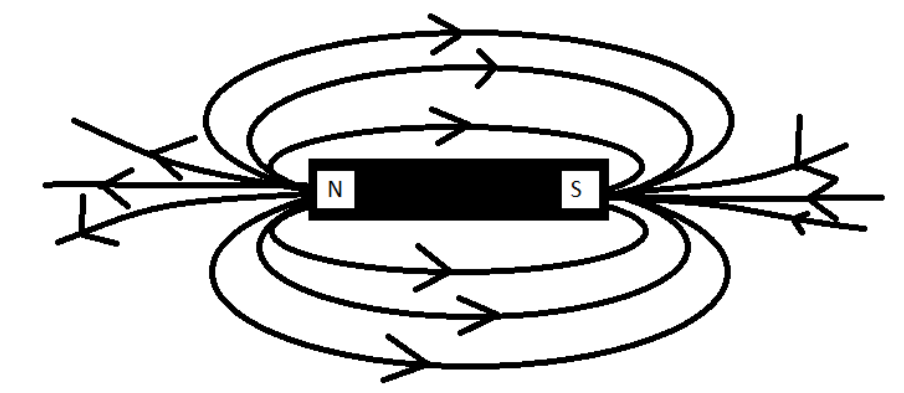
This is the respective diagram of a bar magnet with magnetic field lines.
The lines originate from the north pole and terminate on the south pole of the bar magnet.
The magnetic field lines make closed loops.
(c) Characteristics of magnetic field lines:
- The lines originate from the north pole and terminate on the south pole of the bar magnet.
- The strength of the magnetic field is proportional to the density of lines.
- Magnetic field lines cannot cross each other.
- Magnetic field lines are continuous loops.
Posted by Rajnish Tiwari 5 years ago (5727249)
- 1 answers
Posted by Deepakkumar Sethi 5 years ago (9878111)
- 0 answers
Posted by Royal Thakur ? 5 years ago (10134966)
- 3 answers
First Name 5 years ago (10129186)
Posted by Mohammed Saeed Sherani 5 years ago (10210066)
- 3 answers
Baibhab Paul 5 years ago (9183928)
Gaurav Seth 5 years ago (2898529)
Great Wall of China
The Great Wall of China is the longest in the world and has a main-line length of 3,460 km (2,150 miles - nearly three times the length of Britain - plus 3,530 km (2,193 miles) of branches and spurs.
Posted by Sam Daniel 5 years ago (5630068)
- 1 answers
Posted by Manish Sharma 5 years ago (9782890)
- 2 answers
Avani Rana 5 years ago (1062806)
Gaurav Seth 5 years ago (2898529)
The burning of a substance in the presence of oxygen is defined as combustion.
Conditions necessary for combustion are:
(i) Presence of a combustible substance.
(ii) Attainment of ignition temperature.
(iii) Proper supply of air to provide oxygen.
Structure of flame
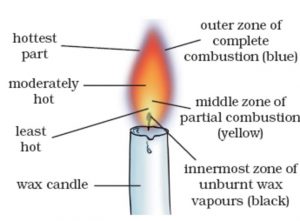
A flame consist of three zones.These are Innermost zone,middle zone,outer zone.The three zones of a flame have different colours and different temperature.
Posted by Faizan Hussain 5 years ago (9442229)
- 1 answers
Gaurav Seth 5 years ago (2898529)
The various types of roads in India are explained below:
(i) Golden Quadrilateral Super Highways: It is a network of six lane super highways including North-South Corridor and East-West Corridor. It is a major road development project that connects Delhi-Kolkata-Chennai-Mumbai and Delhi. National Highway Authority of India (NHAI) is implementing this gigantic project.
(ii)National Highways: National Highways link extreme parts of the country. These are the primary road systems and are laid and maintained by the Central Public Works Department (CPWD).
(iii)State Highways: Roads linking a state capital with different district headquarters are known as State Highways. These roads are constructed and maintained by the State Public Works Department (PWD) in State and Union Territories.
(iv)District Roads: These roads connect the district headquarters with other places of the district. These roads are maintained by the Zila Parishad.
(v)Border Roads: Border Roads Organisation, a Government of India undertaking constructs and maintains roads in the bordering areas of the country. These roads have improved accessibility in areas of difficult terrain and have helped in the economic development of these area.
Posted by Geetha Bhat Geetha 5 years ago (10213681)
- 1 answers
Mayank Rauthan 5 years ago (10201183)
Posted by Himanshu Yadav 5 years ago (8586135)
- 1 answers
Meghna Thapar 4 years, 11 months ago (6237)
Simple majority may refer to: Majority, a voting requirement of more than half of all ballots cast. ... Supermajority, a voting requirement of a specified level of support which is greater than the "one half" threshold used for majority. A majority, also called a simple majority to distinguish it from similar terms (see the "Related terms" section below), is the greater part, or more than half, of the total. ... "Majority" can be used to specify the voting requirement, as in a "majority vote", which means more than half of the votes cast.
myCBSEguide
Trusted by 1 Crore+ Students

Test Generator
Create papers online. It's FREE.

CUET Mock Tests
75,000+ questions to practice only on myCBSEguide app

Yogita Ingle 5 years ago (2577571)
There are two types of cell references: relative and absolute. Relative and absolute references behave differently when copied and filled to other cells. Relative references change when a formula is copied to another cell. Absolute references, on the other hand, remain constant no matter where they are copied.
1 Thank You