
Ask questions, doubts, problems and we will help you..
Ask questions which are clear, concise and easy to understand.
Ask Question
CBSE, JEE, NEET, CUET
Question Bank, Mock Tests, Exam Papers
NCERT Solutions, Sample Papers, Notes, Videos
Posted by Sreenidhil Kp 5 years ago (10292508)
- 1 answers
Posted by Tanu Sharma 5 years ago (10207393)
- 5 answers
Gaurav Seth 5 years ago (2898529)
| Important Questions Rights in the Indian Constitution |
|
| Important Questions Constitution Why and How |
|
| Important Questions Election and Representation |
|
| Important Questions Executive |
|
| Important Questions Legislature |
|
| Important Questions Federalism |
|
| Important Questions Judiciary |
|
| Important Questions The Philosophy of the Constitution |
|
| Important Questions Constitution as a Living Document |
|
| Important Questions Local Governments |
|
| Important Questions Freedom |
|
| Important Questions Political Theory an Introduction |
|
| Important Questions Equality |
|
| Important Questions Citizenship |
|
| Important Questions Rights |
|
| Important Questions Social Justice |
|
| Important Questions Secularism |
|
| Important Questions Nationalism |
|
| Important Questions Development |
|
| Important Questions Peace |
|
Tanu Sharma 5 years ago (10207393)
Gaurav Seth 5 years ago (2898529)
Go through the important set of questions and answers from class 12 NCERT textbook ‘Contemporary World Politics’. Prepare well from the given questions.
Important Questions for Class 12 Political Science
Click on the chapters links:
PART-A Contemporary World Politics
- <a href="https://www.learncbse.in/political-science-class-12-important-questions-chapter-1/" title="Political Science Class 12 Important Questions Chapter 1 The Cold War Era">Chapter 1 The Cold War Era</a>
- <a href="https://www.learncbse.in/political-science-class-12-important-questions-chapter-2/" title="Political Science Class 12 Important Questions Chapter 2 The End of Bipolarity">Chapter 2 The End of Bipolarity</a>
- <a href="https://www.learncbse.in/political-science-class-12-important-questions-chapter-3/" title="Political Science Class 12 Important Questions Chapter 3 US Hegemony in World Politics">Chapter 3 US Hegemony in World Politics</a>
- <a href="https://www.learncbse.in/political-science-class-12-important-questions-chapter-4/" title="Political Science Class 12 Important Questions Chapter 4 Alternative Centres of Power">Chapter 4 Alternative Centres of Power</a>
- <a href="https://www.learncbse.in/political-science-class-12-important-questions-chapter-5/" title="Political Science Class 12 Important Questions Chapter 5 Contemporary South Asia">Chapter 5 Contemporary South Asia</a>
- <a href="https://www.learncbse.in/political-science-class-12-important-questions-chapter-6/" title="Political Science Class 12 Important Questions Chapter 6 International Organisations">Chapter 6 International Organisations</a>
- <a href="https://www.learncbse.in/political-science-class-12-important-questions-chapter-7/" title="Political Science Class 12 Important Questions Chapter 7 Security in the Contemporary World">Chapter 7 Security in the Contemporary World</a>
- <a href="https://www.learncbse.in/political-science-class-12-important-questions-chapter-8/" title="Political Science Class 12 Important Questions Chapter 8 Environment and Natural Resources">Chapter 8 Environment and Natural Resources</a>
- <a href="https://www.learncbse.in/political-science-class-12-important-questions-chapter-9/" title="Political Science Class 12 Important Questions Chapter 9 Globalisation">Chapter 9 Globalisation</a>
PART-B Politics in India since Independence
- <a href="https://www.learncbse.in/political-science-class-12-important-questions-chapter-10/" title="Political Science Class 12 Important Questions Chapter 10 Challenges of Nation Building">Chapter 10 Challenges of Nation Building</a>
- <a href="https://www.learncbse.in/political-science-class-12-important-questions-chapter-11/" title="Political Science Class 12 Important Questions Chapter 11 Era of One-Party Dominance">Chapter 11 Era of One-Party Dominance</a>
- <a href="https://www.learncbse.in/political-science-class-12-important-questions-chapter-12/" title="Political Science Class 12 Important Questions Chapter 12 Politics of Planned Development">Chapter 12 Politics of Planned Development</a>
- <a href="https://www.learncbse.in/political-science-class-12-important-questions-chapter-13/" title="Political Science Class 12 Important Questions Chapter 13 India’s External Relations">Chapter 13 India’s External Relations</a>
- <a href="https://www.learncbse.in/political-science-class-12-important-questions-chapter-14/" title="Political Science Class 12 Important Questions Chapter 14 Challenges to and Restoration of Congress System">Chapter 14 Challenges to and Restoration of Congress System</a>
- <a href="https://www.learncbse.in/political-science-class-12-important-questions-chapter-15/" title="Political Science Class 12 Important Questions Chapter 15 The Crisis of Democratic Order">Chapter 15 The Crisis of Democratic Order</a>
- <a href="https://www.learncbse.in/political-science-class-12-important-questions-chapter-16/" title="Political Science Class 12 Important Questions Chapter 16 Rise of Popular Movements">Chapter 16 Rise of Popular Movements</a>
- <a href="https://www.learncbse.in/political-science-class-12-important-questions-chapter-17/" title="Political Science Class 12 Important Questions Chapter 17 Regional Aspirations">Chapter 17 Regional Aspirations</a>
- <a href="https://www.learncbse.in/political-science-class-12-important-questions-chapter-18/" title="Political Science Class 12 Important Questions Chapter 18 Recent Developments in Indian Politics">Chapter 18 Recent Developments in Indian Politics</a>
<button type="button"></button>
Posted by Ayansh Raj 1 year, 4 months ago (9727962)
- 1 answers
Posted by Tanu Sharma 5 years ago (10207393)
- 3 answers
Gaurav Seth 5 years ago (2898529)
Go through the important set of questions and answers from class 12 NCERT textbook ‘Contemporary World Politics’. Prepare well from the given questions.
Important Questions for Class 12 Political Science
PART-A Contemporary World Politics
- <a href="https://www.learncbse.in/political-science-class-12-important-questions-chapter-1/" title="Political Science Class 12 Important Questions Chapter 1 The Cold War Era">Chapter 1 The Cold War Era</a>
- <a href="https://www.learncbse.in/political-science-class-12-important-questions-chapter-2/" title="Political Science Class 12 Important Questions Chapter 2 The End of Bipolarity">Chapter 2 The End of Bipolarity</a>
- <a href="https://www.learncbse.in/political-science-class-12-important-questions-chapter-3/" title="Political Science Class 12 Important Questions Chapter 3 US Hegemony in World Politics">Chapter 3 US Hegemony in World Politics</a>
- <a href="https://www.learncbse.in/political-science-class-12-important-questions-chapter-4/" title="Political Science Class 12 Important Questions Chapter 4 Alternative Centres of Power">Chapter 4 Alternative Centres of Power</a>
- <a href="https://www.learncbse.in/political-science-class-12-important-questions-chapter-5/" title="Political Science Class 12 Important Questions Chapter 5 Contemporary South Asia">Chapter 5 Contemporary South Asia</a>
- <a href="https://www.learncbse.in/political-science-class-12-important-questions-chapter-6/" title="Political Science Class 12 Important Questions Chapter 6 International Organisations">Chapter 6 International Organisations</a>
- <a href="https://www.learncbse.in/political-science-class-12-important-questions-chapter-7/" title="Political Science Class 12 Important Questions Chapter 7 Security in the Contemporary World">Chapter 7 Security in the Contemporary World</a>
- <a href="https://www.learncbse.in/political-science-class-12-important-questions-chapter-8/" title="Political Science Class 12 Important Questions Chapter 8 Environment and Natural Resources">Chapter 8 Environment and Natural Resources</a>
- <a href="https://www.learncbse.in/political-science-class-12-important-questions-chapter-9/" title="Political Science Class 12 Important Questions Chapter 9 Globalisation">Chapter 9 Globalisation</a>
PART-B Politics in India since Independence
- <a href="https://www.learncbse.in/political-science-class-12-important-questions-chapter-10/" title="Political Science Class 12 Important Questions Chapter 10 Challenges of Nation Building">Chapter 10 Challenges of Nation Building</a>
- <a href="https://www.learncbse.in/political-science-class-12-important-questions-chapter-11/" title="Political Science Class 12 Important Questions Chapter 11 Era of One-Party Dominance">Chapter 11 Era of One-Party Dominance</a>
- <a href="https://www.learncbse.in/political-science-class-12-important-questions-chapter-12/" title="Political Science Class 12 Important Questions Chapter 12 Politics of Planned Development">Chapter 12 Politics of Planned Development</a>
- <a href="https://www.learncbse.in/political-science-class-12-important-questions-chapter-13/" title="Political Science Class 12 Important Questions Chapter 13 India’s External Relations">Chapter 13 India’s External Relations</a>
- <a href="https://www.learncbse.in/political-science-class-12-important-questions-chapter-14/" title="Political Science Class 12 Important Questions Chapter 14 Challenges to and Restoration of Congress System">Chapter 14 Challenges to and Restoration of Congress System</a>
- <a href="https://www.learncbse.in/political-science-class-12-important-questions-chapter-15/" title="Political Science Class 12 Important Questions Chapter 15 The Crisis of Democratic Order">Chapter 15 The Crisis of Democratic Order</a>
- <a href="https://www.learncbse.in/political-science-class-12-important-questions-chapter-16/" title="Political Science Class 12 Important Questions Chapter 16 Rise of Popular Movements">Chapter 16 Rise of Popular Movements</a>
- <a href="https://www.learncbse.in/political-science-class-12-important-questions-chapter-17/" title="Political Science Class 12 Important Questions Chapter 17 Regional Aspirations">Chapter 17 Regional Aspirations</a>
- <a href="https://www.learncbse.in/political-science-class-12-important-questions-chapter-18/" title="Political Science Class 12 Important Questions Chapter 18 Recent Developments in Indian Politics">Chapter 18 Recent Developments in Indian Politics</a>
Tanu Sharma 5 years ago (10207393)
Posted by Gagan Dhalio 5 years ago (10292433)
- 0 answers
Posted by Muhammad Irfan 5 years ago (10292197)
- 1 answers
Gaurav Seth 5 years ago (2898529)
Nationalism refers to the feeling of oneness and common consciousness that emerges when people living in a common territory share the same historical, political and cultural backgrounds. People may be speaking different languages but the love for their nation keeps them together.

Posted by Meghna Roy 5 years ago (10187022)
- 2 answers
Gaurav Seth 5 years ago (2898529)
A compass is usually a small box with a glass cover on it. A magnetised needle is pivoted inside the box, which can rotate freely.
The compass also has a dial with directions marked on it.
The compass is kept at the place where we wish to know the directions. Its needle indicates the north-south direction when it comes to rest.
The compass is then rotated until the north and south marked on the dial are at the two ends of the needle.
To identify the north-pole of the magnetic needle, it is usually painted in a different colour.
Red colour arrow usually points to North Pole. If we know the North direction we can find all other 3 directions of that place.

Posted by Meghna Roy 5 years ago (10187022)
- 1 answers
Gaurav Seth 5 years ago (2898529)
A compass is usually a small box with a glass cover on it. A magnetised needle is pivoted inside the box, which can rotate freely.
The compass also has a dial with directions marked on it.
The compass is kept at the place where we wish to know the directions. Its needle indicates the north-south direction when it comes to rest.
The compass is then rotated until the north and south marked on the dial are at the two ends of the needle.
To identify the north-pole of the magnetic needle, it is usually painted in a different colour.
Red colour arrow usually points to North Pole. If we know the North direction we can find all other 3 directions of that place.
Posted by Parveen Kumar 5 years ago (10292355)
- 1 answers
Gaurav Seth 5 years ago (2898529)
उत्तर:- कवि ने अपने आने को उल्लास इसलिए कहता है क्योंकि जहाँ भी वह जाता है मस्ती का आलम लेकर जाता है। वहाँ लोगों के मन प्रसन्न हो जाते हैं।
पर जब वह उस स्थान को छोड़ कर आगे जाता है तब उसे तथा वहाँ के लोगों को दुःख होता है। विदाई के क्षणों में उसकी आखों से आँसू बह निकलते हैं।
Posted by Shiva Gowri 5 years ago (10237529)
- 1 answers
Gaurav Seth 5 years ago (2898529)
In the recent times,life would be impossible without electricity. From lighting our homes, charging our devices, electricity has become an integral part of our day-to-day live. So it becomes necessary to understand the origin,characteristics and utilisation of electricity. In the current chapter we will discuss :
- Electric Current and Circuit
- Electric Potential and Potential Difference
- Circuit Diagram
- OHM’s Law
- Factors on which the resistance of a conductor depends
- Resistance of a system of resistors
- Heating effect of electric current
- Electric Power
Click on the given link for complete notes in short:
<a data-ved="2ahUKEwj--o-q5tvtAhVOSX0KHf_UB3UQFjAAegQIBBAC" href="https://mycbseguide.com/blog/electricity-class-10-notes-science/" ping="/url?sa=t&source=web&rct=j&url=https://mycbseguide.com/blog/electricity-class-10-notes-science/&ved=2ahUKEwj--o-q5tvtAhVOSX0KHf_UB3UQFjAAegQIBBAC" rel="noopener" target="_blank">Electricity class 10 Notes Science | myCBSEguide | CBSE ...</a>
Posted by Akhilachandran Akhilan 5 years ago (10290654)
- 5 answers
Chahat Pandit 5 years ago (10713313)
Posted by Shivansh Das 5 years ago (9168982)
- 3 answers
Harshitha Reddy 5 years ago (9757597)
Rohit Panghal 5 years ago (10206093)
Shruti ? 5 years ago (9554162)
Posted by Vantika Srivastava 5 years ago (8201060)
- 1 answers
Gaurav Seth 5 years ago (2898529)
In the world of commerce, the term is usually synonymous with 'company', or 'business'. A business entity such as a corporation, limited liability company, public limited company, sole proprietorship, or partnership that has products or services for sale is a firm.
Posted by Ankita Kumari 5 years ago (9930743)
- 1 answers
Gaurav Seth 5 years ago (2898529)
Clock rule: The polarity of any face of circular current loop can be determined by using clock rule, as shown in Fig. If the current round any face of the loop flows in anticlockwise direction, it behaves like a north pole. If the current flows in the clockwise direction, the face behaves like a south pole.
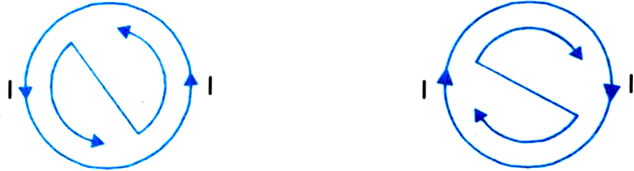
Fig. Clock rule.
Posted by Ayush Katwal 5 years ago (10292039)
- 0 answers
Posted by Rishav Kumar 5 years ago (10290861)
- 4 answers
Ayush Patel 5 years ago (10271629)
Yogita Ingle 5 years ago (2577571)
Stress, from a biological perspective, is defined as a reaction to change or a process of responding to any kind of perceived threat.
Usually, stress stimulates the release of hormones such as adrenaline, cortisol and noradrenaline, which in turn, induces several changes in the body that prepare it for fight or flight situations.
Posted by Clera Noronha 5 years ago (10217726)
- 2 answers
Abirami Kamalbabu 4 years, 11 months ago (10036453)
Yogita Ingle 5 years ago (2577571)
Acceleration of a body moving with a uniform velocity = 0
because acceleration = change in velocity/time
change in velocity= 0
SO, acceleration = 0
Posted by Mo Aahad Khan 5 years ago (9001696)
- 1 answers
Yogita Ingle 5 years ago (2577571)
The business class in India initially supported the Civil Disobedience Movement. This was because the industrialists and merchants in India had become rich during the First World War. They were keen on expanding their businesses and wanted protection against foreign industries. Many eminent industrialists such as Purshottamdas Thakurdas and G. D. Birla criticised the colonial government for its control over the Indian economy which prevented their growth. They provided financial assistance during the movement, and refused to buy and sell imported goods. Many industrialists began to see swaraj as a time when colonial restrictions on business will end. However, towards the end, they became apprehensive of the growing influence of socialism among the younger members of the Congress.
Posted by Shivanshu Gupta 5 years ago (10269136)
- 1 answers
Posted by Nandani Kanwar 5 years ago (10292118)
- 1 answers
Gaurav Seth 5 years ago (2898529)
The article 326 defines a universal adult franchise as the basis for elections to all levels of the elected government. The universal Adult Franchise refers that all citizens who are 18 years and above irrespective of their caste or education, religion, colour, race and economic conditions are free to vote. In a democracy, a universal adult franchise is important, as it is based on the idea of equality. It states that every adult in a country, irrespective of their wealth and the communities she/he belongs to, has one vote. The Indian Constitution has adopted universal adult franchise as a basis of elections to the Lok Sabha and the state legislative assemblies.
Posted by Vaibhav Saraswat Saraswat 4 years, 8 months ago (10291288)
- 1 answers
Sia ? 4 years, 8 months ago (6945213)
Posted by Shymna Cp 5 years ago (10187463)
- 1 answers
Yogita Ingle 5 years ago (2577571)
Connective tissues, as the name implies, support and connect different tissues and organs of the body. They are widely distributed in every part of the body. They originate from the mesoderm (the middle germinal layer of the embryo).
Connective tissues contain three types of fibres: collagen, elastic and reticular
Collagen fibres are the most widespread and made up of fibrous protein, collagen. Collagen fibres are flexible and have high tensile strength (comparable to steel).
Elastic fibres form a network and can be stretched like a rubber band. They are made up of protein elastin. They retain their original shape and size once the force is removed.
Reticulate fibres consist of collagen and glycoproteins. They are thin and form a delicate network. They join connective tissues to neighbouring tissues.
Posted by Air1 Aditya Kanu 5 years ago (10292040)
- 1 answers
Yogita Ingle 5 years ago (2577571)
Packaging of DNA helix
- Length of DNA is found to be far greater than dimension of a typical nucleus
Total number of base pairs in a typical mammalian cell= 6.6 * 109
Distance between two base pairs= 0.34nm
Therefore, Length of DNA= 0.34 *10-9 *6.6 *109 = 2.2m
Size of a nucleus is of the order of 10-6m
So, Length of DNA is greater than the size of nucleus (It is as if the house is smaller than the person who wants to stay in).
Posted by Laksh Sharma 5 years ago (10211214)
- 1 answers
Yogita Ingle 5 years ago (2577571)
The gram-positive bacteria retain the crystal violet colour and stains purple whereas the gram-negative bacteria lose crystal violet and stain red. Thus, the two types of bacteria are distinguished by gram staining.
Posted by Shreekunj Prasad 5 years ago (9041626)
- 2 answers
Posted by Lovely Kumari 5 years ago (10250175)
- 2 answers
Hritik Raj 5 years ago (8340244)
Yogita Ingle 5 years ago (2577571)
x – 2y = 0
3x + 4y - 20 = 0
1/3 ≠ −2/4
As, a1/a2 ≠ b1/b2 is one condition for consistency. Therefore, the pair of equations is consistent.
Posted by Pushpendra Sharma 5 years ago (8942795)
- 5 answers
Posted by Shreekunj Prasad 5 years ago (9041626)
- 2 answers
Posted by Lovely Kumari 5 years ago (10250175)
- 0 answers
myCBSEguide
Trusted by 1 Crore+ Students

Test Generator
Create papers online. It's FREE.

CUET Mock Tests
75,000+ questions to practice only on myCBSEguide app

Vikash Sharma 4 years, 5 months ago (11341292)
0 Thank You