Elections – NCERT Solutions Class 9 Social Science (New) Understanding Society includes all the questions with solutions given in the NCERT Class 9 Social Science Book Understanding Society textbook.
NCERT Solutions Class 9
English Kaveri Hindi Ganga Sanskrit Sharada Maths Ganita Manjari Science Exploration Social Understanding SocietyElections – NCERT Solutions
Q.1: Why are elections essential to a democratic system?
Solution: Elections are essential to a democratic system because they allow citizens to choose their representatives and participate in government. They ensure that leaders are accountable to the people and can be replaced if they fail to perform. Free and fair elections protect citizens’ rights, promote equality, and help maintain a government that reflects the people’s will.
Q.2: How do electoral systems and rules shape political representation and fairness?
Solution: Electoral systems and rules determine how votes are converted into seats and how representatives are elected. A fair electoral system gives all eligible citizens an equal chance to vote and ensures that election results reflect the people’s choices. Clear rules, free and fair elections, and equal opportunities for candidates strengthen political representation and democracy.
Q.3: What role do institutions and laws play in ensuring free and fair elections?
Solution: Institutions and laws ensure that elections are conducted fairly, transparently, and peacefully. They protect citizens’ voting rights, prevent unfair practices, and ensure that all candidates follow the same rules. Independent election authorities supervise the election process, making sure that results reflect the people’s choice and strengthen trust in democracy.
Q.4: What challenges do elections face in practice, and how can these challenges affect democracy?
Solution: Elections are an important part of democracy, but they face several challenges in practice. These include the use of money and muscle power, unfair practices, misuse of government resources, fake voting, low voter participation, and the spread of false information. Such problems can influence voters, reduce the fairness of elections, and weaken people’s trust in the democratic system. When elections are not free and fair, the true choice of citizens may not be represented. To overcome these challenges, countries need strong election laws, an independent Election Commission, transparent voting procedures, and awareness among citizens. Strict action against electoral malpractices and responsible participation by voters can help ensure that elections remain fair, peaceful, and truly reflect the will of the people.
Q.5: What reforms have been introduced by the ECI to make voting more inclusive for the following groups?
- People with Disabilities
- Service Voters
- Senior Citizens- 60 years and above; and 80 years and above
- Prisoners
- Persons in preventive detention
Solution: The Election Commission of India (ECI) has introduced several measures to make voting more accessible for various groups:
- People with Disabilities (PwDs): The ECI has made polling stations accessible by providing ramps, wheelchairs, and Braille-enabled Electronic Voting Machines (EVMs). The Saksham App assists PwDs with voter registration and locating polling stations. Voting from home is also available for PwDs with a benchmark disability of 40%40% or more.
- Service Voters: The ECI developed the Electronically Transmitted Postal Ballot System (ETPBS), which enables service voters (such as armed forces and government personnel posted outside their constituency) to receive and submit their postal ballots electronically from any location.
- Senior Citizens: For those above 8585 years and PwDs, the ECI has introduced voting from home. This facility was rolled out nationwide during the 2024 General Elections. Senior citizens above 60 years are also given priority at polling stations.
- Prisoners: Prisoners are not permitted to vote in India, except for those held under preventive detention.
- Persons in Preventive Detention: These individuals are allowed to vote via postal ballots, preserving their right to participate in elections.
These changes aim to make voting more accessible, equitable, and inclusive for all eligible citizens.
Q.6: What are the various functions of the Election Commission of India? Which of these functions is most important for the conduct of free and fair elections? Explain.
Solution: The Election Commission of India (ECI) has several important functions:
- Preparing and updating electoral rolls: The ECI ensures that all eligible citizens are included and ineligible names are removed from the voter list.
- Deciding the election schedule: The ECI sets the dates and timings for elections, considering factors like weather, festivals, and exams.
- Registering political parties and allocating symbols: Only registered parties can contest elections, and the ECI assigns them unique symbols.
- Supervising the nomination of candidates: The ECI checks that candidates meet all legal requirements.
The most important function for free and fair elections is ensuring free and fair voting. This includes managing polling stations, preventing fraud, and making sure every eligible citizen can vote without fear or pressure. If this function is not performed properly, the entire election process loses its credibility and the foundation of democracy is weakened. Free and fair voting ensures that the true will of the people is reflected in the results.
Q.7: Elections are the soul of a democracy. Do you agree? Why or why not?
Solution: Yes, I agree that elections are the soul of a democracy. They give citizens the right to choose their representatives and participate in the governance of the country. Elections ensure that governments remain accountable to the people and can be peacefully replaced if they fail to perform well. They promote equality, protect democratic rights, and ensure that the government reflects the will of the people. Thus, free and fair elections are essential for the successful functioning of democracy.
Q.8: Explain at least three differences between the national and state/regional political parties.
Solution: National parties and State (Regional) parties differ in the following ways:
| National Political Parties | State/Regional Political Parties |
|---|---|
| They work across the country and have a national presence. | They mainly work within one or a few states. |
| They raise issues of national importance. | They focus on the needs and interests of a particular state or region. |
| They contest elections in many states and aim to form the Central Government. | They mainly contest state elections and may form the State Government or support coalition governments at the Centre. |
These differences show that national parties represent the interests of the whole country, while state or regional parties focus on regional issues and aspirations.
Q.9: Why should you vote? Arrange the following in the descending order of your choice. Discuss the reasons for your choice.
- Opportunity to choose my representative
- Makes me a responsible person
- Opportunity to change the non-performing representative
- Strengthens democracy
Solution: Descending order of choice:
- Strengthens democracy
- Opportunity to choose my representative
- Opportunity to change the non-performing representative
- Makes me a responsible person
Voting is important because it strengthens democracy by giving people the power to decide who governs them. It allows citizens to choose honest and capable representatives who can work for public welfare. Elections also provide an opportunity to replace leaders who fail to perform or meet public expectations. Finally, voting encourages responsible citizenship by making people actively participate in the democratic process. Thus, every vote helps build an accountable, representative, and effective government.
Q.10: What is the Special Intensive Revision (SIR) initiative of the ECI? Explain the objectives and the necessity of conducting SIR.
Solution: The Special Intensive Revision (SIR) is an exercise conducted by the Election Commission of India (ECI) to prepare and update electoral rolls accurately. During this process, election officials verify voter details through field visits and other checks. The main objectives of SIR are to include all eligible citizens, remove the names of deceased, shifted, duplicate, or otherwise ineligible voters, and correct errors in the electoral roll. SIR is necessary because voter lists change over time due to migration, deaths, new voters attaining 18 years of age, and changes in personal details. A correct and updated electoral roll ensures that every eligible citizen can vote while preventing ineligible voting. This helps conduct free, fair, transparent, and credible elections, strengthens public confidence in the electoral process, and promotes a healthy democracy.
Q.11: Match the political party name with its symbol.
| Political Party Name | Correct Symbol |
| (a) Aam Aadmi Party (AAP) | (i) 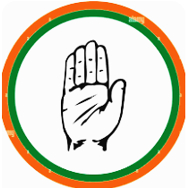 |
| (b) Bharatiya Janata Party (BJP) | (ii)  |
| (c) Bahujan Samaj Party (BSP) | (iii)  |
| (d) Communist Party of India (Marxist) [CPI(M)] | (iv) 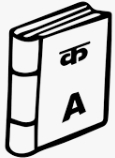 |
| (e) Indian National Congress (INC) | (v) 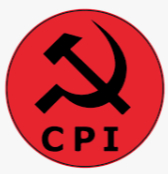 |
| (f) National People’s Party (NPP) | (vi) 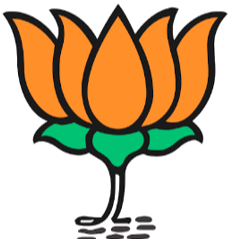 |
Solution:
(a) – (iii), (b) – (vi), (c) – (ii), (d) – (v), (e) – (i), (f) – (iv)
Q.12: Read the case study below and answer the following questions.
Ishani and her mother were in the local market, day before the state assembly elections. She noticed wall writing and campaign posters pasted everywhere. Large groups of campaigners were distributing pamphlets and raising slogans in support of the respective candidates. Ishani has turned 18 and will be voting for the first time. She had registered to vote through the ECI’s online portal. The next morning, she, along with her mother and her disabled elder brother, went to the polling station, which was well guarded by the police personnel. A wheelchair was made available to them, and volunteers guided them to the polling booth. Inside the polling booth, there were only three people who were performing all duties. Ishani had forgotten her voter ID card and Aadhaar card, but she was surprised as no one asked for them. After casting her vote, she was also able to see the VVPAT slip. While leaving, she wondered how the police personnel vote, as they must be on duty from early morning till late evening. When she went home, she narrated her entire experience to her 89-year-old grandmother, who cast her vote from home.
- What initiatives were taken by the ECI to enable the voters to cast their vote?
- If Ishani was allowed to vote even without carrying her Voter ID card or Aadhaar card, which other document might she be carrying that is valid for voting?
- Cite the examples of violations of the Model Code of Conduct.
- Give a suitable title to the passage.
- Find out how the police and army personnel cast their votes.
Solution:
- The ECI enabled voting through online voter registration, wheelchair facilities, volunteers for persons with disabilities, secure polling stations, VVPAT, and home voting for eligible senior citizens.
- Ishani could have carried another approved identity document, such as a passport, driving licence, PAN card, or MGNREGA job card.
- Wall writing, campaign posters in public places, and loud slogan shouting during the restricted campaign period are examples of Model Code of Conduct violations.
- Suitable title: A First-Time Voter’s Election Experience
- Police personnel on election duty and army personnel, known as service voters, usually vote through postal ballots or the Electronically Transmitted Postal Ballot System (ETPBS).
Q.13: A comparative chart of three countries is given below. Based on the information given in the chart, answer the questions.
| Country A | Country B | Country C | |
| Political Dimension | Written constitution, periodic elections, voting rights, party system varies from two-party to multi-party. | Written constitution, periodic elections, voting rights, one political party. | Written constitution, monarchy, no voting rights, no political party. |
| Economic Dimension | Average standard of living. | Above-average standard of living. | High standard of living. |
- What is the difference between having a voting right in a country with a multi-party system and another with a single-party system?
- In which of the above countries would you like to stay and why?
Solution:
- In a multi-party system, citizens have the freedom to choose from different political parties and candidates. They can compare policies and elect the representative they prefer. In a single-party system, voters may have only one political option, which limits their choice and political competition.
- I would prefer to stay in Country A because it has written constitutional rights, periodic elections, voting rights, and a multi-party system. These features allow citizens to participate in government, choose their leaders, and hold them accountable. Although Country C has a high standard of living, the absence of voting rights and political parties reduces people’s participation in decision-making. Country A provides a better balance between democracy and citizens’ freedom.
Q.14: What are the challenges to conducting free and fair elections?
Solution: The main challenges to free and fair elections include misinformation, intimidation, misuse of money power, unfair campaigning, and accessibility issues. Fake news can mislead voters, while threats and unfair practices can affect free choice. Problems in voting access or counting can reduce public trust. To address these challenges, the ECI uses measures like the Model Code of Conduct, EVMs, VVPAT, voter awareness programmes, security arrangements, and accessible voting facilities.
Q.15: On the Stage.
Elections are to be held in your school for the posts of Head Girl, Head Boy, and Sports Captain. Assume the roles of an Election Commissioner, Returning Officer, Polling Agent, Candidate, Campaigner, Polling Officer, Police Personnel, and a Journalist, and perform their roles while ensuring free, fair, and transparent elections.
Solution: For this activity, a model school election can be conducted in the following way:
The Election Commissioner will announce the election schedule and rules. The Returning Officer will accept nominations of candidates and prepare the final list of candidates. The candidates will present their ideas and promises for the school. The campaigners will campaign peacefully without false promises or personal attacks.
On election day, the Polling Officer will check the names of students in the voter list and allow them to vote secretly. The Polling Agent will observe the process and ensure that no unfair practice takes place. Police personnel will maintain discipline near the polling area. The journalist will report the election process honestly.
After voting, the votes will be counted fairly, and the results will be declared. This activity teaches students the importance of voting, secrecy of ballot, fair campaigning, discipline, transparency, and democratic participation.
Q.16: Try and make videos or audios on topics like: My Vote My Nation; No Voter to be Left Behind; How to Eliminate the Ill of Money Power, etc.
Solution: Title: My Vote, My Nation
A video or audio message can spread awareness about the importance of voting in a democracy. The theme “My Vote, My Nation” highlights that every vote helps choose responsible leaders and strengthens democracy. “No Voter to be Left Behind” focuses on encouraging all eligible citizens, including senior citizens and persons with disabilities, to participate in elections. The topic “How to Eliminate the Ill of Money Power” explains the need to prevent bribery and unfair influence during elections. Such awareness programmes motivate citizens to vote honestly, understand their rights, and support free and fair elections.
Q.17: Select one national or state political party. Using authentic and reliable sources such as the Election Commission of India (ECI) website, the official website of the selected political party, and newspapers. Prepare a comparative chart of the last two State Legislative Assembly elections. The chart should include the following details for the chosen party:
- Some promises made in the Election manifesto
- Percentage of votes polled
- Number of seats won
- Number of women who contested
- Number of women candidates elected
Present the data for both elections in a clear and comparative format, citing all sources used.
Solution: For this activity, I have selected Bharatiya Janata Party – Gujarat Legislative Assembly Elections 2017 and 2022.
| Details | Gujarat Assembly Election 2017 | Gujarat Assembly Election 2022 |
| Selected party | Bharatiya Janata Party | Bharatiya Janata Party |
| Some manifesto promises | Improving farm income, support for farmers, toilets in rural households, women empowerment, education and employment-related promises | Free education for girls from KG to PG, development, welfare, education, infrastructure and governance-related promises |
| Percentage of votes polled | 49.05% | 52.50% |
| Number of seats won | 99 seats | 156 seats |
| Number of women who contested | 12 women candidates | 17 women candidates |
| Number of women candidates elected | 9 women candidates | 14 women candidates |
The 2017 result data shows that BJP won 99 seats with 49.05%49.05% vote share, while the 2022 result data shows that BJP won 156 seats with 52.5052.50% vote share. The women-candidate data shows that in 2017 BJP fielded 12 women candidates, out of whom 9 won; in 2022 BJP fielded 17 women candidates, out of whom 14 won.
Conclusion: The BJP performed better in the 2022 Gujarat Assembly election than in 2017 because its vote share and seats both increased. The number of women candidates elected from the party also increased.
Q.18: Do you think ‘One Nation, One Election’ can improve the efficiency of the electoral process? Divide the class and discuss into two groups-one to examine its potential advantages and the other to analyse its limitations.
Solution: One Nation, One Election means holding Lok Sabha and State Assembly elections together. It may improve the efficiency of the electoral process by reducing election expenses, saving time, and allowing governments to focus more on development work. It can also reduce frequent enforcement of the Model Code of Conduct. However, it has some limitations. Organising simultaneous elections requires large resources and security arrangements. It may also affect regional issues because national matters could dominate state elections. Changes in government before completing the term can create difficulties. Therefore, while it has potential benefits, careful planning and constitutional changes are needed before implementation.
Class 9 Social Science (New book) NCERT Solutions
- Understanding Social Science
- Shaping of the Earth’s Surface
- Atmosphere and Climate
- Early Humans and Beginning of Civilisation
- State and Society up to 1000 CE
- Democracy
- Elections
- Building Blocks in Economics: The Problem of Choice
- The Price Puzzle: What Drives the Market Edit

Test Generator
Create question paper PDF and online tests with your own name & logo in minutes.
Create Now
Learn8 App
Practice unlimited questions for Entrance tests & government job exams at ₹99 only
Install Now