NCERT Solutions class 12 Chemistry Coordination Compounds part 1 Class 12 Chemistry book solutions are available in PDF format for free download. These ncert book chapter wise questions and answers are very helpful for CBSE board exam. CBSE recommends NCERT books and most of the questions in CBSE exam are asked from NCERT text books. Class 12 Chemistry chapter wise NCERT solution for Chemistry part 1 and Chemistry part 2 for all the chapters can be downloaded from our website and myCBSEguide mobile app for free.
Download NCERT solutions for Coordination Compounds part 1 as PDF.
NCERT Class 12 Chemistry Chapter-wise Solutions
- 1 – The Solid State
- 2 – Solutions
- 3 – Electrochemistry
- 4 – Chemical Kinetics
- 5 – Surface Chemistry
- 6 – General Principles and Processes of Isolation of Elements
- 7 – The p-Block Elements
- 8 – The d-and f-Blocks Elements
- 9 – Coordination Compounds
- 10 – Haloalkanes and Haloarenes
- 11 – Alcohols, Phenols and Ethers
- 12 – Aldehydes, Ketones and Carboxylic Acids
- 13 – Amines
- 14 – Biomolecules
- 15 – Polymers
- 16 – Chemistry in Everyday Life
CHAPTER NINE COORDINATION COMPOUNDS
- 9.1 Werner’s Theory of Coordination Compounds
- 9.2 Definition of Some Important Terms Pertaining to Coordination Compounds
- 9.3 Nomenclature of Coordination Compounds
- 9.4 Isomerism in Coordination Compounds
- 9.5 Bonding in Coordination Compounds
- 9.6 Bonding in Metal Carbonyls
- 9.7 Stability of Coordination Compounds
- 9.8 Importance and Applications of Coordination Compounds
NCERT Solutions class 12 Chemistry Coordination Compounds part 1
1. Explain the bonding in coordination compounds in terms of Werner’s postulates.
2.  solution mixed with
  solution in 1:1 molar ratio gives the test of
  ion but
  solution mixed with aqueous ammonia in 1:4 molar ratio does not give the test of
  ion. Explain why?
3. Explain with two examples each of the following: coordination entity, ligand, coordination number, coordination polyhedron, homoleptic and heteroleptic.
4. What is meant by unidentate, didentate and ambidentate ligands? Give two examples for each.
5. Specify the oxidation numbers of the metals in the following coordination entities:
(i) 
(ii) 
(iii) 
(iv) 
(v) 
6. Using IUPAC norms write the formulas for the following:
(i) Tetrahydroxozincate(II)
(ii) Potassium tetrachloridopalladate(II)
(iii) Diamminedichloridoplatinum(II)
(iv) Potassium tetracyanonickelate(II)
(v) Pentaamminenitrito-O-cobalt(III)
(vi) Hexaamminecobalt(III) sulphate
(vii) Potassium tri(oxalato)chromate(III)
(viii) Hexaammineplatinum(IV)
(ix) Tetrabromidocuprate(II)
(x) Pentaamminenitrito-N-cobalt(III)
7. Using IUPAC norms write the systematic names of the following:
(i) 
(ii) 
(iii) 
(iv) 
(v) 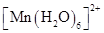
(vi) 
(vii) 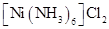
(viii) 
(ix) 
8. List various types of isomerism possible for coordination compounds, giving an example of each.
9. How many geometrical isomers are possible in the following coordination entities?
(i) 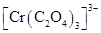
(ii) 
10. Draw the structures of optical isomers of:
(i)
(ii) 
(iii) 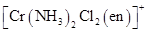
11. Draw all the isomers (geometrical and optical) of:
(i) 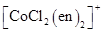
(ii) 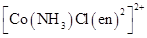
(iii) 
12. Write all the geometrical isomers of  and how many of these will exhibit optical isomers?
13. Aqueous copper sulphate solution (blue in colour) gives:
(i) a green precipitate with aqueous potassium fluoride, and
(ii) a bright green solution with aqueous potassium chloride
Explain these experimental results.
14. What is the coordination entity formed when excess of aqueous KCN is added to an aqueous solution of copper sulphate? Why is it that no precipitate of copper sulphide is obtained when  is passed through this solution?
15. Discuss the nature of bonding in the following coordination entities on the basis of valence bond theory:
(i) 
(ii) 
(iii) 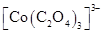
(iv) 
16. Draw figure to show the splitting of d orbitals in an octahedral crystal field.
NCERT Solutions class 12 Chemistry
NCERT Solutions Class 12 Chemistry PDF (Download) Free from myCBSEguide app and myCBSEguide website. Ncert solution class 12 Chemistry includes text book solutions from both part 1 and part 2. NCERT Solutions for CBSE Class 12 Chemistry have total 16 chapters. 12 Chemistry NCERT Solutions in PDF for free Download on our website. Ncert Chemistry class 12 solutions PDF and Chemistry ncert class 12 PDF solutions with latest modifications and as per the latest CBSE syllabus are only available in myCBSEguide
CBSE app for Students
To download NCERT Solutions for class 12 Chemistry, Physics, Biology, History, Political Science, Economics, Geography, Computer Science, Home Science, Accountancy, Business Studies and Home Science; do check myCBSEguide app or website. myCBSEguide provides sample papers with solution, test papers for chapter-wise practice, NCERT solutions, NCERT Exemplar solutions, quick revision notes for ready reference, CBSE guess papers and CBSE important question papers. Sample Paper all are made available through the best app for CBSE students and myCBSEguide website.
NCERT Solutions for Class 12 Chemistry
Class 12 Chemistry NCERT book Solutions covers both organic and inorganic chemistry. Please note that CBSE has reduced the syllabus for class 12 Chemistry. So, you must check the latest syllabus of CBSE while going through the NCERT solution of any chapter given in the class 12 NCERT book.
- The Solid State part-1
- The Solid State part-2
- Solutions In-text question
- Solutions Part 1
- Solutions Part 2
- Solutions In-text question
- Electrochemistry In-text question
- Electrochemistry part 1
- Electrochemistry part 2
- Chemical kinetics In-text question
- Chemical kinetics part 1
- Chemical kinetics part 2
- Surface Chemistry In-text Questions
- Surface Chemistry part 1
- Surface Chemistry part 2
- General principle and processes of isolation of elements In-text Questions
- General principle and processes of isolation of elements part-1
- General principle and processes of isolation of elements part-2
- The p block elements part 1
- The p block elements part 2
- The p block elements In-text Questions
- The d and f block elements In-text Questions
- The d and f block elements part 1
- The d and f block elements part 2
- Coordination Compounds In-text Questions
- Coordination Compounds part 1
- Coordination Compounds part 2
- Haloalkanes and haloarenes In-text Questions
- Haloalkanes and haloarenes part 1
- Haloalkanes and haloarenes part 2
- Alcohol phenol and ether In-text Questions
- Alcohol phenol and ether part 1
- Alcohol phenol and ether part 2
- Aldehydes ketones and carboxylic acid In-text Questions
- Aldehydes ketones and carboxylic acid part 1
- Aldehydes ketones and carboxylic acid part 2
- Amines In-text Questions
- Amines part 1
- Amines part 2
- Biomolecules In-text Questions
- Biomolecules part 1
- Biomolecules part 2
- Polymers In-text Questions
- Polymers part 1
- Polymers part 2
- Chemistry in everyday life In-text Questions
- Chemistry in everyday life part 1
- Chemistry in everyday life part 2

Test Generator
Create question paper PDF and online tests with your own name & logo in minutes.
Create Now
Learn8 App
Practice unlimited questions for Entrance tests & government job exams at ₹99 only
Install Now