
Ask questions, doubts, problems and we will help you..
Ask questions which are clear, concise and easy to understand.
Ask QuestionPosted by Sahil Creator 5 years, 1 month ago (10064487)
- 3 answers
Kumari Shalini 5 years, 1 month ago (9968457)
Kumari Shalini 5 years, 1 month ago (9968457)
Kumari Shalini 5 years, 1 month ago (9968457)
Posted by Rl Rahul Kumar 5 years, 1 month ago (10064238)
- 1 answers
Yogita Ingle 5 years, 1 month ago (2577571)
"Word size" refers to the number of bits processed by a computer's CPU in one go (these days, typically 32 bits or 64 bits). Data bus size, instruction size, address size are usually multiples of the word size. ... In computing, a word is the natural unit of data used by a particular processor design.
Posted by Account Deleted 5 years, 1 month ago (9327450)
- 1 answers
Yogita Ingle 5 years, 1 month ago (2577571)
In the figure, two coils are not electrically connected to each other because they are wound on a non conducting rod. Say Coil-1 is connected across a battery through a key. This coil is called primary coil. Coil-2 is connected across a galvanometer. This coil is called secondary coil.
When the key is pressed it is observed that, the galvanometer shows a small momentary deflection and then returns to zero. When the key is released, the galvanometer again shows a small momentary deflection, but in opposite direction and then returns to zero. As the coil is connected to a non-conducting rod the self induced electromotive force or voltage is very less and thus the current that flows in one direction slowly diminishes and returns to zero. Similarly when the key is released the current flows in the opposite direction and slowly diminishes.
Thus, the rate of change of electromotive force (e.m.f.) in coil-1, decides the magnitude of deflection of galvanometer. The magnetic flux of primary coil is linked through the rod to the secondary coil. Thus, the induced e.m.f. or current is produced in a coil when varying current flows through a neighboring coil.
Posted by Dilraj Kâlêsh 5 years, 1 month ago (9218186)
- 1 answers
Yogita Ingle 5 years, 1 month ago (2577571)
Non-Cooperation became a movement:
(i) It was the view of Gandhiji that the British rule was set in India with the cooperation of Indians.
(ii) If Indians refused cooperation, British rule in India would collapse within a year and Swaraj would come.
(iii) Gandhiji proposed that the movement should unfold in stages.
(iv) In case the government used repression, a full civil disobedience campaign would be launched.
(v) Mahatma Gandhi and Shaukat Ali toured extensively, mobilising popular support of the movement.
Posted by Owais Rasheed 5 years, 1 month ago (10071408)
- 1 answers

Posted by Dilraj Kâlêsh 5 years, 1 month ago (9218186)
- 2 answers
Yogita Ingle 5 years, 1 month ago (2577571)
1. The growth of modern nationalism was connected to the anti-colonial movement. The sense of being controlled under colonialism provided a shared bond.
2. Political unification of the country under the British also played a very important role in awakening the spirit of nationalism.
3. Introduction of the modern means of transportation especially the railways created a sense of equality among the people.
4. Formation of the Indian National Congress and other political organizations also provided the people a common platform.
5. The Congress under the leadership of Mahatma Gandhi tried to unite these groups together within one movement.
Posted by Dilraj Kâlêsh 5 years, 1 month ago (9218186)
- 1 answers
Yogita Ingle 5 years, 1 month ago (2577571)
Development is a process that creates growth, progress, positive change or the addition of physical, economic, environmental, social and demographic components. The purpose of development is a rise in the level and quality of life of the population, and the creation or expansion of local regional income and employment opportunities, without damaging the resources of the environment. Development is visible and useful, not necessarily immediately, and includes an aspect of quality change and the creation of conditions for a continuation of that change.
The international agenda began to focus on development beginning in the second half of the twentieth century. An understanding developed that economic growth did not necessarily lead to a rise in the level and quality of life for populations all over the world; there was a need to place an emphasis on specific policies that would channel resources and enable social and economic mobility for various layers of the population.
Through the years, professionals and various researchers developed a number of definitions and emphases for the term “development.” Amartya Sen, for example, developed the “capability approach,” which defined development as a tool enabling people to reach the highest level of their ability, through granting freedom of action, i.e., freedom of economic, social and family actions, etc. This approach became a basis for the measurement of development by the HDI (Human Development Index), which was developed by the UN Development Program (UNDP) in 1990. Martha Nussbaum developed the abilities approach in the field of gender and emphasized the empowerment of women as a development tool.
In contrast, professionals like Jeffrey Sachs and Paul Collier focused on mechanisms that prevent or oppress development in various countries, and cause them to linger in abject poverty for dozens of years. These are the various poverty traps, including civil wars, natural resources and poverty itself. The identification of these traps enables relating to political – economic – social conditions in a country in an attempt to advance development. One of the emphases in the work of Jeffrey Sacks is the promotion of sustainable development, which believes in growth and development in order to raise the standard of living for citizens of the world today, through relating to the needs of environmental resources and the coming generations of the citizens of the world.
Posted by Pavithran Pavi 5 years, 1 month ago (10060612)
- 1 answers
Posted by Kajal Kumari 5 years, 1 month ago (9285121)
- 1 answers
Gaurav Seth 5 years ago (2898529)
Don't post personal information, mobile numbers and other details.
Don't use this platform for chatting, social networking and making friends. This platform is meant only for asking subject specific and study related questions.
Be nice and polite and avoid rude and abusive language. Avoid inappropriate language and attention, vulgar terms and anything sexually suggestive. Avoid harassment and bullying.
Ask specific question which are clear and concise.
If content is found in violation, the user posting this content will be banned for 30 days from using Homework help section. Suspended users will receive error while adding question or answer. Question comments have also been disabled. Read community guidelines at https://mycbseguide.com/community-guidelines.html
Posted by Bob Vans 5 years, 1 month ago (10071189)
- 1 answers
Yes Yadav Babu 5 years, 1 month ago (9897226)
Posted by Aadya Singh 5 years, 1 month ago (9723261)
- 1 answers
Dεερακ Ȿιηɠꜧ 5 years, 1 month ago (10057315)
$$\hat{H}$$= hamiltonian operator
$$\Psi$$ = wave function
E = energy
Conservation of Energy
Schrodinger equation is written as HΨ = EΨ, where h is said to be a Hamiltonian operator.
Posted by L J Maru 5 years, 1 month ago (9823351)
- 2 answers
Yogita Ingle 5 years, 1 month ago (2577571)
Ordinal measurement of utility refers to the measurement (or expression) of utility in terms ranks like high or low (more or less). Ordinality means that utility can be ranked based on consumer preferences.
Ordinal utility theory states that utility cannot be measured, it can only be ranked or ordered according to the preference of the consumer. Ordinality means that utility can be ranked.
Posted by Sweta Yadav 5 years, 1 month ago (3084809)
- 1 answers
Punit Yadav 5 years, 1 month ago (10071642)
Posted by Aadya Singh 5 years, 1 month ago (9723261)
- 4 answers
Dεερακ Ȿιηɠꜧ 5 years, 1 month ago (10057315)
Posted by Rani Kumari 5 years, 1 month ago (9848041)
- 1 answers
Hariom Dalal 5 years, 1 month ago (6283317)
Posted by Ajeet Pratap 5 years, 1 month ago (5678597)
- 0 answers
Posted by Nafisa Jalali 5 years, 1 month ago (8703827)
- 1 answers
Mohd Muaz Malik 5 years, 1 month ago (10067119)
Posted by Arshiya Tabassum 5 years, 1 month ago (6682658)
- 0 answers
Posted by Suha Anmol 5 years, 1 month ago (8951832)
- 1 answers
Gaurav Seth 5 years ago (2898529)
Rhyming scheme:
1. DUST OF SNOW- abab
2. FIRE AND ICE- ababaabcbcb
3. A TIGER IN THE ZOO- abcb
4. HOW TO TELL WILD ANIMALS- ababcc
5. THE BALL POEM- no definite scheme, free verse
6. AMANDA- aaba
7. ANIMALS- no scheme, free verse
8. THE TREES- aa bb cc dd ee aa
9. FOG- no scheme, free verse
10.THE TAIL OF THE CUSTARD OF THE DRAGON- aabb
11. FOR ANNE GREGORY- abcbdb.
Posted by Reeva Jani 5 years, 1 month ago (9418644)
- 1 answers
Yogita Ingle 5 years, 1 month ago (2577571)
a. It is a covalent bond in which both the cholrine atoms share their unpaired electron with two valence electrons of calcium.
b. ionic compound splits into positive and negative ions in a molten or aquoes state s. This develop a potential difference between ions through which current can easily flow but in solid state they ate present in form of neutral compound not a charged specie.
Posted by Bhupender Kholi 5 years, 1 month ago (4322141)
- 2 answers
Muskan Maan 4 years, 11 months ago (9974792)
Harsh Sharma 5 years ago (9506393)
Posted by Parnali Paul 5 years, 1 month ago (8855599)
- 1 answers
Posted by Bhavna Yadav 5 years, 1 month ago (9816578)
- 1 answers
Kap Sharma 5 years, 1 month ago (4692530)
Posted by Kumari Shalini 5 years, 1 month ago (9968457)
- 1 answers
Yogita Ingle 5 years, 1 month ago (2577571)
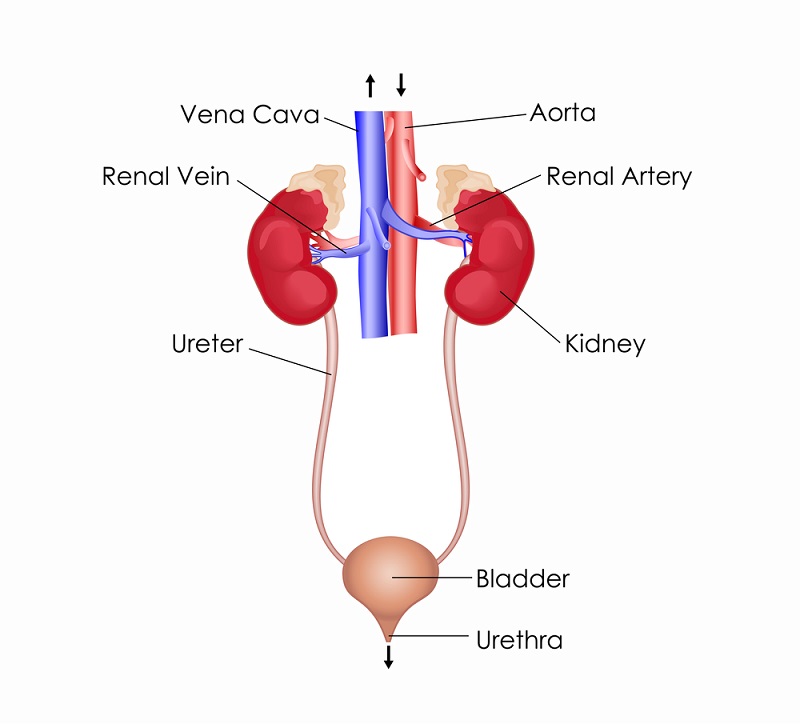
The wastes that are produced in human body are removed by the process of excretion. Human body consists of a number of excretory organs such as liver, skin, kidneys etc. But there is a specialized system in humans that helps to purifies blood. That is called excretory system. It consists of Kidneys, ureters, urethra, urinary bladder .
Kidneys are placed in lower abdomen and bean like shaped. They filter the blood and removes toxins from the blood. It also reabsorbs the essential ions and substances from the filtrate. The final toxins are collected and removed from the body in the from of urine.
The urine is 95% of water in composition and rest it contains urea and other wastes.
Posted by Kumari Shalini 5 years, 1 month ago (9968457)
- 2 answers
Akshita ???? 5 years, 1 month ago (6983559)
Yogita Ingle 5 years, 1 month ago (2577571)
Soil is the natural and richest source of raw material for plants.
Raw materials like nitrogen, phosphorous and other minerals are absorbed by plants from soil by roots.
Plants absorb water and minerals from soil by roots and transport to the leaves.
As the distance between roots and leaves is large, diffusion is not sufficient to provide raw materials to leaves and energy to roots.
Plants use slow transport system but large as required in tall plants to transport energy from leaves and raw materials form roots.
A group of special cells forming vascular tissue transport water and nutrients to all the cells of the plants.
Two types of vascular tissues are xylem and phloem.
Xylem transports water and minerals obtained from the soil.
Phloem transports products of photosynthesis from the leaves to other parts of the plant.

Vessels, tracheids of the roots, stems and leaves are connected to form a continuous system in xylem cells to transport water to all the parts of the plants.
Cells in the roots which are in contact with the soil take up ions which creates a difference of concentration between the roots and the soil and therefore water moves to the roots to eliminate the difference.
Water is moved into xylem of roots and from where it is pushed upward.
Posted by Pankajini Hans 5 years, 1 month ago (10059217)
- 5 answers
?☺️?☺️?Neha W(°O°)W Bharati 5 years ago (5698478)
Pankajini Hans 5 years, 1 month ago (10059217)
Yogita Ingle 5 years, 1 month ago (2577571)
A balanced diet is the diet that focuses on providing all the nutrients that the body needs along with roughage and water. It comprises of macronutrients like protein, carbohydrates and fat along with micronutrients like vitamins and minerals. All these nutrients can be found in a variety of food items.
Posted by Tehsin Ansari 5 years, 1 month ago (7212326)
- 1 answers
Yogita Ingle 5 years, 1 month ago (2577571)
अबुल फजल का पुरा नाम अबुल फजल इब्न मुबारक था। इसका संबंध अरब के हिजाजी परिवार से था। इसका जन्म 14 जनवरी 1551 में हुआ था। इसके पिता का नाम शेक मुबारक था। अबुल फजल ने अकबरनामा एवं आइने अकबरी जैसे प्रसिद्ध पुस्तक की रचना की। प्रारंभिक जीवन – अबुल फजल का पुरा परिवार देशांतरवास कर पहले ही सिंध आ चुका था। फिर हिन्दुस्तान के राजस्थान में अजमेर के पास नागौर में हमेशा के लिए बस गया। इसका जन्म आगरा में हुआ था। अबुल फजल बचपन से ही काफी प्रतिभाशाली बालक था। उसके पिता शेख मुबारक ने उसकी शिक्षा की अच्छी व्यवस्था की शीध्र ही वह एक गुढ़ और कुशल समीक्षक विद्वान की ख्याति अर्जित कर ली। 20 वर्ष की आयु में वह शिक्षक बन गया। 1573 ई. में उसका प्रवेश अकबर के दरबार में हुआ। वह असाधारण प्रतिभा, सतर्क निष्ठा और वफादारी के बल पर अकबर का चहेता बन गया। वह शीध्र अकबर का विश्वासी बन गया और शीध्र ही प्रधानमंत्री के ओहदे तक पहुँच गया। अबुल फजल इब्न का इतिहास लेखन – वह एक महान राजनेता, राजनायिक और सौन्य जनरल होने के साथ–साथ उसने अपनी पहचान एक लेखक के रूप ने भी वह भी इतिहास लेखक के रूप में बनाई। उसने इतिहास के परत-दर-परत को उजागर का लोगों के सामने लाने का प्रयास किया। खास कर उसका ख्याति तब और बढ़ जाती है जब उसने अकबरनामा और आईने अकबरी की रचना की। उसने भारतीय मुगलकालीन समाज और सभ्यता को इस पुस्तक के माध्यम से बड़े ही अच्छे तरीके से वर्णन किया है।
Posted by Vignesh Babu 5 years, 1 month ago (7238210)
- 2 answers
Lovely Sharma 5 years ago (10152307)
Muskan Maan 5 years, 1 month ago (9974792)

myCBSEguide
Trusted by 1 Crore+ Students

Test Generator
Create papers online. It's FREE.

CUET Mock Tests
75,000+ questions to practice only on myCBSEguide app

Yogita Ingle 5 years, 1 month ago (2577571)
(1) Starting in January 1921, the Non-Cooperation movement unfolded inthe following ways:
• Large scale participation by all class people
• Boycott of government controlled organizations
• People started refusing to participate in council elections
• Drastic reduction in importing of foreign clothes
• Rejection of imported dress materials
As a result, Indian textile mills emerged out of the shadows and saw an upward rise
(2) Middle class people mainly participated in non cooperation movement in towns.
(3) a. The middle class group boycotted the foreign goods which helps our local products.
b. The peasants took part with the aim of fulfilling their demand of reduction of the revenue.
c. Plantation workers joined the movement in the belief of getting the right to move inside the plantations for transportation.
d. The Tribal in Andhra Pradesh took part in the movement against the British because of the restrictions imposed by them over their culture and tradition.
1 Thank You