
Ask questions which are clear, concise and easy to understand.
Ask QuestionPosted by Robins Kumar 5 years, 4 months ago
- 1 answers
Posted by Jatin Op 5 years, 4 months ago
- 1 answers
Yogita Ingle 5 years, 4 months ago
Archimedes’ principle states that: “The upward buoyant force that is exerted on a body immersed in a fluid, whether partially or fully submerged, is equal to the weight of the fluid that the body displaces and acts in the upward direction at the center of mass of the displaced fluid”.
Posted by Anshu Kumari 5 years, 4 months ago
- 2 answers
Yogita Ingle 5 years, 4 months ago
MODEL PUBLIC SCHOOL
NOTICE
12TH DECEMBER, 2018
BOOK FAIR.
This is to inform all students that our school I organizing a book fair. In the fair, students can find all sorts of books such as adventurous, comics, study related and horror. All the students and parents are invited to attend the book fair. The date, time and venue of the book fair are as follows:
Date: 21st December 2018
Time: 10 to 2 PM.
Venue: a school playground.
For any further details please contact the undersigned.
Head boy/girl
XYZ
Posted by Francis Lalu 5 years, 4 months ago
- 4 answers
Posted by Francis Lalu 5 years, 4 months ago
- 1 answers
Knowledge Singh 5 years, 4 months ago
Posted by Francis Lalu 5 years, 4 months ago
- 3 answers
Shikha Gupta 5 years, 4 months ago
Yogita Ingle 5 years, 4 months ago
The Maxwell's Screw Rules
The Maxwell Screw Rules sometime is also called the Maxwell's Corkscrew Rule. Imagine a right handed screw being turn so that it bores its way in the direction of the current in the wire. The direction of rotation gives the direction of the magnetic field.
<a href="http://bp0.blogger.com/_PyvjcvYfRLk/SFnpDf4Eg3I/AAAAAAAAAEY/z4sb_G5DYkw/s1600-h/Maxwell-Screw-Rule.png" onblur="try {parent.deselectBloggerImageGracefully();} catch(e) {}">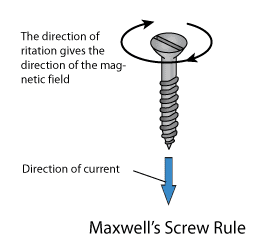 </a>
</a>
Knowledge Singh 5 years, 4 months ago
Posted by Karan Prasad 5 years, 4 months ago
- 5 answers
Posted by Akhya Sahay 5 years, 4 months ago
- 4 answers
Posted by Sachin Gupta 5 years, 4 months ago
- 0 answers
Posted by Sachin Gupta 5 years, 4 months ago
- 0 answers
Posted by @/<$#!T Just Own 5 years, 4 months ago
- 3 answers
Yogita Ingle 5 years, 4 months ago
- People should get a chance to choose their representatives without any fear.
- Elections are held periodically on the basis of universal franchise.
- Free and fair elections are conducted by an independent machinery.
- The elected representatives are accountable to the people.
- There is more than one political party which competes for power.
- Pressure and Interest groups play a prominent role in the system.
- People are guaranteed fundamental rights like right to life, liberty, equality and religion by the constitution.
- The constitution provides for an independent and impartial judiciary, which protects the rights of the people.
- There should be a strong Opposition which should act as a watchdog on government both inside and outside the Parliament.
- There should be an enlightened public opinion so that people can put pressure on government.
- The constitution provides for a written set of roles, which divides power between the Centre and the state.
- Freedom of the press should be allowed.
- Public order and decency should be maintained.
- The unity, integrity and sovereignty of the country should be maintained.
- People should be vigilant and participate actively in the process of governance.
The first thing towards thinking carefully about the outcomes of democracy is to recognise that democracy is just a form of government. Democracy can only create conditions for achieving something.
Posted by @/<$#!T Just Own 5 years, 4 months ago
- 1 answers
Yogita Ingle 5 years, 4 months ago
The government can be accountable by framing and developing various laws and policies in which citizens can hold the government responsible if any of those policies and laws are not implemented or are held against the welfare of the citizens.
Reasons for democracy being accountable, responsive and legitimate Government
- The government can be responsible when people start taking actions when the government becomes insensitive about their aspirations.
- People can hold protests, carry out campaigns and organise rallies and force the government to respond to them.
- A democratic government is a legitimate government, as it is elected by citizens and enjoys the confidence and trust of the citizens.
- People have the right to choose their rulers and they have control over their rulers. Citizens can participate in decision making.
- Democracy makes the point that decision making is based on norms and procedures. So, a citizen who wants to know if a decision was taken through the correct procedures can find out this information.
- Citizens can take part in decision making whenever necessary.
- A democratic government is the people’s own government and it is run by the people.
- People wish to be ruled by representatives elected by them.
Posted by Khushi Upadhyay 5 years, 4 months ago
- 3 answers
Posted by Sumit Kumar 5 years, 4 months ago
- 1 answers
Vaishu ? 5 years, 4 months ago
Posted by Ferdus Alom 5 years, 4 months ago
- 0 answers
Posted by Rabkirat Kaur 5 years, 4 months ago
- 1 answers
Gaurav Seth 5 years, 4 months ago
Analytical Paragraph writing - An analytical paragraph is a form of descriptive writing which is written on the basis of a given chart, graph, data, outline, clues, table, etc. When writing an analytical paragraph, one should remember to describe the facts in the best possible manner and to cover the information provided.
The analytical paragraph has to be written in around 100-120 words. So the paragraph must use clear and crisp language along with providing complete details of the chart given in the question. There will be an internal choice given.
You need to attempt one question out of the two questions of analytical paragraphs given as a choice. The question carries 5 marks.
1. The introduction
The introduction is the first paragraph that should describe in brief what the graph is about. It should be like an opening paragraph that introduces the reader to the context of the chart given. When writing the introductory paragraph, you need not go into the details. You just need to mention what is clearly evident from the chart or the graph given in the question. It is best to write the introduction in one or two lines.
2. The body of the paragraph
This part of the analytical paragraph should contain details of the graph/chart given in the question. It should contain all the important information. It is extremely important to choose the significant details that should be included in the paragraph.
The body can be broken into two or three sub-paragraphs depending on the information extracted from the graph. Breaking the body into subparagraphs makes it easy for the reader to understand.
i. Organizing information: You should look for the large differences that are very prominent. You can mention the aspect which is the smallest or the largest in the data given. Any aspects that are similar should be mentioned next. You should further mention about the aspect that has remained unchanged or constant throughout.
ii. Comparing information: If the chart mentions two different parties, for example, men and women, refer to both of them in the analytical paragraph. If there is any contrast or comparison that could be drawn, you must present it effectively. If the chart is about a particular time period or highlights trends of several years, mention each year in a concise manner. If any comparison or contrast can be done for two or more years, you should write about it too.
iii. Mentioning quantities: When including numbers and figures, their accuracy must be ensured. There are a number of ways that can be used to describe quantities, for example- percentage, fraction, ratios, etc.
iv. Connecting sentences: If different information or ideas are there, you should use connectors or linking phrases to link them logically. The sentences of the paragraph should be sequential and connected rationally.
3. The conclusion
The last paragraph should summarise the idea mentioned and the information in general. It should be concluding in nature and act as the closing statement. One should keep in mind that one must not include any personal opinions, conclusions, or observations. You should simply stick to the facts.
You need not dispose of the information to write a good analytical paragraph. The key is to choose wisely the important information, organize it well, state correct facts and summarise it properly.
Posted by Prashansa Rai 5 years, 4 months ago
- 2 answers
Yogita Ingle 5 years, 4 months ago
| Breathing | Cellular Respiration |
| Definition | |
| Breathing involves the process of inhaling oxygen and exhaling carbon dioxide | Cellular respiration is the process of breaking down of glucose to produce energy, which is then used by cells to carry out the cellular function. |
| Process Occurrence | |
| Breathing takes place in the lungs. Also involves the nose, mouth and pharynx | Respiration takes place in cells |
| Type of Process | |
| Breathing is voluntary as well as an involuntary physical process. (For example, breathing during sleep is involuntary. Voluntary breathing is observed when we sing, speak, swim or for relaxation techniques) | Respiration is an involuntary chemical process. |
| Production of Energy | |
| There is no production of energy in this process. | Energy is produced and released in the form of ATP. |
| Cellular Activity | |
| As it occurs outside cells, it is called the extracellular process. (Occurs between the organism and the external environment) | As it occurs inside cells, it is called the intracellular process. |
Posted by Nithish S 5 years, 4 months ago
- 1 answers
Yogita Ingle 5 years, 4 months ago
The outcomes of democracy are: Accountable , legitimate , responsive government: Democracy ensures free and fair elections. Economic growth and development: It is expected from democracy to bring economic development because, it works on the principle of equality.
Posted by Kirpajot Kaur 5 years, 4 months ago
- 1 answers
Yogita Ingle 5 years, 4 months ago
If the atomic number is given from the electronic configuration we can find the poasition of the element.
Example:
Carbon (6)
Electronic configuration: (2,4)
No. of valence electrons gives the group number and no of shells gives period.
So it corrosponds to group 4 and period 2.
Posted by Francis Lalu 5 years, 4 months ago
- 1 answers
Yogita Ingle 5 years, 4 months ago
Recombination Prism is the prism which enables the recombining of the dispersed ray of light (VIBGYOR) into the ray of white light.
The bending of light or the refraction phenomenon is used to disperse a white light into VIBGYOR by first prism and the recombination prism due to its optical arrangement recombines VIBGYOR into the white light which was originally incident n the first prism.
Posted by Birbans Mandap 5 years, 4 months ago
- 2 answers
Vaishu ? 5 years, 4 months ago
Posted by Khushi Nadgali 5 years, 4 months ago
- 1 answers
Yogita Ingle 5 years, 4 months ago
Money eliminates this complex and tedious situation by representing an exchange medium which can be utilised for all commodities.
‘Double Coincidence of Wants’ is an important aspect of the barter system, wherein commodities are exchanged with each other without using money. Nevertheless, in an economy utilising money as an exchange medium, it does away with this by offering the essential intermediary step.
Posted by Arham Hussain 5 years, 4 months ago
- 1 answers
Himanshu Pathak Pathak 5 years, 4 months ago
Posted by Sneha Agrawal 5 years, 4 months ago
- 1 answers
Vaishu ? 5 years, 4 months ago
Posted by Pankaj Soni 5 years, 4 months ago
- 4 answers
Raju Salve 5 years, 2 months ago
Posted by Nisha Raman 5 years, 4 months ago
- 1 answers
Posted by Ravi Miryala 5 years, 4 months ago
- 1 answers
Yogita Ingle 5 years, 4 months ago
Satyajit Ray and Gaston Roberge’s meeting at 9 a.m. Sunday. This is their meeting schedule from the time their friendship started and lasted for 22 years.
Gaston Roberge: Manikda, you seem to be upset? Did the people who were here upset you in any way?
Satyajit Ray: I’m unable to find my “Charulata” Screenplay missing.
Gaston Roberge: (speaking in Bengali) Do you know who stole it?
Satyaji Ray: Yes. I’m very sure of the culprit
G. R.: Then why the hesitation? (He got shocked by Ray’s reply)
S.R. : No, it will affect that famous personality’s reputation.
G.R. : I’m really shocked by your humbleness and human concern.
S.R.: Smiles and waves.
G.R. : Departs from that place.
Posted by Ramneek Kaur Brar 5 years, 4 months ago
- 3 answers
King Adithya H M... 5 years, 4 months ago
Yogita Ingle 5 years, 4 months ago
The reason for the selection of pea plants for the genetic experiments are
- Easy to grow in the garden.
- The flowers of pea plants are hermaphrodite, i.e flowers have bisexual characteristics.
- Easy to obtain pure breed plant through self-fertilization
- The generation time of pea plants is less.
-
They have excellent disease resistance and have an optimal rate of survival.
Vaishu ? 5 years, 4 months ago

myCBSEguide
Trusted by 1 Crore+ Students

Test Generator
Create papers online. It's FREE.

CUET Mock Tests
75,000+ questions to practice only on myCBSEguide app

Yogita Ingle 5 years, 4 months ago
Vacuum tube experiments concluded that electrons, protons and neutrons are the fundamental particles of all atoms. Many hypothesis and experiments were proposed to know the distribution of these fundamental particles inside the atom. Thomson suggested a model of the spherical atom with positive charge distributed over the entire volume and electrons placed on it like plums on a cake. Rutherford tried to determine the structure of the atom experimentally.
Rutherford in 1911, carried out an experiment called ‘Gold foil experiment’ and could conclude the nature of an atom and the position of the protons present in the atom decisively. He also proposed the position and behaviour of electrons. They bombarded fragile sheets of gold foil with fast-moving alpha particles. Alpha particles, a type of natural radioactive particle, are positively charged particles with a mass about four times that of a hydrogen atom.
Observation of the experiment
Most of the alpha particles were indeed undeflected, a tiny percentage (about 1 in 8000 particles) bounced off the gold foil at extensive angles. Some were even redirected back toward the source.
Conclusion of the experiment
He concluded that all the positive charge and the majority of the mass of the atom must be concentrated in a minimal space in the atom’s interior, which he called the nucleus. The nucleus is the tiny, dense, central core of the atom and is composed of protons and neutrons.
0Thank You