
Ask questions, doubts, problems and we will help you..
Ask questions which are clear, concise and easy to understand.
Ask Question
CBSE, JEE, NEET, CUET
Question Bank, Mock Tests, Exam Papers
NCERT Solutions, Sample Papers, Notes, Videos
Posted by Rudra Chetariya 5 years ago (9575707)
- 1 answers
Posted by Rudra Chetariya 5 years ago (9575707)
- 2 answers
Yogita Ingle 5 years ago (2577571)
there are six elements in a tringale
The six elements of a triangle are its three angles and the three sides. T
Posted by Rudra Chetariya 5 years ago (9575707)
- 1 answers
Yogita Ingle 5 years ago (2577571)
If the angles are of equal measure, then the measure of the angles be x and x respectively.
Then,
x+x=180
⇒ 2x=180
⇒ x=90
Posted by Rudra Chetariya 5 years ago (9575707)
- 1 answers
Yogita Ingle 5 years ago (2577571)
Let x be the angle.
Given, supplement of angle x is 65o
=> x+65o=180o
x=115o
But the complement of the angle 115o degrees cannot be determined. Because of the pair of angles whose sum is 90° is called complementary angles.
Posted by Anurag Sathe 5 years ago (10360722)
- 2 answers
Hashini N 4 years, 11 months ago (10254466)
used for saying that there is more than one reason for something. His travel articles are always, for one reason or another, fascinating.
Posted by Account Deleted 5 years ago (10332725)
- 5 answers
Jayanthasena E.L 5 years ago (10066649)

Posted by Rudra Chetariya 5 years ago (9575707)
- 1 answers
Yogita Ingle 5 years ago (2577571)
Linear pair of angles must add upto 180°.
If one of the angle forming a linear pair is right angle (90°).
The other angle would obviously be 90°.
As it would add upto 180.
Posted by Rudra Chetariya 5 years ago (9575707)
- 1 answers
Yogita Ingle 5 years ago (2577571)
(i) No. Acute angle is always lesser than 90º. It can be observed that two angles, even of 89º, cannot add up to 180º. Therefore, two acute angles cannot be in a supplementary angle pair.
Posted by Rudra Chetariya 5 years ago (9575707)
- 2 answers
Yogita Ingle 5 years ago (2577571)
Let the x be the measure of the two angles which are supplementary.
x+x=180o
2x=180o
x=90o
∴ measure of an each angle = 90o
Posted by Rudra Chetariya 5 years ago (9575707)
- 1 answers
Posted by Rudra Chetariya 5 years ago (9575707)
- 1 answers
Posted by Harsh Kumar 5 years ago (10228678)
- 2 answers
Posted by Rudra Chetariya 5 years ago (9575707)
- 1 answers
Yogita Ingle 5 years ago (2577571)
The sum of the measures of two supplementary angles is 180°.
Let the measuare of angle is x
x + 135° = 180°
x = 180° - 135°
x = 45°
∴ The measure of the supplement of an angle of 135° is 45°.
Posted by Aditya Raiswal 2 years, 4 months ago (10289678)
- 0 answers
Posted by Pihu ✨ 5 years ago (10059176)
- 1 answers
Yogita Ingle 5 years ago (2577571)
Let us have a detailed look at the different parts of the respiratory system and their functions.
Nose
The nose possesses a couple of exterior nostrils, which are divided by a framework of cartilaginous structure termed as the septum. This is the structure that evenly separates the right nostril from the left nostril. Tiny hair follicles that cover the interior lining of nostrils acts as the body’s first line of defence against foreign <a href="https://byjus.com/biology/pathogen/">pathogens</a>. Furthermore, they provide additional humidity for inhaled air.
Larynx
Two cartilaginous chords lay the framework for the larynx. They are situated at the point of joining the pharynx and trachea. It is also termed as Adam’s apple or the voice box. It is the portion which rises and falls during swallowing of food particles. It generates sound as air passes through the hollow in the middle.
Pharynx
The nasal chambers open up into a wide hollow space termed as the pharynx. It is a common path for both air and food. It functions by preventing the entry of food particles into the windpipe. The epiglottis is an elastic cartilage, which serves as a switch between the larynx and the oesophagus by allowing the passage of air into the airway to the lungs, and food in the <a href="https://byjus.com/biology/gastrointestinal-tract/">gastrointestinal tract</a>.
Have you ever wondered why we cough when we eat or swallow?
Talking while we eat or swallow results in incessant coughing. The reason behind this reaction is the epiglottis. It is forced to open for the air to exit outwards and the food to enter into the windpipe, triggering a cough.
Trachea
The trachea or the windpipe rises below the larynx and moves down to the neck. The walls of trachea comprise C-shaped cartilaginous rings which give hardness to the trachea and maintain it by completely expanding. The trachea extends further down into the breastbone and splits into two bronchi, one for each lung.
Bronchi
The trachea splits into two tubes termed as bronchi, which enter each lung individually. The bronchi divide into secondary, tertiary, and to bronchioles, which is again further divided into small air-sacs called the alveoli. The alveoli are minute sacs of air with thin walls and single-celled manner. It enables the exchange of oxygen and carbon dioxide molecules into or away from the bloodstream.
Lungs
Lungs are the chief centres of the respiration in humans and other vertebrates. They are located in the thoracic cavity of the chest near the backbone and on either side of the heart. They are the pair of large, spongy organs, mainly involved in the exchange of gases between the blood and the air. Compared to the left lung, the right lung is quite bigger and heavier.
Posted by Ravikant Kulhare 5 years ago (8980887)
- 1 answers
Posted by Tanupreet Kaur 5 years ago (9902731)
- 2 answers
Yogita Ingle 5 years ago (2577571)
The majority of the prairie provinces experience snowy, fully humid continental climates with cool summers, also known as class Dfc on the Köppen climate scale. The southern-most regions of the prairies tend to experience fully humid continental climates with warm summers, Dfb.
Posted by Tanupreet Kaur 4 years, 6 months ago (9902731)
- 1 answers
Sia ? 4 years, 6 months ago (6945213)
Posted by Tanupreet Kaur 5 years ago (9902731)
- 3 answers
Yogita Ingle 5 years ago (2577571)
Let x% of 125=10
So,
125× x/100 =10
₹125x=10×100
x= 10×100/125
x= 10×4/5
x=2×4=8%
Posted by Tanupreet Kaur 5 years ago (9902731)
- 2 answers
Yogita Ingle 5 years ago (2577571)
The k in kg means kilo and is 1,000
so 50g = 50/1,000 = 5/100 = 5%
Posted by Tanupreet Kaur 5 years ago (9902731)
- 1 answers
Posted by Tanupreet Kaur 5 years ago (9902731)
- 2 answers
Posted by Arun Kushwah 5 years ago (9295678)
- 1 answers
Gaurav Kumar 5 years ago (10316795)
Posted by Arun Kushwah 5 years ago (9295678)
- 1 answers
Yogita Ingle 5 years ago (2577571)
Given: In the isosceles ∆XYZ, XY = XZ.
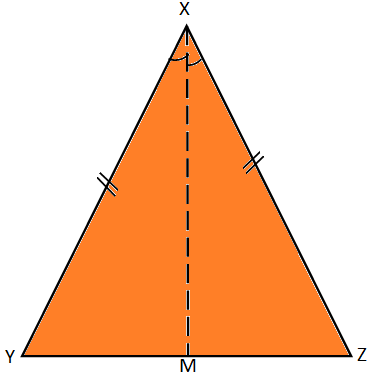
To prove ∠XYZ = ∠XZY.
Construction: Draw a line XM such that it bisects ∠YXZ and meets the side YZ at M.
Proof:
|
Statement 1. In ∆XYM and ∆XZM, (i) XY = XZ (ii) XM = XM (iii) ∠YXM = ∠ZXM
2. ∆XYM ≅ ∆XZM 3. ∠XYZ = ∠XZY. (Proved) |
Reason 1. (i) Given. (ii) Common side. (iii) XM bisects ∠YXZ.
2. By SAS criterion. 3. CPCTC. |
Posted by Arush Kasture 5 years ago (5418403)
- 0 answers
Posted by Arun Kushwah 5 years ago (9295678)
- 2 answers
Yogita Ingle 5 years ago (2577571)

In ΔABE and ΔACF,
∠BAE=∠CAF (Common angle)
∠AEB=∠AFC ....(∵BE⊥AC and CF⊥AB)
BE=CF (Given that altitudes are equal)
By AAS criterion of congruence,
ΔABE≅ΔACF
Hence,
AB=AC (by CPCT)
Posted by Arun Kushwah 5 years ago (9295678)
- 1 answers
Yogita Ingle 5 years ago (2577571)
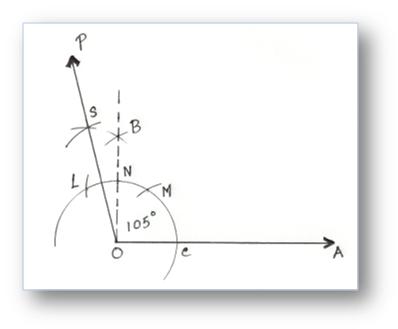
<i>Step of Construction:</i>
(i) After making 90° angle take L and N as centre and draw two arcs cutting each other at S.
(ii) Join SO.
Then, ∠SOA = 105°.
Posted by Arun Kushwah 5 years ago (9295678)
- 1 answers
Yogita Ingle 5 years ago (2577571)
since , AB is a line segment,
L is drawn perpendicular to AB,
A point 'p' lies on line L.
( as shown in the diagram in the attachment )
To prove : P is equidistant from A and B.
Prove :- In ∆AOP and ∆BOP ,
OP = OP ( common side )
POA =
POB
AO = OB
∆AOP
∆BOP (By S.A.S.)
=> AP = BP ( By C.P.C.T. )
Hence , "P" is equidistant from A and B .
myCBSEguide
Trusted by 1 Crore+ Students

Test Generator
Create papers online. It's FREE.

CUET Mock Tests
75,000+ questions to practice only on myCBSEguide app

Yogita Ingle 5 years ago (2577571)
An altitude of a triangle is a line segment that starts from the vertex and meets the opposite side at right angles.
A median of a triangle is a line segment that joins a vertex to the mid-point of the side that is opposite to that vertex.
0 Thank You