
Ask questions which are clear, concise and easy to understand.
Ask QuestionPosted by Shambhavi Mishra 5 years, 4 months ago
- 2 answers
Harsh Nagarkar 5 years, 4 months ago
Posted by Mohit Kumar 5 years, 4 months ago
- 5 answers
Mansi Class12 5 years, 4 months ago
Akhya Sahay 5 years, 4 months ago
Yogita Ingle 5 years, 4 months ago
Verbal communication is the sharing of information using words. It is what most people use as a method of communication. We will learn about non-verbal and visual communication in the next session. Verbal communication is important because if you do not use the right words, you will cause confusion and you will not be able to communicate what you want.
Posted by Dilraj Kâlêsh 5 years, 4 months ago
- 1 answers
Yogita Ingle 5 years, 4 months ago
(1) Starting in January 1921, the Non-Cooperation movement unfolded inthe following ways:
• Large scale participation by all class people
• Boycott of government controlled organizations
• People started refusing to participate in council elections
• Drastic reduction in importing of foreign clothes
• Rejection of imported dress materials
As a result, Indian textile mills emerged out of the shadows and saw an upward rise
(2) Middle class people mainly participated in non cooperation movement in towns.
(3) a. The middle class group boycotted the foreign goods which helps our local products.
b. The peasants took part with the aim of fulfilling their demand of reduction of the revenue.
c. Plantation workers joined the movement in the belief of getting the right to move inside the plantations for transportation.
d. The Tribal in Andhra Pradesh took part in the movement against the British because of the restrictions imposed by them over their culture and tradition.
Posted by Sahil Creator 5 years, 4 months ago
- 3 answers
Kumari Shalini 5 years, 4 months ago
Kumari Shalini 5 years, 4 months ago
Kumari Shalini 5 years, 4 months ago
Posted by Account Deleted 5 years, 4 months ago
- 1 answers
Yogita Ingle 5 years, 4 months ago
In the figure, two coils are not electrically connected to each other because they are wound on a non conducting rod. Say Coil-1 is connected across a battery through a key. This coil is called primary coil. Coil-2 is connected across a galvanometer. This coil is called secondary coil.
When the key is pressed it is observed that, the galvanometer shows a small momentary deflection and then returns to zero. When the key is released, the galvanometer again shows a small momentary deflection, but in opposite direction and then returns to zero. As the coil is connected to a non-conducting rod the self induced electromotive force or voltage is very less and thus the current that flows in one direction slowly diminishes and returns to zero. Similarly when the key is released the current flows in the opposite direction and slowly diminishes.
Thus, the rate of change of electromotive force (e.m.f.) in coil-1, decides the magnitude of deflection of galvanometer. The magnetic flux of primary coil is linked through the rod to the secondary coil. Thus, the induced e.m.f. or current is produced in a coil when varying current flows through a neighboring coil.
Posted by Dilraj Kâlêsh 5 years, 4 months ago
- 1 answers
Yogita Ingle 5 years, 4 months ago
Non-Cooperation became a movement:
(i) It was the view of Gandhiji that the British rule was set in India with the cooperation of Indians.
(ii) If Indians refused cooperation, British rule in India would collapse within a year and Swaraj would come.
(iii) Gandhiji proposed that the movement should unfold in stages.
(iv) In case the government used repression, a full civil disobedience campaign would be launched.
(v) Mahatma Gandhi and Shaukat Ali toured extensively, mobilising popular support of the movement.
Posted by Dilraj Kâlêsh 5 years, 4 months ago
- 2 answers
Yogita Ingle 5 years, 4 months ago
1. The growth of modern nationalism was connected to the anti-colonial movement. The sense of being controlled under colonialism provided a shared bond.
2. Political unification of the country under the British also played a very important role in awakening the spirit of nationalism.
3. Introduction of the modern means of transportation especially the railways created a sense of equality among the people.
4. Formation of the Indian National Congress and other political organizations also provided the people a common platform.
5. The Congress under the leadership of Mahatma Gandhi tried to unite these groups together within one movement.
Posted by Dilraj Kâlêsh 5 years, 4 months ago
- 1 answers
Yogita Ingle 5 years, 4 months ago
Development is a process that creates growth, progress, positive change or the addition of physical, economic, environmental, social and demographic components. The purpose of development is a rise in the level and quality of life of the population, and the creation or expansion of local regional income and employment opportunities, without damaging the resources of the environment. Development is visible and useful, not necessarily immediately, and includes an aspect of quality change and the creation of conditions for a continuation of that change.
The international agenda began to focus on development beginning in the second half of the twentieth century. An understanding developed that economic growth did not necessarily lead to a rise in the level and quality of life for populations all over the world; there was a need to place an emphasis on specific policies that would channel resources and enable social and economic mobility for various layers of the population.
Through the years, professionals and various researchers developed a number of definitions and emphases for the term “development.” Amartya Sen, for example, developed the “capability approach,” which defined development as a tool enabling people to reach the highest level of their ability, through granting freedom of action, i.e., freedom of economic, social and family actions, etc. This approach became a basis for the measurement of development by the HDI (Human Development Index), which was developed by the UN Development Program (UNDP) in 1990. Martha Nussbaum developed the abilities approach in the field of gender and emphasized the empowerment of women as a development tool.
In contrast, professionals like Jeffrey Sachs and Paul Collier focused on mechanisms that prevent or oppress development in various countries, and cause them to linger in abject poverty for dozens of years. These are the various poverty traps, including civil wars, natural resources and poverty itself. The identification of these traps enables relating to political – economic – social conditions in a country in an attempt to advance development. One of the emphases in the work of Jeffrey Sacks is the promotion of sustainable development, which believes in growth and development in order to raise the standard of living for citizens of the world today, through relating to the needs of environmental resources and the coming generations of the citizens of the world.
Posted by Rani Kumari 5 years, 4 months ago
- 1 answers
Hariom Dalal 5 years, 4 months ago
Posted by Suha Anmol 5 years, 4 months ago
- 1 answers
Gaurav Seth 5 years, 3 months ago
Rhyming scheme:
1. DUST OF SNOW- abab
2. FIRE AND ICE- ababaabcbcb
3. A TIGER IN THE ZOO- abcb
4. HOW TO TELL WILD ANIMALS- ababcc
5. THE BALL POEM- no definite scheme, free verse
6. AMANDA- aaba
7. ANIMALS- no scheme, free verse
8. THE TREES- aa bb cc dd ee aa
9. FOG- no scheme, free verse
10.THE TAIL OF THE CUSTARD OF THE DRAGON- aabb
11. FOR ANNE GREGORY- abcbdb.
Posted by Reeva Jani 5 years, 4 months ago
- 1 answers
Yogita Ingle 5 years, 4 months ago
a. It is a covalent bond in which both the cholrine atoms share their unpaired electron with two valence electrons of calcium.
b. ionic compound splits into positive and negative ions in a molten or aquoes state s. This develop a potential difference between ions through which current can easily flow but in solid state they ate present in form of neutral compound not a charged specie.
Posted by Bhavna Yadav 5 years, 4 months ago
- 1 answers
Kap Sharma 5 years, 4 months ago
Posted by Kumari Shalini 5 years, 4 months ago
- 1 answers
Yogita Ingle 5 years, 4 months ago
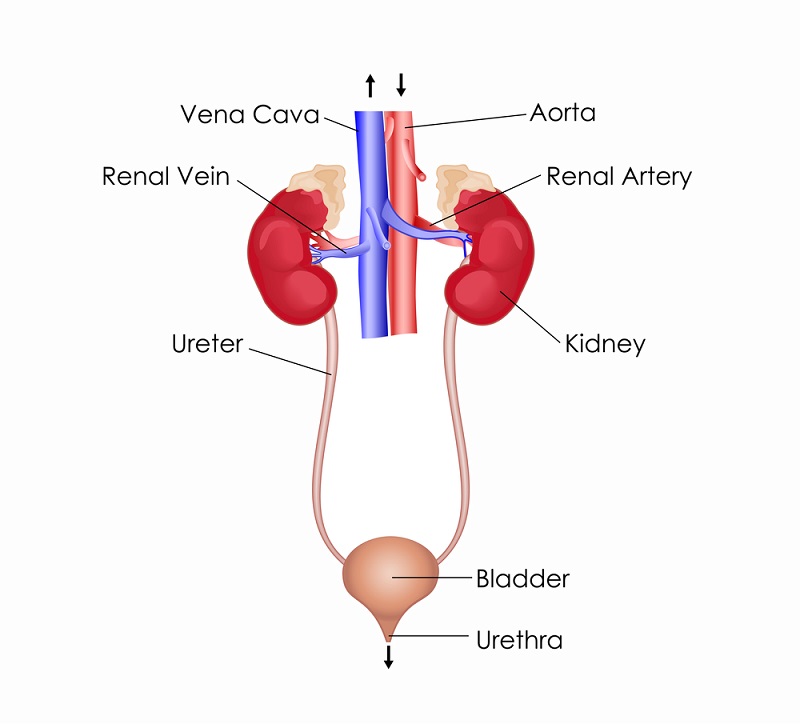
The wastes that are produced in human body are removed by the process of excretion. Human body consists of a number of excretory organs such as liver, skin, kidneys etc. But there is a specialized system in humans that helps to purifies blood. That is called excretory system. It consists of Kidneys, ureters, urethra, urinary bladder .
Kidneys are placed in lower abdomen and bean like shaped. They filter the blood and removes toxins from the blood. It also reabsorbs the essential ions and substances from the filtrate. The final toxins are collected and removed from the body in the from of urine.
The urine is 95% of water in composition and rest it contains urea and other wastes.
Posted by Kumari Shalini 5 years, 4 months ago
- 2 answers
Akshita ???? 5 years, 4 months ago
Yogita Ingle 5 years, 4 months ago
Soil is the natural and richest source of raw material for plants.
Raw materials like nitrogen, phosphorous and other minerals are absorbed by plants from soil by roots.
Plants absorb water and minerals from soil by roots and transport to the leaves.
As the distance between roots and leaves is large, diffusion is not sufficient to provide raw materials to leaves and energy to roots.
Plants use slow transport system but large as required in tall plants to transport energy from leaves and raw materials form roots.
A group of special cells forming vascular tissue transport water and nutrients to all the cells of the plants.
Two types of vascular tissues are xylem and phloem.
Xylem transports water and minerals obtained from the soil.
Phloem transports products of photosynthesis from the leaves to other parts of the plant.

Vessels, tracheids of the roots, stems and leaves are connected to form a continuous system in xylem cells to transport water to all the parts of the plants.
Cells in the roots which are in contact with the soil take up ions which creates a difference of concentration between the roots and the soil and therefore water moves to the roots to eliminate the difference.
Water is moved into xylem of roots and from where it is pushed upward.
Posted by Abdul Kadir Laskar 5 years, 4 months ago
- 0 answers
Posted by Mahakal Jai 5 years, 4 months ago
- 5 answers
Divyanshi Jindal 5 years, 4 months ago
Tanmay Nagar 5 years, 4 months ago
Posted by Bharti Kumari 5 years, 4 months ago
- 1 answers
Posted by N . 5 years, 4 months ago
- 1 answers
Reefa Khan 5 years, 4 months ago
Posted by Lavanya Lavanya 5 years, 4 months ago
- 2 answers
Yogita Ingle 5 years, 4 months ago
Advantage of railway..
1.serve as chief mode of transport for both passengers and goods
2.it is a cheap mode of transport for bulky goods
3.forms a major employment sector giving jobs to lakhs of people
4.helps in agricultural development by connecting urban to rural areas..
Disadvantages of railways..
1.faces tough Competition with roadways as road transport can deliver goods at doorstep
2.poor maintenance causes accidents
3 incidents of robberies and loot make them unsafe for journeys
4.lack of cleanliness and hygiene on railway platforms is a major issue
Posted by Sumit Kr Kumar 5 years, 4 months ago
- 1 answers
Yogita Ingle 5 years, 4 months ago
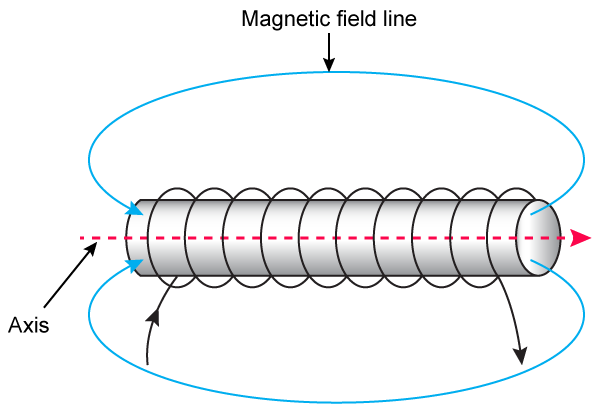
- A coil with many circular close turns of insulated copper wire (like a cylinder as shown above) is a solenoid.
- One end of such a solenoid behaves like the north pole and the other as a south pole.
- Therefore magnetic field due to current in the solenoid is similar to a bar magnet. The fields always emerge out of the North pole and always merge into the South pole
- The field inside the solenoid is uniform.
Posted by Akshat Awasthi 5 years, 4 months ago
- 3 answers
Posted by Aayush Maurya 5 years, 4 months ago
- 2 answers
Rakshak Sherigar 5 years, 4 months ago
Yogita Ingle 5 years, 4 months ago
The reason for the selection of pea plants for the genetic experiments are
- Easy to grow in the garden.
- The flowers of pea plants are hermaphrodite, i.e flowers have bisexual characteristics.
- Easy to obtain pure breed plant through self-fertilization
- The generation time of pea plants is less.
-
They have excellent disease resistance and have an optimal rate of survival.
Posted by Aayush Maurya 5 years, 4 months ago
- 1 answers
Yogita Ingle 5 years, 4 months ago
Gregor Johann Mendel conducted experiments on pea plants and proposed the rules of inheritance; based on his observations. Mendel observed that characters are often present in pairs. A pair of contrasting characters is called allele.
Posted by Vikash Gautam 5 years, 4 months ago
- 3 answers
Kap Sharma 5 years, 4 months ago
Mohit Anand 5 years, 4 months ago
Posted by Gorika Tyagi 5 years, 4 months ago
- 5 answers
Posted by Rani Kumari 5 years, 4 months ago
- 3 answers
Posted by Anil Tharkar 5 years, 4 months ago
- 2 answers
Yogita Ingle 5 years, 4 months ago
Isomerism is the phenomenon in which more than one compounds have the same chemical formula but different chemical structures. Chemical compounds that have identical chemical formulae but differ in properties and the arrangement of atoms in the molecule are called isomers.

myCBSEguide
Trusted by 1 Crore+ Students

Test Generator
Create papers online. It's FREE.

CUET Mock Tests
75,000+ questions to practice only on myCBSEguide app

Yogita Ingle 5 years, 4 months ago
When we produce a good by exploiting natural resources, it is an activity of the primary sector.
This is because it forms the base of all other products that we subsequently use.
Since most of the natural products we get from agriculture, dairy, fishing, forestry, this sector is also called agriculture and related sector.
1Thank You