
Ask questions which are clear, concise and easy to understand.
Ask QuestionPosted by Shivanand Sonawane 5 years, 8 months ago
- 2 answers
Posted by Rahul Sharma 5 years, 8 months ago
- 4 answers
Gaurav Seth 5 years, 8 months ago
97° 25'
Answer: "97° 25' East" is the "eastern most longitude of India". Explanation: It is located in "Arunachal Pradesh".
Posted by Devina Wakchaure 5 years, 8 months ago
- 2 answers
Gaurav Seth 5 years, 8 months ago
(i) The Russian army began to break up after Bolsheviks ordered land redistribution. Soldiers who were mostly peasants wished to go home for the land redistribution. (ii)Non Bolshevik Socialists, Liberals and supporters of autocracy condemned the Bolshevik uprising. Their leaders organised the troops to fight the Bolsheviks. (iii) During 1918 and 1919, the ‘greens’ (Socialist Revolutionaries) and ‘whites’ (pro-Tsarists) controlled most of the Russian empire. They were backed by French, American, British and Japanese troops. As these troops and the Bolsheviks fought a civil war, looting, banditry and famine became common. (iv)Supporters of private property among ‘whites’ took harsh steps against peasants who had seized land.
Yogita Ingle 5 years, 8 months ago
(i) The Russian army began to break up after Bolsheviks ordered land redistribution. Soldiers who were mostly peasants wished to go home for the land redistribution.
(ii)Non Bolshevik Socialists, Liberals and supporters of autocracy condemned the Bolshevik uprising. Their leaders organised the troops to fight the Bolsheviks.
(iii) During 1918 and 1919, the ‘greens’ (Socialist Revolutionaries) and ‘whites’ (pro-Tsarists) controlled most of the Russian empire. They were backed by French, American, British and Japanese troops. As these troops and the Bolsheviks fought a civil war, looting, banditry and famine became common.
(iv)Supporters of private property among ‘whites’ took harsh steps against peasants who had seized land.
Posted by Muskan Bharti Bharti 5 years, 8 months ago
- 2 answers
Gaurav Seth 5 years, 8 months ago
1)Signing of a secrete treaty by the king with Prusia to control revolutionaries in France which made the famous political club Jacobin stormed the palace tuileries and made the king and his family hostage for several hours and then they imprisoned them.
2)The act of boycott of the meeting by members of the third estate which was called on 5th May a meeting of estate general as they represented their grievance of one person one vote but note the act of one estate one vote which led to the formation of national assembly on 20th June.
3)On 21st September election were held and 21 year old men cast their votes,hence in 1792 conversion abolished monarchy and declared France as a republic.On 21st January king Louis xvi was executed and Robespierre became the director of France.
4)King Louis xvi became the king of France when he was 20 years of age.
5)On 14th July Bastille was attacked hence king had to give his recognition to the national assembly and it drafted constitution which passed laws and checked the power of the king.
Yogita Ingle 5 years, 8 months ago
King louis xvi became the king of the france when he was 20. on 5 th may meeting of estate general was called and members of third estste boycotted the meeting demanding one person one vote instead of one estate one vote.on 20 th june national assembly was formed. on 14 th july bastille was attacked. so, king gave his recognition to the national assembly. it drafted constitution which passed laws and checked the power of the king. king signed a secret treaty with prusia to control revolutioneries in france. famous political club jacobin stormed the palace tuileries and made the king and his family hostage for several hour and then imprisioned them. elections were held and 21 year old men cast their vote. on 21september 1792 convention abolished monarchy and declared france as republic. on 21st january king louis xvi was executed and robespierre became the director of france.
Posted by Divyani Das 5 years, 8 months ago
- 4 answers
Posted by Kushal Gowda D.L 5 years, 8 months ago
- 1 answers
Yogita Ingle 5 years, 8 months ago
After many years of protest and demonstrations against the white supremacist Apartheid regime in South Africa, the power elite finally realised that it would no longer be possible to rule the blacks through repression. As a result, a new Republic of South Africa was born and the political leadership of both the majority blacks and the minority whites decided to draw up a new Constitution. It was decided that the Constitution will be based on equality of all races and genders, democratic values, social justice and human rights. To this purpose, the black leaders appealed to fellow blacks to forgive the whites for the atrocities they had committed while in power. After two years of debate and discussion, the South African leadership came up with what is considered as one of the best Constitutions in modern world history. This Constitution gave its citizens extensive rights and included all sections of the society (regardless of their previous political opinions or biases) in the deliberations.
Posted by Kavya Bhardwaj 5 years, 8 months ago
- 1 answers
Yogita Ingle 5 years, 8 months ago
The Russian Revolution had a great global impact. It had an impact on many things such as, communism, Socialism, democracy, economy, imperialism, nationalism, and most importantly the division of the world. First of all, Russia was the first country to establish a communist government, and communism spread throughout the world. This means that the Russian Revolution ended the monarchy in Russia. Also, the revolution took out Russia from World War 1. The Soviet Union was created due to the Russian Revolution, since Russia was composed of many different nationalities.
Posted by Sangeeta Pathak 5 years, 8 months ago
- 1 answers
Meghna Thapar 5 years, 8 months ago
Tropical cyclones are like giant engines that use warm, moist air as fuel. That is why they form only over warm ocean waters near the equator. The warm, moist air over the ocean rises upward from near the surface. The other problem with tropical cyclones is flooding due to heavy rains and flooding due to storm surge at coastlines. The other reason tropical cyclones cause so much destruction is simply because there is more to destroy now than ever.
Posted by Divya . 5 years, 8 months ago
- 3 answers
Vallabh Pawar 5 years, 8 months ago
Yogita Ingle 5 years, 8 months ago
A person who advocates thorough or complete political or social reform..
The Demand of Radicals are:
1.) British should leave India.
2.) He wants poorna swaraj.
Aryan Kumar 5 years, 8 months ago
Posted by Saad Ali 5 years, 8 months ago
- 2 answers
Gaurav Seth 5 years, 8 months ago
La Marseillaise
La Marseillaise is national anthem of France and was sung on 24th April 1792 for first time.It was first sung by the volunteers from Marseilles as they marched to Paris in a war launched against Prussia and Austria.
Posted by Khushi. Singh. 5 years, 8 months ago
- 1 answers
Yogita Ingle 5 years, 8 months ago
Democracy is based on the the principle of political equality, on recognising that the poorest and the least educated has the same status as the rich and the educated. People are not subjects of a rulers, they are rulers themselves.
Posted by Almi Aami 5 years, 8 months ago
- 1 answers
Yogita Ingle 5 years, 8 months ago
- Every country drafts its own constitution.
- A constitution of a nation is the set of written laws accepted by people living together in a country.
- It generates trust and co-ordination.
- It specifies how a government should be constituted.
- It lays down limits on the powers of the government.
- It expresses the aspirations of the people about creating a good society.
Posted by Pragati Kumari 5 years, 8 months ago
- 1 answers
Gaurav Seth 5 years, 8 months ago
South African Constituition Characteristics:
1. It saves the basic rights of its citizens.
2. It gives equality and dignity to all the humans of South Africa.
3. The government will be run in parliamentary way.
4. It gives religious freedom to its citizens.
5. There is freedom for political parties and media groups.
Posted by Pragati Kumari 5 years, 8 months ago
- 1 answers
Gaurav Seth 5 years, 8 months ago
(i) After the emergence of the new democratic South Africa, black leaders appealed to fellow blacks to forgive the whites for the atrocities they had committed while in power.
(ii) They thought of building a new South Africa based on equality of all races and men and women on democratic values, social justice and human rights.
(iii) The party that ruled through oppression and brutal killings and the party that led the freedom struggle sat together to draw up a common constitution.
(iv) After two years of discussion and debate, they came out with one of the finest constitutions the world had ever had.
(v) This Constitution gave to its citizens the most extensive rights available in any country.
(vi) Together, they decided that in search for a solution to the problems, nobody should be excluded, no one should be treated as a demon. They agreed that everybody should become part of the solution, whatever they might have done or represented in the past.
Posted by Naman Pandey 5 years, 8 months ago
- 1 answers
Gaurav Seth 5 years, 8 months ago
Some of the major features of a democracy are:
- The final decision making power rests with those elected by the people.
- It must be based on a free and fair election.
- Each adult citizen must have one vote and each vote must have one value.
- It should rule within limits set by constitutional law and citizens’ rights.
Posted by Damini Damini 5 years, 8 months ago
- 1 answers
Yogita Ingle 5 years, 8 months ago
The Bolshevik Party of India is a communist political party in India. The party was founded in 1939. The party had a certain role in the trade union movement in West Bengal and was briefly represented in the state government in 1969. In later years the party has played a negligible role in Indian politics.
Posted by Naman Bansal 5 years, 8 months ago
- 1 answers
Meghna Thapar 5 years, 8 months ago
The Constitution provides that all citizens are equal before the law. There can be no discrimination based on a citizen's caste, ***, religious belief or place of birth etc. Article 14 of the Constitution of India provides for equality before the law or equal protection of the laws within the territory of India. It states: "The State shall not deny to any person equality before the law or the equal protection of the laws within the territory of India."
Posted by Almi Aami 5 years, 8 months ago
- 1 answers
Gaurav Seth 5 years, 8 months ago
The Constitution of India embodies the values into the constitutional arrangements.Is has developed a basic institutional design which has its own importance.
1.It provides for a democracy where elected representatives get the opportunity to rule the country.
2.It embodies separation of powers among the institutions which clearly specifies demarcation of powers among them.
3.It puts a check o the arbitrary powers of the government by providing certain fundamental rights to the citizens which cannot be violated.
4.It also make necessary changes in the constitution from time to time to make it more up to date.
Posted by Abhi Ram Reddy 5 years, 8 months ago
- 0 answers
Posted by Abhi Ram Reddy 5 years, 8 months ago
- 3 answers
Suhani Gupta 5 years, 8 months ago
Almi Aami 5 years, 8 months ago
Gaurav Seth 5 years, 8 months ago
India is located latitudinally in the Northern Hemisphere and longitudinally in the Eastern Hemisphere. Afghanistan, Bangladesh, Bhutan, China, Maldives, Myanmar, Nepal, Pakistan, and Sri Lanka are the 9 key neighbours of India.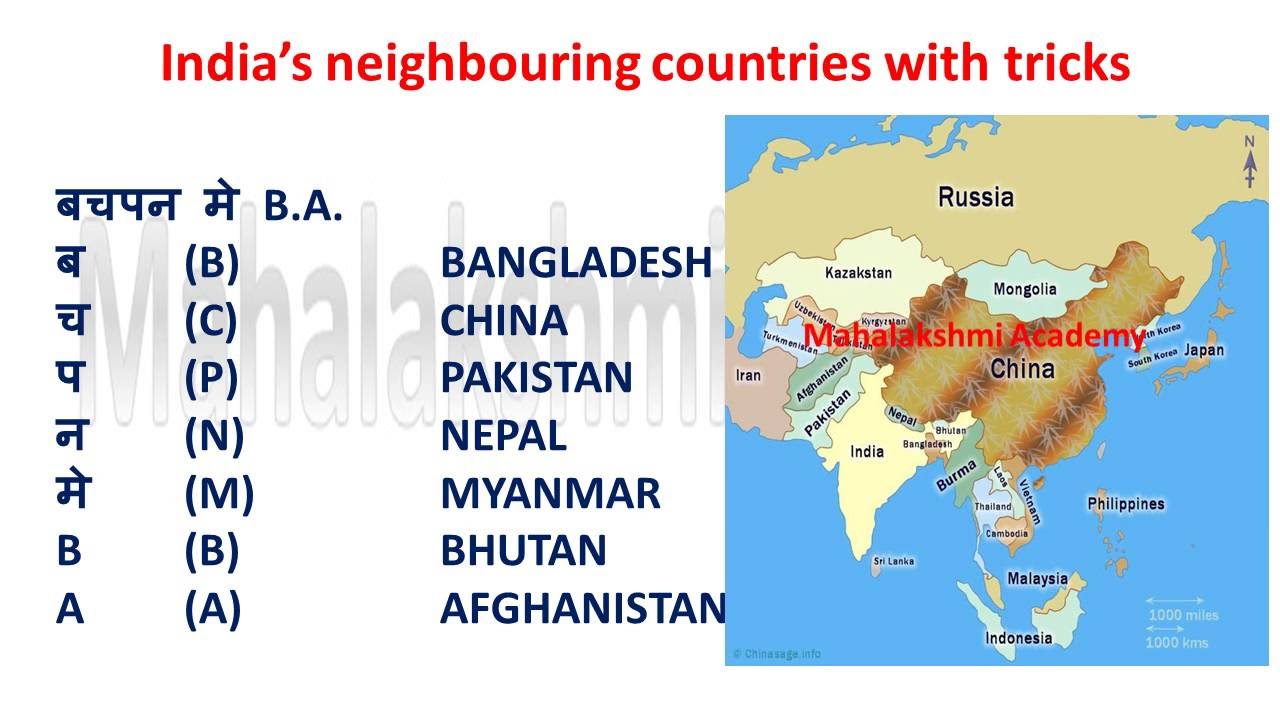
Posted by Deepisha Karki 5 years, 8 months ago
- 1 answers
Yogita Ingle 5 years, 8 months ago
It began during the First World War, with the February Revolution that was focused in and around the Petrograd the capital (now Saint Petersburg). The revolution erupted in the context of Russia's major military losses during the War, which resulted in much of the Russian Army being ready to mutiny.
Posted by Maneesh Sapra 5 years, 8 months ago
- 1 answers
Yogita Ingle 5 years, 8 months ago
Feudalism(feudal system) was common in France before the French revolution.
The system consisted of the granting of land for return for military services.
In a feudal system, a peasant or worker received a piece of land in return for serving a lord or king, especially during times of war.
The peasant now is called as a VASSAL.
In the late medieval period, this system became hereditary.
Feudalism discouraged trade and economic growth. And it discouraged unified government.
Posted by Vivan Meena 5 years, 8 months ago
- 2 answers
Yogita Ingle 5 years, 8 months ago
Human capital formation is the process of adding to the stock of human capital over time. Human capital can be developed through the creation of skilled, trained, and efficient labor force by providing better education, health care facilities, etc. Highly skilled people can create new ideas and methods of production
Abhi Ram Reddy 5 years, 8 months ago
Posted by Khushi. Singh. 5 years, 8 months ago
- 2 answers
Ayush Yadav 5 years, 8 months ago
Yogita Ingle 5 years, 8 months ago
The members of Jacobin club mostly belonged to less prosperous and from middle class. Most of them were artisans, cooks, farmers, domestic servants and daily wage workers.
Posted by Hakeem Urva Tul Wusqa 5 years, 8 months ago
- 2 answers
S.A. Wadood 5 years, 8 months ago
Yogita Ingle 5 years, 8 months ago
Coral polyps are tiny marine animals which live in mud-free shallow and warm waters. They secrete calcium carbonate. The secretion of calcium carbonate results in the formation of coral reefs. Islands formed of such coral reefs are known as coral islands.
Posted by Krishna Gurjar 5 years, 8 months ago
- 1 answers
Yogita Ingle 5 years, 8 months ago
The Rule of law states that all laws apply equally to all citizens of the country and no one can be above the law. The law is equal and similar for all, be it a government official, a wealthy person or even the President, none of them are above the law. Hence, the law cannot differentiate between people on the basis of their religion, caste or gender. Nevertheless, any crime or violation of law has to be established after which a specific punishment is given.
Posted by Pragati Kumari 5 years, 8 months ago
- 5 answers
Shraddhey Shinde 5 years, 8 months ago
Yogita Ingle 5 years, 8 months ago
A Constitution is necessary because of the following reasons:
- It is an important law of the land. It determines the relationship of the citizens with the governments.
- It lays down principles and guidelines which are required for people belonging to different ethnic and religious groups to live in harmony.
- It specifies on how the Government would be elected and who will have the power and the responsibility to take important decisions.
- It outlines the limits on the power of the Government and tells us about the rights of the citizens.
- It expresses the aspirations of the people about creating a good society.
Gaurav Seth 5 years, 8 months ago
(i) The Constitution of India does not reflect the views of its members alone. It expresses a broad consensus of its time. Many countries of the world have had to rewrite their constitution afresh because the basic values were not accepted to all major social groups or political parties. In some other countries, the constitution exists as a mere piece of paper. No one actually follows it. The experience of our constitution is different. Over the last half a century, several groups have questioned some provisions of the constitution. But no large social group or political party has ever questioned the legitimacy of the constitution itself. (ii) The Constituent Assembly represented the people of India. There was no universal adult franchise at that time. So, the Constituent Assembly could not have been chosen directly by all the people of India. It was elected mainly by the members of existing Provincial Legislatures. This ensured a fair geographical share of members from all the regions of the country. (iii) The Constituent Assembly was dominated by the Indian National Congress, the party that led India's freedom struggle. But the Congress itself included a variety of political groups and opinions. The Assembly had many members who did not agree with the Congress. (iv) In social terms too, the Assembly represented members from different languages, groups, castes, classes, religions and occupations. (v) The manner in which the Constituent Assembly worked gives sanctity to the constitution. The Assembly worked in a systematic, open and consensual manner. First, some basic principles were decided and agreed upon. Then a Drafting Committee prepared a draft constitution for discussion. Several rounds of thorough discussion took place on the Draft Constitution, clause by clause. More than two thousand amendments were considered. The members deliberated for 114 days spread over three years. Every document presented and every word spoken in the Constituent Assembly has been recorded and preserved. These are called 'Constituent Assembly Debates'. These debates provide the rationale behind every provision of the Constitution.
Posted by Akash S 5 years, 8 months ago
- 3 answers
Gaurav Seth 5 years, 8 months ago
After the fall of Robespierre's government, the wealthier middle classes came forward to seize power.
A new constitution was introduced which denied the vote to non-propertied sections of the society. It provided for two elected legislative councils.
These then appointed a Directory, an executive made up of five members.
This was meant as a safeguard against the concentration of power in a one man executive as under the Jacobins.
However, the Directors often clashed with the legislative councils, who then sought to dismiss them.
Thus, the Directory became the victim of political instability which paved the way for the rise of Napoleon Bonaparte.
Yogita Ingle 5 years, 8 months ago
After the fall of Robespierre's government, the wealthier middle classes came forward to seize power.
A new constitution was introduced which denied the vote to non-propertied sections of the society. It provided for two elected legislative councils.
These then appointed a Directory, an executive made up of five members.
This was meant as a safeguard against the concentration of power in a one man executive as under the Jacobins.
However, the Directors often clashed with the legislative councils, who then sought to dismiss them.
Thus, the Directory became the victim of political instability which paved the way for the rise of Napoleon Bonaparte.
Posted by Akash S 5 years, 8 months ago
- 1 answers
Gaurav Seth 5 years, 8 months ago
The wealthier middle classes seized power and formed a new constitution. It provided for two elected legislative councils. These then appointed a Directory, an executive made up of five members. This was meant as a safeguard against the concentration of power in a one-man executive as under the Jacobins.
The Directory or Directorate (French: le Directoire) was a five-member committee which governed France from 1795 when it replaced the Committee of Public Safety. On 9 November 1799, it was overthrown by Napoleon Bonaparte in the Coup of 18 Brumaire and replaced by the French Consulate. It gave its name to the final four years of the French Revolution.

myCBSEguide
Trusted by 1 Crore+ Students

Test Generator
Create papers online. It's FREE.

CUET Mock Tests
75,000+ questions to practice only on myCBSEguide app

Gaurav Seth 5 years, 8 months ago
May 5, 1789-Estates-General meets after not meeting for 175 years
June 17, 1789-the Third Estate announced that the National Assembly would meet
June 20, 1789 King locks door to meeting place, so need to go to inddor tennis court where make the Tennis Court Oath
July 14, 1789 beginning of French Revolution, storm of Bastille
August 4, 1789nobles forced to recant their fedual rights, and so make Declaration of Rights of Man
October 5, 1789women marched to Versailles, move Louis XVI to Paris and so does National assembly (fishwives)
August 10, 1792san-culottes cut off head of radical mayor and show Legislative Assembly, Paris Commune
1774-Louis XVI became the king of France.
1789-The Bastille was stormed.National Assembly was also formed.
1791-A constitution was formed to make the powers of monarch limited .
1804-Napoleon Bonaparte became the king of France.
1815-Napoleon Bonaparte was defeated in the battle of Waterloo..
1946-The French Women got the right to vote.
2Thank You