Cotton is a soft, fluffy staple fiber that grows in a boll, or protective case, around the seeds of the cotton plants of the genus Gossypium in the mallow family Malvaceae. The fiber is almost pure cellulose. Under natural conditions, the cotton bolls will increase the dispersal of the seeds.
After cotton has been harvested, producers who use conventional tillage practices cut down and chop the cotton stalks. The next step is to turn the remaining residue underneath the soil surface. Producers who practice a style of farming called conservation tillage often choose to leave their stalks standing and leave the plant residue on the surface of the soil.eeding is done with mechanical planters which cover as many as 10 to 24 rows at a time. The planter opens a small trench or furrow in each row, drops in the right amount of seed, covers them and packs the earth on top of them. The seed is planted at uniform intervals in either small clumps (“hill-dropped”) or singularly (“drilled”). Machines called cultivators are used to uproot weeds and grass, which compete with the 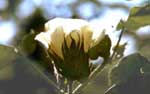 cotton plant for soil nutrients, sunlight and water.
About two months after planting, flower buds called squares appear on the cotton plants. In another three weeks, the blossoms open. Their petals change from creamy 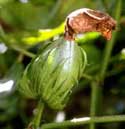 white to yellow, then pink and finally, dark red. After three days, they wither and fall, leaving green pods which are called cotton bolls.
Inside the boll, which is shaped like a tiny football, moist fibers grow and push out from the newly formed seeds. As the boll ripens, it turns brown. The fibers continue to expand under the warm 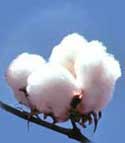 sun. Finally, they split the boll apart and the fluffy cotton bursts forth. It looks like white cotton candy.
Since hand labor is no longer used in the U.S. to harvest cotton, the crop is harvested by machines, either a picker or a stripper. Cotton picking machines have spindles that pick (twist) the seed cotton from the burrs that are attached to plants’ stems. Doffers then remove the seed cotton from the spindles and knock the seed cotton into the conveying system.


 Test
Test



Meghna Thapar 5 years, 7 months ago
Cotton is a soft, fluffy staple fiber that grows in a boll, or protective case, around the seeds of the cotton plants of the genus Gossypium in the mallow family Malvaceae. The fiber is almost pure cellulose. Under natural conditions, the cotton bolls will increase the dispersal of the seeds.
After cotton has been harvested, producers who use conventional tillage practices cut down and chop the cotton stalks. The next step is to turn the remaining residue underneath the soil surface. Producers who practice a style of farming called conservation tillage often choose to leave their stalks standing and leave the plant residue on the surface of the soil.eeding is done with mechanical planters which cover as many as 10 to 24 rows at a time. The planter opens a small trench or furrow in each row, drops in the right amount of seed, covers them and packs the earth on top of them. The seed is planted at uniform intervals in either small clumps (“hill-dropped”) or singularly (“drilled”). Machines called cultivators are used to uproot weeds and grass, which compete with the cotton plant for soil nutrients, sunlight and water.
 white to yellow, then pink and finally, dark red. After three days, they wither and fall, leaving green pods which are called cotton bolls.
 sun. Finally, they split the boll apart and the fluffy cotton bursts forth. It looks like white cotton candy.
About two months after planting, flower buds called squares appear on the cotton plants. In another three weeks, the blossoms open. Their petals change from creamy
Inside the boll, which is shaped like a tiny football, moist fibers grow and push out from the newly formed seeds. As the boll ripens, it turns brown. The fibers continue to expand under the warm
Since hand labor is no longer used in the U.S. to harvest cotton, the crop is harvested by machines, either a picker or a stripper. Cotton picking machines have spindles that pick (twist) the seed cotton from the burrs that are attached to plants’ stems. Doffers then remove the seed cotton from the spindles and knock the seed cotton into the conveying system.
0Thank You