
Ask questions which are clear, concise and easy to understand.
Ask QuestionPosted by Pihu ✨ 5 years, 3 months ago
- 3 answers
Posted by Dhanshree Mane 5 years, 3 months ago
- 1 answers
Posted by Sheetal Barik 5 years, 3 months ago
- 2 answers
Yogita Ingle 5 years, 3 months ago
DNA copying is otherwise known as DNA replication which is the process of producing 2 identical copies of DNA from one original DNA molecule during cell division. DNA copying is important because it generates variation during sexual reproduction which leads to evolution. Also, DNA copying helps in transfer of information or characters from the parents to the offsprings.
Moses K.Joy 5 years, 3 months ago
Posted by Akhya Sahay 5 years, 3 months ago
- 2 answers
Shresth Sharma 5 years, 3 months ago
Posted by Anirudh Jaat 5 years, 3 months ago
- 2 answers
Posted by Himanshu Jagne 5 years, 3 months ago
- 4 answers
Kumari Shalini 5 years, 3 months ago
Himani Yadav 5 years, 3 months ago
Ritika Talwar 5 years, 3 months ago
Archi Jain 5 years, 3 months ago
Posted by Yash Kumar 5 years, 3 months ago
- 3 answers
B.Aishwarya 203 Kalyannagar 5 years, 3 months ago
Archi Jain 5 years, 3 months ago
Posted by ?????? ????? 5 years, 3 months ago
- 5 answers
Posted by Ayush Dhiman 5 years, 3 months ago
- 0 answers
Posted by Araya Mishra 5 years, 3 months ago
- 2 answers
Araya Mishra 5 years, 2 months ago
Meghna Thapar 5 years, 3 months ago
Excretion is a type of elimination. Excretion events are exhalation, defecation, and urination mainly. Osmoregulation refers to the process of maintaining constant osmotic pressure within the body fluids by keeping the water balance. The main difference between excretion and osmoregulation is that excretion is the process of removing waste products and toxic substances from the body, whereas osmoregulation is the process of maintaining a constant osmotic pressure within the body fluids. ... Excretion and osmoregulation are two processes of the body.
Posted by Naman Sharma 5 years, 3 months ago
- 3 answers
Utkarsh Kasaudhan 5 years, 3 months ago
Yogita Ingle 5 years, 3 months ago
Insulators are materials that hinder the free flow of electrons from one particle of the element to another. If we transfer some amount of charge to such an element at any point, the charge remains at the initial location and does not get distributed across the surface.
Examples of insulators
Some of the common insulator examples are given below:
- Plastic
- Wood
- Glass
Posted by Sahil Creator 5 years, 3 months ago
- 3 answers
Kumari Shalini 5 years, 3 months ago
Kumari Shalini 5 years, 3 months ago
Kumari Shalini 5 years, 3 months ago
Posted by Account Deleted 5 years, 3 months ago
- 1 answers
Yogita Ingle 5 years, 3 months ago
In the figure, two coils are not electrically connected to each other because they are wound on a non conducting rod. Say Coil-1 is connected across a battery through a key. This coil is called primary coil. Coil-2 is connected across a galvanometer. This coil is called secondary coil.
When the key is pressed it is observed that, the galvanometer shows a small momentary deflection and then returns to zero. When the key is released, the galvanometer again shows a small momentary deflection, but in opposite direction and then returns to zero. As the coil is connected to a non-conducting rod the self induced electromotive force or voltage is very less and thus the current that flows in one direction slowly diminishes and returns to zero. Similarly when the key is released the current flows in the opposite direction and slowly diminishes.
Thus, the rate of change of electromotive force (e.m.f.) in coil-1, decides the magnitude of deflection of galvanometer. The magnetic flux of primary coil is linked through the rod to the secondary coil. Thus, the induced e.m.f. or current is produced in a coil when varying current flows through a neighboring coil.
Posted by Reeva Jani 5 years, 3 months ago
- 1 answers
Yogita Ingle 5 years, 3 months ago
a. It is a covalent bond in which both the cholrine atoms share their unpaired electron with two valence electrons of calcium.
b. ionic compound splits into positive and negative ions in a molten or aquoes state s. This develop a potential difference between ions through which current can easily flow but in solid state they ate present in form of neutral compound not a charged specie.
Posted by Bhavna Yadav 5 years, 3 months ago
- 1 answers
Kap Sharma 5 years, 3 months ago
Posted by Kumari Shalini 5 years, 3 months ago
- 1 answers
Yogita Ingle 5 years, 3 months ago
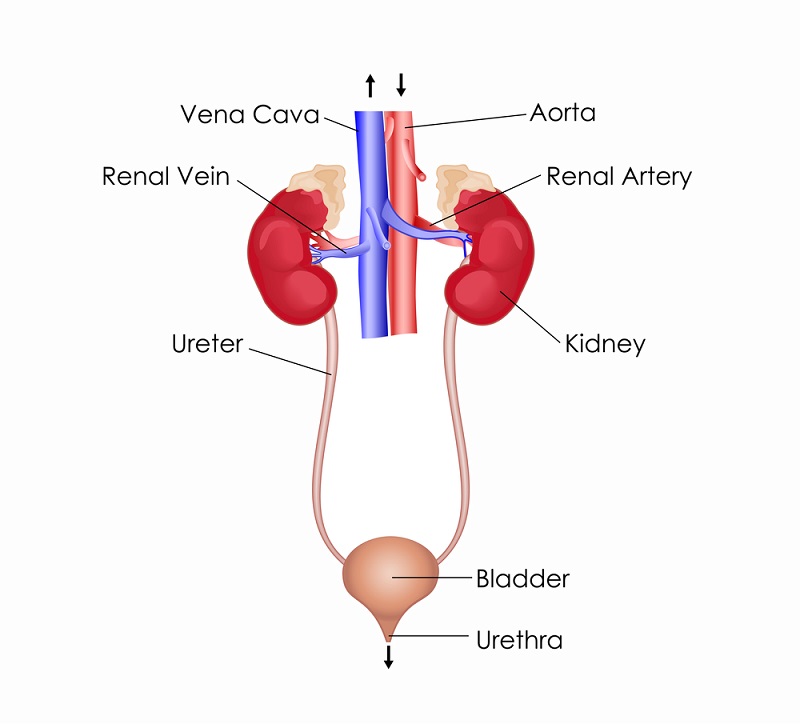
The wastes that are produced in human body are removed by the process of excretion. Human body consists of a number of excretory organs such as liver, skin, kidneys etc. But there is a specialized system in humans that helps to purifies blood. That is called excretory system. It consists of Kidneys, ureters, urethra, urinary bladder .
Kidneys are placed in lower abdomen and bean like shaped. They filter the blood and removes toxins from the blood. It also reabsorbs the essential ions and substances from the filtrate. The final toxins are collected and removed from the body in the from of urine.
The urine is 95% of water in composition and rest it contains urea and other wastes.
Posted by Kumari Shalini 5 years, 3 months ago
- 2 answers
Akshita ???? 5 years, 3 months ago
Yogita Ingle 5 years, 3 months ago
Soil is the natural and richest source of raw material for plants.
Raw materials like nitrogen, phosphorous and other minerals are absorbed by plants from soil by roots.
Plants absorb water and minerals from soil by roots and transport to the leaves.
As the distance between roots and leaves is large, diffusion is not sufficient to provide raw materials to leaves and energy to roots.
Plants use slow transport system but large as required in tall plants to transport energy from leaves and raw materials form roots.
A group of special cells forming vascular tissue transport water and nutrients to all the cells of the plants.
Two types of vascular tissues are xylem and phloem.
Xylem transports water and minerals obtained from the soil.
Phloem transports products of photosynthesis from the leaves to other parts of the plant.

Vessels, tracheids of the roots, stems and leaves are connected to form a continuous system in xylem cells to transport water to all the parts of the plants.
Cells in the roots which are in contact with the soil take up ions which creates a difference of concentration between the roots and the soil and therefore water moves to the roots to eliminate the difference.
Water is moved into xylem of roots and from where it is pushed upward.
Posted by Sumit Kr Kumar 5 years, 3 months ago
- 1 answers
Yogita Ingle 5 years, 3 months ago
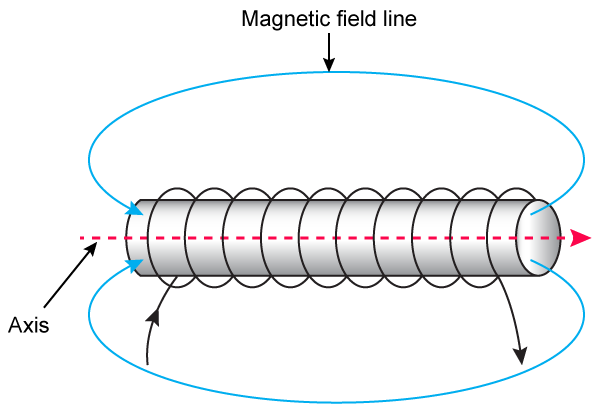
- A coil with many circular close turns of insulated copper wire (like a cylinder as shown above) is a solenoid.
- One end of such a solenoid behaves like the north pole and the other as a south pole.
- Therefore magnetic field due to current in the solenoid is similar to a bar magnet. The fields always emerge out of the North pole and always merge into the South pole
- The field inside the solenoid is uniform.
Posted by Aayush Maurya 5 years, 3 months ago
- 2 answers
Rakshak Sherigar 5 years, 3 months ago
Yogita Ingle 5 years, 3 months ago
The reason for the selection of pea plants for the genetic experiments are
- Easy to grow in the garden.
- The flowers of pea plants are hermaphrodite, i.e flowers have bisexual characteristics.
- Easy to obtain pure breed plant through self-fertilization
- The generation time of pea plants is less.
-
They have excellent disease resistance and have an optimal rate of survival.
Posted by Aayush Maurya 5 years, 3 months ago
- 1 answers
Yogita Ingle 5 years, 3 months ago
Gregor Johann Mendel conducted experiments on pea plants and proposed the rules of inheritance; based on his observations. Mendel observed that characters are often present in pairs. A pair of contrasting characters is called allele.
Posted by Anil Tharkar 5 years, 3 months ago
- 2 answers
Yogita Ingle 5 years, 3 months ago
Isomerism is the phenomenon in which more than one compounds have the same chemical formula but different chemical structures. Chemical compounds that have identical chemical formulae but differ in properties and the arrangement of atoms in the molecule are called isomers.
Posted by Umar Faruque 5 years, 3 months ago
- 2 answers
Posted by Umar Faruque 5 years, 3 months ago
- 0 answers
Posted by Shlok Malik 5 years, 3 months ago
- 0 answers
Posted by Shlok Malik 5 years, 3 months ago
- 1 answers
Posted by Suchitra. S. Megalamani 5 years, 3 months ago
- 3 answers
Akshita ???? 5 years, 3 months ago
Sumit Kr Kumar 5 years, 3 months ago
Yogita Ingle 5 years, 3 months ago
- Transport of soluble product of photosynthesis or food from leaves to other parts of plants is called translocation.
- For translocation, food molecules enter the part of the phloem called the sieve tubes where they can be transported upwards or downwards to all parts of the plant including roots.
- Translocation is achieved by utilizing energy from the ATP that provides osmotic pressure required for upward and downward movement of food.
Posted by Good Student 5 years, 3 months ago
- 1 answers
Yogita Ingle 5 years, 3 months ago
A chromosome has generally 8 parts; Centromere or primary constriction or kinetochore, chromatids, chromatin, secondary constriction, telomere, chromomere, chromonema, and matrix.

myCBSEguide
Trusted by 1 Crore+ Students

Test Generator
Create papers online. It's FREE.

CUET Mock Tests
75,000+ questions to practice only on myCBSEguide app

Kartik Singh 5 years, 3 months ago
1Thank You