
Ask questions which are clear, concise and easy to understand.
Ask QuestionPosted by Jiya Bansal 6 years, 9 months ago
- 1 answers
Posted by Patel Sangita 6 years, 9 months ago
- 4 answers
Sia ? 6 years, 9 months ago
Chlorophyll is the green colour pigment which helps leaves to capture energy from sunlight to carry out the food making process of plants by the leaves.
Aastha Singh 6 years, 9 months ago
Kiran Devde 6 years, 9 months ago
Posted by Harish Kumar 6 years, 9 months ago
- 1 answers
Meghna Thapar 6 years, 1 month ago
The human digestive system consists of the alimentary canal and its associated glands. Food is taken into the body through the mouth.
Digestion in human beings starts in the mouth. The mouth contains teeth, tongue and salivary glands. The teeth cut the food into small pieces, chew and grind it. The tongue mixes the food with saliva. The salivary glands secrete a watery liquid called saliva.
The slightly digested food goes into the food pipe or oesophagus by peristalsis. No digestion of food takes place in the oesophagus.
The slightly digested food reaches the stomach through oesophagus for further digestion where it is broken down into smaller pieces. The inner lining of the stomach secretes gastric juice which includes mucus, hydrochloric acid and digestive juices. Mucus protects the lining of the stomach from hydrochloric acid. Hydrochloric acid makes the medium in the stomach acidic to facilitate the digestion of proteins. The digestive juices break down the protein into simpler substances. Then the partially digested food goes into the small intestine.
The small intestine is a very long and narrow tube where complete digestion of food takes place. It receives secretions of liver, pancreas and its own walls. Liver secretes liquid called bile which helps in the digestion of fats and converts them into small droplets. Pancreas secretes pancreatic juice which breaks down fats into fatty acids and glycerol. Pancreatic juice also breaks down carbohydrates and proteins into simpler forms. The intestinal juice secreted by the walls of small intestine breaks down the carbohydrates into glucose, proteins into amino acids. Thus, the food gets completely digested in small intestine.
Absorption: The digested food material passes into the blood vessels in the walls of small intestine. This process is called absorption. The inner walls of small intestine have millions of tiny, finger-like outgrowths called villi which increase the surface area for rapid absorption of digested food. Each villus has a network of blood vessels which absorbs the digested food materials into the blood flowing through them.
Assimilation: The blood carries the absorbed food materials to the cells in all the parts of the body where it is used for growth, energy and repair. This is called assimilation. Glucose breaks down utilizing oxygen to form carbon dioxide and water, and releases energy.
The undigested and unabsorbed food passes from the small intestine into large intestine. Most of the water is absorbed from the undigested food materials in the large intestine.
Egestion: The undigested food is temporarily stored in the last part of the large intestine called rectum and finally the semi-solid waste is passed out from the body through **** in the form of faeces. This is called egestion.
Posted by Kanishk Soni 6 years, 9 months ago
- 3 answers
Posted by Bhawish Goyal 6 years, 9 months ago
- 1 answers
Sia ? 6 years, 9 months ago
Because it contains several types of tissues and a membrane and it covers the body. The skin is the largest organ of the body and includes associated organs and derivatives of the skin such as hair, nails, glands, and specialized nerve endings.
Posted by Bhawish Goyal 6 years, 9 months ago
- 1 answers
Sia ? 6 years, 9 months ago
Cells are the basic structural unit of life like bricks which are basic structural unit c buildings. Buildings are not same at all. In the same way organisms also differ from each other. Both cells and bricks are basic units of structure. So we can say that cells are building blocks of life.
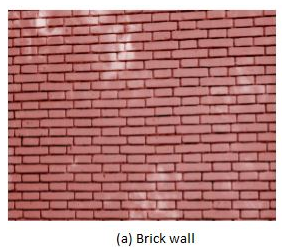
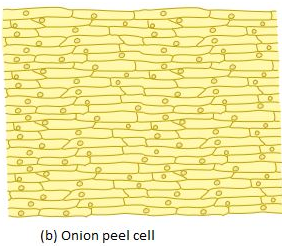
Brick wall and onion peel
Posted by Bhawish Goyal 6 years, 9 months ago
- 1 answers
Posted by Arpita Das 6 years, 9 months ago
- 1 answers
Nilesh Kr. 6 years, 9 months ago
Posted by Vishal Satish 6 years, 9 months ago
- 1 answers
Meghna Thapar 6 years, 1 month ago
The wall of oesophagus is muscular. When the slightly digested food enters the food pipe, the walls of the oesophagus starts contraction and expansion movements called peristaltic movements which push the food into the stomach.
Posted by Charitha Cherry 6 years, 9 months ago
- 1 answers
Sia ? 6 years, 9 months ago
Egg shells contain calcium carbonate. Acids react with metal carbonates and metal bicarbonates to form carbon dioxide gas. When nitric acid is added to the egg shells, carbon dioxide gas is evolved. The reaction can be given as follows:
{tex}\mathrm{CaCO}_{3}+2 \mathrm{HNO}_{3} \rightarrow \mathrm{Ca}\left(\mathrm{NO}_{3}\right)_{2}+\mathrm{H}_{2} \mathrm{O}+\mathrm{CO}_{2} {/tex}
Posted by Uttara Gope 6 years, 9 months ago
- 1 answers
Sia ? 6 years, 9 months ago
The hairy skin of the sheep has two types of fibres that form its fleece: (i) the coarse beard hair, and (ii) the fine soft under-hair close to the skin.
Posted by Varghese Thomas 6 years, 9 months ago
- 1 answers
Meghna Thapar 6 years, 1 month ago
Rayon, artificial textile material composed of regenerated and purified cellulose derived from plant sources. Developed in the late 19th century as a substitute for silk, rayon was the first man-made fibre.
Posted by Ritul Pandey 6 years, 9 months ago
- 1 answers
Meghna Thapar 6 years, 1 month ago
The to and fro motion of a simple pendulum is an example of a periodic or an oscillatory motion.The motion which repeats itself at regular intervals of time is called periodic motion. The principle of periodic motion is used for the measurement of time like clocks and watches.
Posted by Aiza Shamim 6 years, 9 months ago
- 1 answers
Kannan Kannan 6 years, 9 months ago
Posted by Vikash Jha 6 years, 9 months ago
- 1 answers
Yogita Ingle 6 years, 9 months ago
Glucose provides instant energy because glucose is a simple sugar molecule. This means that glucose doesn't need to be broken down further by the body. Whenever taken directly, it gets directly absorbed in the bloodstream and provides the body with energy. Unlike, carbohydrates (which are complex molecules), glucose gets digested faster and the energy quickly released.
Posted by Tasmiya Dhila 6 years, 9 months ago
- 3 answers
Posted by Vishal Satish 6 years, 9 months ago
- 2 answers
Posted by Vishal Satish 6 years, 9 months ago
- 2 answers
Chandan Singh 6 years, 8 months ago
Tasmiya Dhila 6 years, 9 months ago
Posted by Sujatha Harish 6 years, 9 months ago
- 4 answers
Yogita Ingle 6 years, 9 months ago
Fungi usually grow in places which are moist and warm enough to support them.
Posted by Kabilan Kabilan 6 years, 9 months ago
- 1 answers
Posted by Dhavan Gandhi 6 years, 9 months ago
- 1 answers
Posted by Nandita Mandal 6 years, 9 months ago
- 1 answers
Meghna Thapar 5 years, 9 months ago
Vomiting and loose motion can happen at the same time for a number of reasons. A stomach virus or bacterial gastrointestinal (GI) infection is the most likely cause in children. The gastrointestinal tract is part of the digestive system.
These infections can affect adults as well, but there are a number of other reasons why an adult may experience these symptoms simultaneously, such as drinking too much alcohol or being pregnant.
Posted by Vidushi Grag 6 years, 9 months ago
- 1 answers
Sia ? 6 years, 9 months ago
Then they would get their food from dead and decaying plants and animals through roots.
Posted by Mantu Kumar 6 years, 9 months ago
- 1 answers
Meghna Thapar 5 years, 8 months ago
Flower colors of red, pink, blue and purple come mainly from the pigments called anthocyanins, which are in the class of chemicals called flavanoids (what gives plants their color). Other pigments are carotenoids, found in tomatoes and carrots, that provide yellow, red and orange in the plastics. Marigold, hibiscus, Rose and bluebell flowers are used for making colours.
Posted by Hardik Gupta 6 years, 9 months ago
- 1 answers
Yogita Ingle 6 years, 9 months ago
Parasitic mode: In parasitic mode of nutrition, plants depend on other live plants or animals for their nourishment. Such plants are called as parasites and the ones on which parasites depend are called as hosts.
The insectivorous mode of nutrition is observed in plants like pitcher plant and the Venus fly trap. They purely depend on other insects and small animals for their nutrition.
Cuscuta is a parasitic plant which develops special roots called haustoria. Haustoria penetrate deep into host plant tissues and just absorb the nutrients from them.
Posted by Kavya Gupta 6 years, 9 months ago
- 2 answers
Pallavi Kadukar 6 years, 9 months ago
Hemlata Patil 6 years, 9 months ago
Posted by Harish Kumar 6 years, 9 months ago
- 2 answers
Shubhangi Shreya 6 years, 9 months ago
Posted by Nidhi ? Choudhary 6 years, 9 months ago
- 1 answers
Sia ? 6 years, 9 months ago
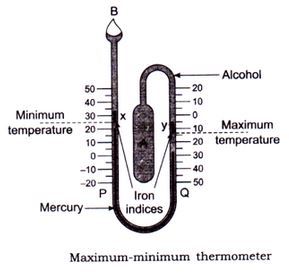
A thermometer used to measure the maximum and minimum temperature of previous day is called maximum-minimum thermometer. It is used by the weather department to report/predict the weather.
Posted by Rakesh Chaurasia 6 years, 9 months ago
- 0 answers

myCBSEguide
Trusted by 1 Crore+ Students

Test Generator
Create papers online. It's FREE.

CUET Mock Tests
75,000+ questions to practice only on myCBSEguide app

Sia ? 6 years, 9 months ago
1Thank You