
Ask questions which are clear, concise and easy to understand.
Ask QuestionPosted by Trushna Thombare 6 years, 9 months ago
- 1 answers
Posted by Kunal Manglani 6 years, 9 months ago
- 1 answers
Meghna Thapar 6 years, 1 month ago
A poori swells up on frying because the boiling point of water is 100 degree Celsius , the oil in the pan is above this temperature causing the water in the poori to get converted to steam.
Posted by Madhu Parashar 6 years, 9 months ago
- 2 answers
Posted by Madhu Parashar 6 years, 9 months ago
- 1 answers
Meghna Thapar 6 years, 1 month ago
On the basis of their size and the type of stem, most of the plants are classified into three types – herbs, shrubs and trees.
- Herbs are non-woody plants with green and tender stem. They are small in size and have a short life-span. They do not have branches and may live for one or two seasons. Examples – tomato, radish, carrot, wheat, paddy, cabbage, ginger, turnip, etc.
- Shrubs are woody plants with a hard stem. They are medium sized and tend to branch near the ground level. Examples – rose, jasmine, tulsi, lemon and croton.
- Trees have thick woody stem. Their branches appear higher up on the stem much above the ground. They are big in size and their life span is very large. Examples – coconut, teak, palm, sandalwood, neem, mango, etc.
Posted by Abi Sri 6 years, 9 months ago
- 5 answers
Rahul 2525 6 years, 9 months ago
Rahul 2525 6 years, 9 months ago
Trushna Thombare 6 years, 9 months ago
Ravi Malik 6 years, 9 months ago
Posted by Satbeer Singh 6 years, 9 months ago
- 1 answers
Aastha Singh 6 years, 9 months ago
Posted by Parmila Parihar 6 years, 9 months ago
- 0 answers
Posted by No Name 6 years, 9 months ago
- 1 answers
Meghna Thapar 6 years, 1 month ago
Soil types: The soil is classified on the basis of the proportion of particles of various sizes. The sizes of the particles in a soil have a very important influence on its properties. There are mainly three basic types of soils. These are:
a. Sandy soil: If soil contains greater proportion of big particles it is called sandy soil. This soil contains very little humus and it is found in desert areas.
b. Clayey soil: If the proportion of fine particles is relatively higher, then it is called clayey soil. It contains mainly clay and very less humus. Clayey soil has very good water-holding capacity due to its very small and tightly packed particles.
c. Loamy soil: If the amount of large and fine particles is about the same, then the soil is called loamy. It is a mixture of sand, clay, silt and humus in correct proportion.
Posted by Rahul Yadav 6 years, 9 months ago
- 1 answers
Meghna Thapar 6 years, 1 month ago
When water is heated, the water near the flame gets hotter and rises up. The cold water from the sides moves down towards the source of heat. This water also gets hot and rises up. The hand above the flame also becomes hot due to convection.
The people living in coastal areas experiences sea breeze during the day time and land breeze during night.
During the day, the land gets heated faster than water so the air over the land gets hotter and rises up. The cooler air from the sea rushes towards the land and the warmer air from the land rushes towards the sea to complete the cycle. This cooler air from the sea is called sea breeze.
That is why the people living in coastal areas built the windows facing the sea to receive cool air.
At night, the same phenomena reverse. The water cools down more slowly than land. So the cool air from the land moves towards the sea. This is called land breeze.
Posted by Anurag Kant 6 years, 9 months ago
- 4 answers
Aastha Singh 6 years, 9 months ago
Posted by Satbeer Singh 6 years, 9 months ago
- 1 answers
Pradeep Sharma 6 years, 9 months ago
Posted by Manish Jain 6 years, 9 months ago
- 3 answers
Posted by Irfan Y Memon 6 years, 9 months ago
- 1 answers
Posted by Kim Haneul? Kim Haneul? 6 years, 9 months ago
- 1 answers
Meghna Thapar 6 years, 1 month ago
Angora rabbit gives Angora fibre which is distinct from mohair, which comes from the Angora goat. Angora fibre is also distinct from cashmere, which comes from the cashmere goat. Angora is known for its softness, thin fibres, and what knitters refer to as a halo (fluffiness). It is also known for its silky texture. It is much warmer and lighter than wool due to the hollow core of the angora fibre.
Posted by Pranjwal Kumar 6 years, 9 months ago
- 1 answers
Sia ? 6 years, 9 months ago
Posted by Pkalimuthu Pkmuthu 6 years, 9 months ago
- 1 answers
Posted by Dhruv Gupta 6 years, 9 months ago
- 1 answers
Sia ? 6 years, 9 months ago
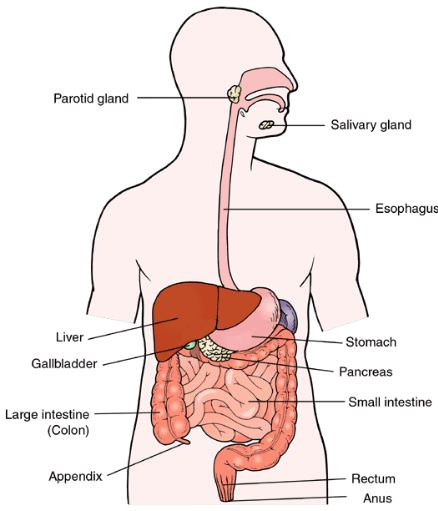
When we ingest food in our mouth, salivary glands of the mouth secrete saliva which moistens the food. It also converts the starch Into sugar. The tongue helps in chewing by moving the food in various directions. Saliva contains enzyme called salivary amylase which converts starch into sugar.Oesophagus Eh From mouth food goes into foodpipe called oesophagus. As food enters into the foodpipe, muscles of its wall start contraction and relexation movement. This movement is called peristaltic movement that pushes the food into the stomach. The peristaltic movement occurs throughout the alimentary canal. The oesophagus leads the food a sac like structure called stomach. The food is churned and partly digested in the stomach. The semi-solid food passes from the stomach to much coiled tube-like structure called the small intestine. The small intestine. serves two purposes—digestion and absorption of the digested food. It is about 20 feet long. The inner surface of the small intestine has a large number of fingerlike projections called villi. The Villi increase the surface area for the absorption of digested food. The absorbed food enters into the blood stream and carried away to various parts of the body for assimilation. The undigested food moves from the small intestine to the large intestine where mainly absorption of water from the undigested food takes place. From the large intestine the undigested food passes to the rectum which pushes it out of the body through the opening called the **** as faeces.
Posted by Sukhdev Singh 6 years, 9 months ago
- 0 answers
Posted by Shrestha Chakraborty 6 years, 9 months ago
- 2 answers
Posted by Shrestha Chakraborty 6 years, 9 months ago
- 0 answers
Posted by Uttara Gope 6 years, 9 months ago
- 1 answers
Meghna Thapar 6 years, 1 month ago
The hairy skin of the sheep has two types of fibres i.e. coarse beard hair and fine soft under-soft close to the skin. Wool is a modified form of hair that grows with waviness. Because of the waviness of wool the woollen fabrics have a greater bulk which traps more air and keep us warm during cold.
Posted by Divya Patel 6 years, 9 months ago
- 0 answers
Posted by Divya Patel 6 years, 9 months ago
- 4 answers
Aastha Singh 6 years, 9 months ago
Meghana.L Meghana 6 years, 9 months ago
Posted by Rithul Kishore 6 years, 9 months ago
- 2 answers
Ridhika❤ Jain? 6 years, 9 months ago
Posted by Anjali Kp 5 years, 11 months ago
- 1 answers
Posted by Swagat Dalai 6 years, 9 months ago
- 1 answers
Posted by Harish Lunge 6 years, 9 months ago
- 3 answers
Shobha Rani 6 years, 9 months ago
Posted by Rekha More 6 years, 9 months ago
- 1 answers
Posted by Amal Jyothi 6 years, 9 months ago
- 1 answers
Meghna Thapar 6 years ago
Experiment to show the effect of saliva on starch
- Two test tubes were taken and were labeled A and B.
- In test tube A one teaspoon full of boiled rice was kept.
- In test tube B one teaspoon full of boiled rice which were chewed for 3-5 minutes were kept.
- 3-4 ml of water was added to both the tubes.
- Then 2-3 drops of iodine solution was added to both test tubes A and B.
Observation:
The test tube A shows blue – black colour whereas test tube B does not show this colour.
Conclusion:
Since test tube B has boiled rice which were chewed for 3-5 minutes, the saliva present in mouth has acted upon starch to break down into sugars. So it does not show any colour in presence of iodine solution.
Boiled rice in test tube A has not been exposed to saliva, so starch is present which is indicated by blue-black colour on addition of iodine solution.

myCBSEguide
Trusted by 1 Crore+ Students

Test Generator
Create papers online. It's FREE.

CUET Mock Tests
75,000+ questions to practice only on myCBSEguide app

Shashi Kumar 6 years, 9 months ago
0Thank You