
Verify the digestive system and human …

CBSE, JEE, NEET, CUET
Question Bank, Mock Tests, Exam Papers
NCERT Solutions, Sample Papers, Notes, Videos
Posted by Khushi Kumari 6 years, 4 months ago
- 1 answers
 Test
Test
Related Questions
Posted by Mn Bhushanam 1 year, 3 months ago
- 0 answers
Posted by Shivam 123 1 year, 5 months ago
- 2 answers
Posted by Abhijot Pannu 1 year, 5 months ago
- 0 answers
Posted by Ramandeep Kaur Bhamra Ramandeep 1 year, 5 months ago
- 1 answers
Posted by Aman Rai 1 year, 5 months ago
- 1 answers
Posted by Inchara Dodmani 5 months, 3 weeks ago
- 2 answers
Posted by Mitali Hude 1 year, 5 months ago
- 2 answers
Posted by Rashmika Solanki 1 year, 5 months ago
- 0 answers
Posted by Ashmeet Kaur Kaur 1 year, 5 months ago
- 4 answers
myCBSEguide
Trusted by 1 Crore+ Students

Test Generator
Create papers online. It's FREE.

CUET Mock Tests
75,000+ questions to practice only on myCBSEguide app

Sia ? 6 years, 4 months ago
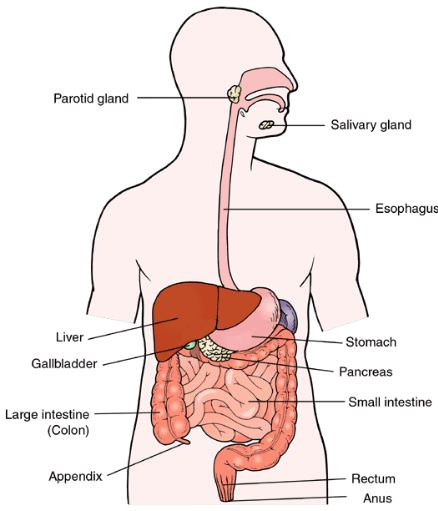
When we ingest food in our mouth, salivary glands of the mouth secrete saliva which moistens the food. It also converts the starch Into sugar. The tongue helps in chewing by moving the food in various directions. Saliva contains enzyme called salivary amylase which converts starch into sugar.Oesophagus Eh From mouth food goes into foodpipe called oesophagus. As food enters into the foodpipe, muscles of its wall start contraction and relexation movement. This movement is called peristaltic movement that pushes the food into the stomach. The peristaltic movement occurs throughout the alimentary canal. The oesophagus leads the food a sac like structure called stomach. The food is churned and partly digested in the stomach. The semi-solid food passes from the stomach to much coiled tube-like structure called the small intestine. The small intestine. serves two purposes—digestion and absorption of the digested food. It is about 20 feet long. The inner surface of the small intestine has a large number of fingerlike projections called villi. The Villi increase the surface area for the absorption of digested food. The absorbed food enters into the blood stream and carried away to various parts of the body for assimilation. The undigested food moves from the small intestine to the large intestine where mainly absorption of water from the undigested food takes place. From the large intestine the undigested food passes to the rectum which pushes it out of the body through the opening called the **** as faeces.
0Thank You