
Life history of silkworm

CBSE, JEE, NEET, CUET
Question Bank, Mock Tests, Exam Papers
NCERT Solutions, Sample Papers, Notes, Videos
Posted by Saurabh Susar 6 years, 8 months ago
- 1 answers
 Test
Test
Related Questions
Posted by Inchara Dodmani 8 months, 4 weeks ago
- 2 answers
Posted by Shivam 123 1 year, 8 months ago
- 2 answers
Posted by Rashmika Solanki 1 year, 8 months ago
- 0 answers
Posted by Ramandeep Kaur Bhamra Ramandeep 1 year, 8 months ago
- 1 answers
Posted by Mn Bhushanam 1 year, 6 months ago
- 0 answers
Posted by Ashmeet Kaur Kaur 1 year, 8 months ago
- 4 answers
Posted by Aman Rai 1 year, 8 months ago
- 1 answers
Posted by Abhijot Pannu 1 year, 8 months ago
- 0 answers
Posted by Mitali Hude 1 year, 8 months ago
- 2 answers
myCBSEguide
Trusted by 1 Crore+ Students

Test Generator
Create papers online. It's FREE.

CUET Mock Tests
75,000+ questions to practice only on myCBSEguide app

Sia ? 6 years, 8 months ago
Life Cycle – Silk Moth: Actually silkworms are not worms, but the larvae or caterpillars hatched from the eggs of the silk moth. The life history of a silk moth starts when a female silk moth lays eggs.
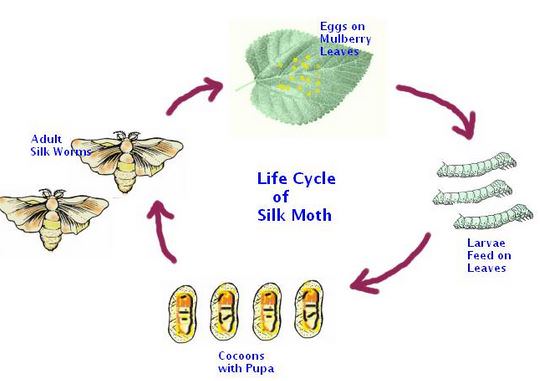
The larvae or caterpillars hatched from the eggs of the silk moth. These silkworms feed on fresh mulberry leaves the silkworm grows in size and then becomes a pupa.
In the pupa stage, it weaves a net to hold itself. It then swings its head from side to side, secreting a fibre that hardens on contact with air. This fibre is made of a protein and becomes the silk fibre.
The caterpillar covers itself completely with silk fibre and turns into a pupa, this covering is known as the cocoon. The moth continues to develop within the cocoon. The silk thread or yarn is obtained from the silk moth’s cocoon.
Egg→ Larva or caterpillar → Pupa → Adult.
0Thank You