
What are electrophiles? Give one example …

CBSE, JEE, NEET, CUET
Question Bank, Mock Tests, Exam Papers
NCERT Solutions, Sample Papers, Notes, Videos
Posted by Sunny Chauhan Photography 7 years ago
- 1 answers
 Test
Test
Related Questions
Posted by Naman Mehra 1 year, 9 months ago
- 0 answers
Posted by Shaila Bombe 1 year, 8 months ago
- 1 answers
Posted by "Serai✨ Wallance" 1 year, 9 months ago
- 0 answers
Posted by Rihan Mehta 1 year, 9 months ago
- 0 answers
Posted by Parneet Kaur 1 year, 4 months ago
- 0 answers
myCBSEguide
Trusted by 1 Crore+ Students

Test Generator
Create papers online. It's FREE.

CUET Mock Tests
75,000+ questions to practice only on myCBSEguide app

Gaurav Seth 7 years ago
Electrophiles (Electrophilic reagents): Electrophiles are electron loving chemical species having an atom which is deficient in electrons. There are two types of electrophiles:
 (Nitronium ion),

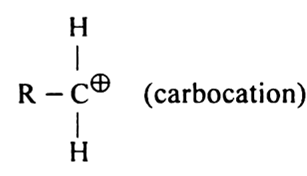
(a) Positively charged ions or positive electrophiles: These are deficient in electrons and carry a positive charge. For example H+ (hydrogen ion) H3O+(hydronium ion),
(b) Neutral electrophiles. These are electrophilic reagents in which the electron deficient atom does not carry any charge. For example AlCl3, FeCl3, BF3, SnCl4. Carbenes also act as electrophiles because the carbon in them has only six electrons.
Since both positively charged and neutral electrophiles are short by a pair of electrons, they have strong tendency to attract electrons from other sources and hence behave a Lewis acids.
Electrophiles always attack the substrate molecule at the point of high electron density.
0Thank You