
Ask questions which are clear, concise and easy to understand.
Ask QuestionPosted by Riky Chani 7 years ago
- 1 answers
Posted by Sheikh Hisba 7 years ago
- 0 answers
Posted by Sheikh Hisba 7 years ago
- 1 answers
Yogita Ingle 7 years ago
Hypanthium is a type of inflorescence, you can see the peduncle modified in narrow cup-like structure. At the base of the cup, the female flowers develop while towards mouth the male flower develops. All three types of flowers are present in this inflorescence. Eg. Banyan, Peepal etc.
Posted by Sheikh Hisba 7 years ago
- 1 answers
Meghna Thapar 5 years, 7 months ago
After a rose (Rosa spp.) is pollinated, the petals drop off to reveal the rose fruit, which is called a hip. Rose hips are actually seed pods, and each one contains dozens of seeds. Although you can grow roses from seeds, most are hybrids, so the results are unpredictable. Rose Apples are not apples; they are another fruit altogether that grow in the tropics. ... Other times the fruit will be more pear or bell-shaped, or a pink or reddish skin, particularly Malaysian varieties. The white flesh inside is crisp, faintly sweet and fragrant.
Posted by Sheikh Hisba 7 years ago
- 1 answers
Meghna Thapar 5 years, 7 months ago
“Peach type” fruit, formed from perigynous flowers, have no sepals, petals, or stamen attached. These flower structures are shed with the unattached hypanthium as the fruit develops. Hypanthium a cup-shaped or tubular body formed by the conjoined sepals, petals, and stamens.
Posted by Sashi Kiran 7 years ago
- 2 answers
Posted by Mohd Hamza 7 years ago
- 1 answers
Tarang Patel 7 years ago
Posted by Rishikesh Yadav 7 years ago
- 1 answers
Posted by Sneha Bhatt 7 years ago
- 2 answers
Sagar Pandya 7 years ago
Kriti Sharma 7 years ago
Posted by Kirat Lehal 7 years ago
- 1 answers
Meghna Thapar 5 years, 7 months ago
The mechanism of hearing. Sound waves enter the outer ear and travel through the external auditory canal until they reach the tympanic membrane, causing the membrane and the attached chain of auditory ossicles to vibrate. Sound transfers into the ear canal and causes the eardrum to move. The eardrum will vibrate with vibrates with the different sounds. These sound vibrations make their way through the ossicles to the cochlea. Sound vibrations make the fluid in the cochlea travel like ocean waves.
Posted by Piyush Mali 7 years ago
- 1 answers
Meghna Thapar 5 years, 7 months ago
The bones of the skull provide protection for the brain and the organs of vision, taste, hearing, equilibrium, and smell. The bones also provide attachment for muscles that move the head and control facial expressions and chewing. Cranial bone: Part of the top portion of the skull which protects the brain. The bones of the cranium include the frontal, parietal, occipital, temporal, sphenoid, and ethmoid bones. The primary bones of the face are the mandible, maxilla, frontal bone, nasal bones, and zygoma. Facial bone anatomy is complex, yet elegant, in its suitability to serve a multitude of functions.
Posted by Krishna Suryakant 7 years ago
- 2 answers
Posted by Sakshi Sananse 7 years ago
- 2 answers
Sudarshan Sharma 7 years ago
Posted by Nandani Darji 7 years ago
- 1 answers
Meghna Thapar 5 years, 7 months ago
A countercurrent mechanism system is a mechanism that expends energy to create a concentration gradient. ... For example, it can refer to the process that is underlying the process of urine concentration, that is, the production of hyperosmotic urine by the mammalian kidney. The counter-current multiplier or the countercurrent mechanism is used to concentrate urine in the kidneys by the nephrons of the human excretory system. The nephrons involved in the formation of concentrated urine extend all the way from the cortex of the kidney to the medulla and are accompanied by vasa recta.
Posted by Abhishek Katiyar 7 years ago
- 2 answers
Sudarshan Sharma 7 years ago
Sudarshan Sharma 7 years ago
Posted by Pratik Soni 7 years ago
- 1 answers
Gaurav Seth 7 years ago
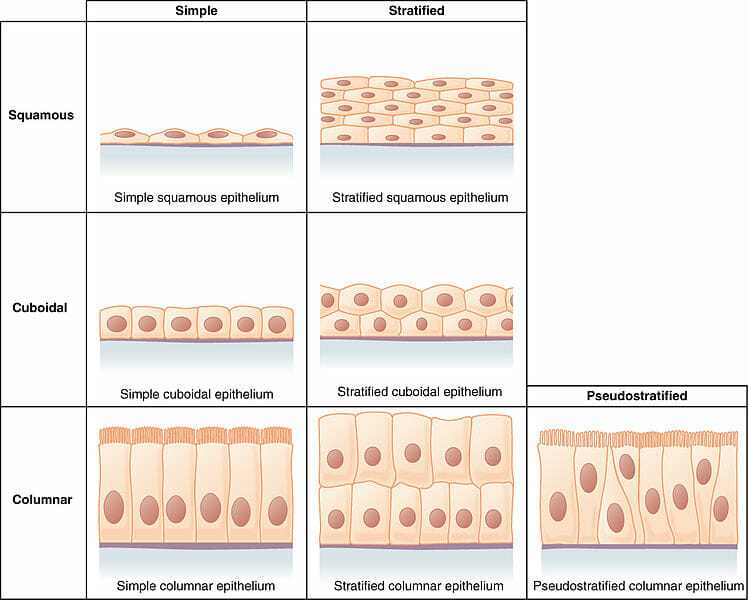
Epithelial tissues are thin tissues that cover all the exposed surfaces of the body. They form the external skin, the inner lining of the mouth, digestive tract, secretory glands, the lining of hollow parts of every organ such as the heart, lungs, eyes, ears, the urogenital tract, as well as the ventricular system of the brain and central canals of the spinal cord.
The main functions of simple epithelial tissues are:
(i) The cells form the outer layer of skin. They protect the underlying cells from drying, injury, infection and chemical effects.
(ii) They regulate the exchange of materials between the body and the external environment.
(iii) They help in absorption of water and other nutrients, especially in alimentary canal.
(iv) They help in the elimination of waste products.
(v) Some of them are greatly specialized (glandular cells) and perform secretory function.
Posted by Abhishek Sharma123 7 years ago
- 1 answers
Sudarshan Sharma 7 years ago
Posted by Creatingshubham Creationthakur 7 years ago
- 3 answers
Abhishek Sharma123 7 years ago
Sudarshan Sharma 7 years ago
Sudarshan Sharma 7 years ago
Posted by Abhishek Verma 7 years ago
- 1 answers
Sudarshan Sharma 7 years ago
Posted by Kriti Sharma 7 years ago
- 0 answers
Posted by Yash Bhardwaj 7 years ago
- 1 answers
Meghna Thapar 5 years, 7 months ago
Transaminases or aminotransferases are enzymes that catalyze a transamination reaction between an amino acid and an α-keto acid. They are important in the synthesis of amino acids, which form proteins. The liver has transaminases to synthesize and break down amino acids and to convert energy storage molecules. The concentrations of these transaminases in the serum (the non-cellular portion of blood) are normally low. Transaminitis, sometimes called hypertransaminasemia, refers to having high levels of certain liver enzymes called transaminases. When you have too many enzymes in your liver, they start to move into your blood stream.
Posted by Priyanka Mehta 7 years ago
- 2 answers
Posted by Vipin Sharma 7 years ago
- 1 answers
Yogita Ingle 7 years ago
The primary function of the pineal gland is to produce melatonin. Melatonin has various functions in the central nervous system, the most important of which is to help modulate sleep patterns. Melatonin production is stimulated by darkness and inhibited by light.
Posted by Class 12 7 years ago
- 3 answers
Abhishek Sharma123 7 years ago
Fairy Lights 7 years ago
Posted by Abhay Kumar 7 years ago
- 1 answers
Posted by Deependra Rathore 7 years, 1 month ago
- 4 answers
Fairy Lights 7 years ago
Posted by Bharat Paul 7 years, 1 month ago
- 1 answers
Avantika Tayal 7 years, 1 month ago
Posted by Abhishek Verma 7 years, 1 month ago
- 1 answers
Priya Singh 7 years, 1 month ago
Posted by Abhishek Katiyar 7 years, 1 month ago
- 1 answers
Priya Singh 7 years, 1 month ago
Posted by ?????Geetanjali???? ? 7 years, 1 month ago
- 5 answers
Yash Bhardwaj 7 years ago
Sanket Nagargoje 7 years, 1 month ago

myCBSEguide
Trusted by 1 Crore+ Students

Test Generator
Create papers online. It's FREE.

CUET Mock Tests
75,000+ questions to practice only on myCBSEguide app

Yogita Ingle 7 years ago
Chordates :
Non-Chordates :
1Thank You