
Ask questions which are clear, concise and easy to understand.
Ask QuestionPosted by Kashish Verma 5 years, 7 months ago
- 3 answers
? Pranali.A.P ? 5 years, 7 months ago
Posted by W T F ? 5 years, 7 months ago
- 2 answers
Posted by Saroj Sharma 5 years, 7 months ago
- 5 answers
Posted by Yash Jaiswal????? 5 years, 7 months ago
- 2 answers
Posted by Vanshika Baliyan 5 years, 7 months ago
- 5 answers
Posted by Yash Jaiswal????? 5 years, 7 months ago
- 5 answers
Vanshika Baliyan 5 years, 7 months ago
Posted by Shani Yadav 5 years, 7 months ago
- 2 answers
Sumesh ☺️☺️☺️ 5 years, 7 months ago
Lucifer?? Morningstar?? 5 years, 7 months ago
Posted by Akshita ???? 5 years, 7 months ago
- 2 answers
Posted by Akshita ???? 5 years, 7 months ago
- 1 answers
Yogita Ingle 5 years, 7 months ago
Digestive system in grasshopper include alimentary canal which is further divided into 3 parts :-
1.) fore gut
2.)midget
3.)hindsight
Posted by Yash Jaiswal????? 5 years, 7 months ago
- 5 answers
Sumesh ☺️☺️☺️ 5 years, 7 months ago
Vanshika Baliyan 5 years, 7 months ago
Posted by Jothy Sree 5 years, 7 months ago
- 1 answers
Meghna Thapar 5 years, 7 months ago
Resources are anything that has utility and adds value to your life. Air, water, food, plants, animals, minerals, metals, and everything else that exists in nature and has utility to mankind is a 'Resource'. The value of each such resource depends on its utility and other factors.Resources can be categorized on the basis of origin: Abiotic resources comprise non-living things (e.g., land, water, air and minerals such as gold, iron, copper, silver). Biotic resources are obtained from the biosphere.
Posted by Lucifer?? Morningstar?? 5 years, 7 months ago
- 3 answers
Posted by Vanshika Bhawsar 5 years, 7 months ago
- 5 answers
Lover ?? 5 years, 7 months ago
? Pranali.A.P ? 5 years, 7 months ago
Gaurav Seth 5 years, 7 months ago
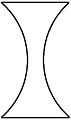
| Meaning | Convex lens refers to the lens which merges the light rays at a particular point, that travels through it. | Concave lens can be identified as the lens which disperses the light rays around, that hits the lenses. |
| Figure | 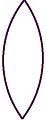 |
 |
Yogita Ingle 5 years, 7 months ago
Concave lens:
1) It has both surfaces curving inwards.
2) It is thicker at edges and thinner at middle.
3) It diverges the light coming towards it.
4) Its focal length is negative.
5) It always produces a virtual image.
Convex lens:
1) It has both surfaces curving outwards.
2) It is thicker at middle and thinner at the edges.
3) It converges the light coming towards it.
4) Its focal length is positive.
5) It always produces a real image and forms a virtual image only when the object is between the focus and optical centre.
Kulraj Singh?? 5 years, 7 months ago
Posted by Prem Kallada 5 years, 7 months ago
- 3 answers
? Pranali.A.P ? 5 years, 7 months ago
Gaurav Seth 5 years, 7 months ago
Paramoecium takes in food at a specific point (through oral groove to mouth to gullet). Food such as bacteria or very small organisms are move to the specific spot (ingestion point) by the movement of cilia which are present on all over the single-celled body.
From the gullet a food vacuole is formed which start circulating in the endoplasm. During circulation food is digested by enzymes. The digested food diffuses into the cytoplasm and undigested food is thrown out through **** pore.
Yogita Ingle 5 years, 7 months ago
- Paramoecium is a unicellular aquatic organism.
- The paramoecium has thin, hair like cilia all over its body.
- The cilia move back and forth rapidly in water.
- When the cilia is present around, the mouth region of paramoecium move, back and forth. They sweep the food particles present in water into the mouth of paramoecium.
- This is the first step in the nutrition of paramoecium which is called ingestion and is followed by digestion, absorption, assimilation and egestion.
Posted by Ankush Pathak 5 years, 7 months ago
- 4 answers
Posted by Vanshika Baliyan 5 years, 7 months ago
- 1 answers
Posted by Bhaskar Rawat 5 years, 7 months ago
- 2 answers
? Pranali.A.P ? 5 years, 7 months ago
Yogita Ingle 5 years, 7 months ago
We all know that stomata are the tiny pores on the leaves which play a major role in the exchange of gases. The intake of carbon dioxide and the outgoing of oxygen both takes place through these pores. The respiration in leaves takes place through the tiny pores called stomata present on them. The exchange of gases occurs through these pores. The oxygen is transported to other cells of the plant by diffusion and in the same carbon dioxide is removed from the cells. In this way respiration takes place in leaves.
Posted by Bhaskar Rawat 5 years, 7 months ago
- 2 answers
Gaurav Seth 5 years, 7 months ago
The digestive process begins in the mouth. Food is partly broken down by the process of chewing and by the chemical action of salivary enzymes (these enzymes are produced by the salivary glands and break down starches into smaller molecules).
After being chewed and swallowed, the food enters the esophagus. The esophagus is a long tube that runs from the mouth to the stomach. It uses rhythmic, wave-like muscle movements (called peristalsis) to force food from the throat into the stomach. This muscle movement gives us the ability to eat or drink even when we're upside-down.
The stomach is a large, sack-like organ that churns the food and bathes it in a very strong acid (gastric acid). Food in the stomach that is partly digested and mixed with stomach acids is called chyme.
After being in the stomach, food enters the duodenum, the first part of the small intestine. It then enters the jejunum and then the ileum (the final part of the small intestine). In the small intestine, bile (produced in the liver and stored in the gall bladder), pancreatic enzymes, and other digestive enzymes produced by the inner wall of the small intestine help in the breakdown of food.
After passing through the small intestine, food passes into the large intestine. In the large intestine, some of the water and electrolytes (chemicals like sodium) are removed from the food. Many microbes (bacteria like Bacteroides, Lactobacillus acidophilus, Escherichia coli, and Klebsiella) in the large intestine help in the digestion process. The first part of the large intestine is called the cecum (the appendix is connected to the cecum). Food then travels upward in the ascending colon. The food travels across the abdomen in the transverse colon, goes back down the other side of the body in the descending colon, and then through the sigmoid colon.
Solid waste is then stored in the rectum until it is excreted via the ****.
? Pranali.A.P ? 5 years, 7 months ago
Posted by Justin Biber 5 years, 7 months ago
- 5 answers
Posted by Emi Lima 5 years, 7 months ago
- 2 answers
Yogita Ingle 5 years, 7 months ago
Tricuspid valve: This valve opens to allow the blood to flow from the right atrium to the right ventricle. This valve is present in the junction of the right atrium and right ventricle.
Bicuspid valve: This is also known as the mitral valve. This valve is present in the left atrium. This valve opens to allow the blood to flow from the left atrium to the left ventricle.
? Pranali.A.P ? 5 years, 7 months ago
Posted by Yash Jaiswal????? 5 years, 7 months ago
- 0 answers
Posted by Emi Lima 5 years, 7 months ago
- 2 answers
Yogita Ingle 5 years, 7 months ago
In human beings, the blood goes through the heart twice during each cycle i.e. the blood passes through the human heart two times to supply once to the whole body. So, it is called Double Circulation of blood.
The double circulation of blood includes:
(i) Systematic Circulation
(ii) Pulmonary Circulation
Systematic Circulation: It supplies oxygenated blood from left auricle to left ventricle, thereby pumped to various body parts. The deoxygenated blood is collected from the various body organs by the veins to pour into vena cava and finally into the right atrium (auricle). Right atrium transfers the blood into the right ventricle.
Pulmonary Circulation: The deoxygenated blood is pumped by the right ventricle into the lungs for oxygenation. The oxygenated blood is brought back to left atrium (auricle) of the human heart. From left atrium, the oxygenated blood is pushed into the left ventricle. The left ventricle pumps oxygenated blood into aorta for systematic circulation.
It is necessary in human being to separate oxygenated and de-oxygenated blood because this makes their circulatory system is more efficient and helps in maintaining constant body temperature.
? Pranali.A.P ? 5 years, 7 months ago
Posted by Tanisha Biswas 5 years, 7 months ago
- 2 answers
? Pranali.A.P ? 5 years, 7 months ago
Yogita Ingle 5 years, 7 months ago
Different kind of organisms obtain thier food in different ways.
The process of obtaining food is called nutrition. Nutrition is of two types namely 1) HETEROTROPHIC And 2) AUTOTROPHIC.
Heterotrophic nutrition : It means organisms depend on other animals for thier survival.
All animals and non green plants are heterotophs.
Autotrophic nutrition : It means that the organisms make thier own food by using sunlight. All plants and photosynthetic bacteria are autotrophs.
Posted by Rahul Sethy 5 years, 7 months ago
- 3 answers
Tanisha Biswas 5 years, 7 months ago
Vanshika Baliyan 5 years, 7 months ago
Posted by Vanshika Baliyan 5 years, 7 months ago
- 5 answers

myCBSEguide
Trusted by 1 Crore+ Students

Test Generator
Create papers online. It's FREE.

CUET Mock Tests
75,000+ questions to practice only on myCBSEguide app

? Pranali.A.P ? 5 years, 7 months ago
0Thank You