
Ask questions which are clear, concise and easy to understand.
Ask QuestionPosted by Priyadarshini Behera 5 years, 5 months ago
- 1 answers
Posted by Priyadarshini Behera 5 years, 5 months ago
- 1 answers
Posted by Amrita Panda 5 years, 5 months ago
- 1 answers
Meghna Thapar 5 years, 5 months ago
The Permanent Settlement, also known as the Permanent Settlement of Bengal, was an agreement between the East India Company and Bengali landlords to fix revenues to be raised from land that had far-reaching consequences for both agricultural methods and productivity in the entire British Empire and the political ... Under the Permanent Settlement, the zamindars were given the charge of collecting revenue from the peasants and paying it to the Company. But in the mahalwari system this charge was given to the village headman.
Posted by Sujal Bhoi 5 years, 5 months ago
- 1 answers
Yogita Ingle 5 years, 5 months ago
Dates act as a milestone. They help us to differ different types of events, they tell us about the event ,s positionand different development which took place. They also act as a landmark due to their long term period
Posted by Bhagyashri Patkari 5 years, 5 months ago
- 1 answers
Yogita Ingle 5 years, 5 months ago
The tribal chiefs were important people. They enjoyed a certain amount of economic power and had the right to administer and control their territories. Under the British rule, the functions and powers of these tribal chiefs changed to a great extent:
(i) They were allowed to keep their land titles over a cluster of villages and rent out lands, but they lost much of their administrative power and were forced to follow laws made by British officials in India.
(il) They had to pay tribute to the British and discipline the tribal groups on behalf of the British.
(iii) They lost the authority they had earlier enjoyed amongst their people, and were unable to fulfil their traditional functions.
Posted by Minakshi Rawat 5 years, 5 months ago
- 1 answers
Posted by Aayush Shirode Aayush Shirode 5 years, 5 months ago
- 1 answers
Yogita Ingle 5 years, 5 months ago
Khonds are original tribal of Odisha.
- They mostly live in the district of Koraput and Rayagarh.
- Their main activity is hunting and cultivation.
- They cultivable paddy crops and potato in rainy season on the scattered plot in hilly terrain.
- The collect fruits, honey, roots of the plant, from forest.
- They cook in the oil extracted from seeds of Sal and mahua.
- They also work as unskilled labour in the construction activities in Koraput district.
Posted by Ratchana Sk 5 years, 5 months ago
- 1 answers
Gaurav Seth 5 years, 5 months ago
CBSE Class 8 Social Science Revision Notes History
Women, Caste and Reform the Nation
Two hundred years ago the lives of women were totally different from what it is today. There were so many restrictions imposed on women.
Widows were praised and called ‘satis’ meaning ‘virtous’ if they chose to by burning themselves on the funeral pyres of their husbands.
People were also divided along lines of caste. Brahmins and Kshatriyas considered themselves in upper caste, after them traders and moneylenders referred to as Vaishyas and the lower caste were Shudras and included peasants, artisans, weavers, and potter.
The attitude towards women & social customs started changing from the early 19th century.
Working Towards Change:
(i) In early 19th century things changed because of the development of new forms of communication.
(ii) Social reformers like Raja Rammohan Roy founded Brahmo Samaj in Calcutta.
(iii) Raja Ram Mohan Roy pioneered this reform movement. He opposed social practices such as discrimination on the basis of caste, untouchability, superstitions and the custom of ‘sati’. He wanted to spread the knowledge of western education and bring about freedom and equality for women.
For more click on the given link:
<a href="https://mycbseguide.com/blog/women-caste-reform-nation-class-8-notes-history/" ping="/url?sa=t&source=web&rct=j&url=https://mycbseguide.com/blog/women-caste-reform-nation-class-8-notes-history/&ved=2ahUKEwjYlP68_absAhU8_XMBHawyAdsQFjAAegQIBBAC" rel="noopener" target="_blank">Women Caste and Reform the Nation class 8 Notes History ...</a>
Posted by Sreenivasan Subramanian 5 years, 5 months ago
- 1 answers
Arya Rathore 5 years, 5 months ago
Posted by Vithalsingh Bhupal Singh 5 years, 5 months ago
- 1 answers
Yogita Ingle 5 years, 5 months ago
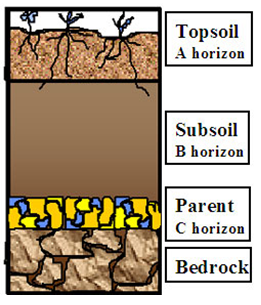
Soil broadly consists of four layers. These are:
- Top Soil: This is the outer thin layer. It contains fine particles and organic matter. It is on this layer that plants and crops grow.
- Sub soil: This layer lies below the top soil. It contains materials which are removed from the top soil.
- Weathered Rock: This layer lies below the sub soil. It is in first stage of soil formation.
- Bed Rock or the Parent Rock: This is un-weathered rock. It determines the nature of the soil.
Posted by Arjun Bhalinge 5 years, 5 months ago
- 0 answers
Posted by Aditi Sharma 5 years, 5 months ago
- 1 answers
Yogita Ingle 5 years, 5 months ago
Power Resources:
- Power resources are of two types: (a) Conventional Resources, (b) Non-conventional Resources
- We need power resources for industry,domastic use, agriculture, transport, communication and defence.
Posted by Meenakshy Shibu 5 years, 5 months ago
- 2 answers
Meghna Thapar 5 years, 5 months ago
Directive Principles of State Policy aim to create social and economic conditions under which the citizens can lead a good life. They also aim to establish social and economic democracy through a welfare state. The Constitution lays down certain Directive Principles of State Policy, which though not justiciable, are 'fundamental in governance of the country', and it is the duty of the State to apply these principles in making laws.
Yogita Ingle 5 years, 5 months ago
Constitution deal with the Directive Principles of State Policy. The Directive Principles are the guiding principles for governance but are not enforceable by any court.
That does not change the fact that they are nevertheless fundamental to the governance of this country. These principles provide the social and economic guidance for Indian Democracy and pave the way for the establishment of a true welfare State.
As the name indicates, these principles command the State and its instrumentalities to follow certain fundamental principles while formulating and pursuing policies
These principles are the guiding light for the attainment of the objectives that our Constitution aspires for. These principles chalk the path for the State to follow in order to secure the greatest good for the greatest number in the way consistent with our Constitutional philosophy and vision.
The Directive Principles envision for all citizens the equality of opportunity and adequate means of livelihood, avoiding concentration of wealth in few hands. In short, the Directive Principles envisage equality, liberty and freedom.
Posted by Gurpreet Singh 5 years, 5 months ago
- 3 answers
Meghna Thapar 5 years, 5 months ago
The Britishers ruled over India for a long time. Their law was arbitrary. They used to introduce any law at any time which they deemed correct. But the fact was that the laws were applied to harass or humiliate Indians. For example, Rowlatt Act was passed which allowed the British government to imprison people without due trial. Britishers discriminated Indians on the basis of their colour and race. Different laws were made for Whites (Britishers) and Blacks(Indians). Indian nationalists began protesting and criticizing the arbitrary use of authority by the British. They asked for a greater share of Indians in the government. They taught for their identity and dignity. They asked British government to make same rules for both the Britishers and the Indians. Nationalists defied to obey their set of rules and openly broke laws which they meant not justified. They asked the Britishers to justice with the Indians by making rational laws.
Yogita Ingle 5 years, 5 months ago
Arbitrary law is a law which has been passed by the legislator to fulfil his motives or simply out of his will. Rowlatt act was a classic example of arbitrary law which allowed the British government to imprison anybody without trial.
Some other examples of arbitrary law include:
a. Sedition laws which allows the police to arrest anybody it suspects of seditious speech
b. AFSPA ( Armed Forces Special Powers Act) which allows armed personnel to arrest anybody without specifying reason.
Meghna Thapar 5 years, 5 months ago
The Britishers ruled over India for a long time. Their law was arbitrary. They used to introduce any law at any time which they deemed correct. But the fact was that the laws were applied to harass or humiliate Indians. For example, Rowlatt Act was passed which allowed the British government to imprison people without due trial. Britishers discriminated Indians on the basis of their colour and race. Different laws were made for Whites (Britishers) and Blacks(Indians). Indian nationalists began protesting and criticizing the arbitrary use of authority by the British. They asked for a greater share of Indians in the government. They taught for their identity and dignity. They asked British government to make same rules for both the Britishers and the Indians. Nationalists defied to obey their set of rules and openly broke laws which they meant not justified. They asked the Britishers to justice with the Indians by making rational laws.
Posted by Ravi B 5 years, 5 months ago
- 2 answers
Posted by Ravi B 5 years, 5 months ago
- 0 answers
Posted by Priyanka Kumari 5 years, 5 months ago
- 2 answers
Posted by Dhruvin Gandhi 5 years, 5 months ago
- 1 answers
Gaurav Seth 5 years, 5 months ago
Hydel power:
- It is generated by fast flowing water.
- It uses renewable resources.
- Initially its cost was high but later it became cheaper.
- It does not cause any pollution.
Example: Bhakra Nangal project.
Thermal power:
- It is generated by using coal, petroleum and natural gas.
- It uses all non-renewable resources.
- Its cost is very high and its production is expensive.
- It does cause pollution.
Example: Badarpur thermal plant of Delhi.
Posted by Madhusudanan Nair P 5 years, 5 months ago
- 2 answers
👌Aditya 👌 👌Kumar👌 5 years, 5 months ago
Gaurav Seth 5 years, 5 months ago
Potential resources are those which are available in the region but are not fully used. But these resources could be used in future. For example, uranium present in Ladakh is a potential resource which could be used in the future.
Posted by Muskan Yadav 5 years, 5 months ago
- 1 answers
Meghna Thapar 5 years, 5 months ago
In brief, casteism refers to one-sided loyalty in favour of a particular caste. Casteism leads the members of one caste to exploit the members of other caste for their own vested interest in the name of superiority or inferiority. It hindered national unity: The caste system developed a parochial feeling and made the people unduly conscious of their own castes. Many a time caste interests were given priority over national interest. Thus the whole system stood against the very concept of national unity.
Posted by Poonam Kumari 5 years, 5 months ago
- 3 answers
Vikash Gupta 5 years, 5 months ago
Harshini Ramachandran 5 years, 5 months ago
Yogita Ingle 5 years, 5 months ago
Classification of natural resources on the basis of origin:
- Abiotic Resource: Resources which come from non-living sources are called abiotic resources, e.g. soil, rocks and minerals.
- Biotic Resource: Resources which come from living beings are called biotic resource, e.g. milk, leather, timber, etc.
Posted by Ritika Gupta 5 years, 5 months ago
- 1 answers
Meghna Thapar 5 years, 5 months ago
The revolt of 1857 started only when Bahadur Shah Zafar, the last ruler of the Mughals, gave his permission. His support for the revolt made leaders from various places become confident about opposing the British. Zafar asked all the leaders to form a confederacy to fight against the British.
Reasons for the confidence of the British rulers about their position in India before May 1857
- The traditional rulers failed to develop independent leadership.
- They also failed to have independent social, economic, and political aims of their own.
- They fought among themselves and could not present a united front against the foreign rule.
- A section of the people practiced inhuman social practices. They did not rise in revolt against the Britishers.
Posted by Khushi Raghav 5 years, 5 months ago
- 0 answers
Posted by Anu Kv 5 years, 5 months ago
- 2 answers
Ch Alli 5 years, 5 months ago
Yatin Satija 5 years, 5 months ago
Posted by Arshiya Tabassum 5 years, 5 months ago
- 2 answers
Posted by Ana R 5 years, 5 months ago
- 1 answers
Gaurav Seth 5 years, 5 months ago
How important are dates:
“History is certainly about changes that occur over time”.
- History is synonymous with dates.
- We compare the past with present.
- We continue to associate history with a string of dates.
- We study dates to find out the sequence of events and significance of events.
Which Dates:
- Selection of date depends on the story of past.
- Focusing on a particular set of events is important.
- By studing the dates reasons and consequences of events are understood in better way.
How do we Periodise:
- James Mill divided the Indian history into three periods: Hindu, Muslim and British.
- According to Mill, Only British rules, culture and laws could make indians civilised.
- There are significant sources to study the periods of events and by studing different historical evidences a string of time periods can be formed.
What is colonial:
- When the subjugation of one country by another country leads to change in social, culture, economic and political sphere,it leads to colonisation.
- British rule brought about changes in values and tastes, customs and practices.
How do we know Administration:
- One important source is the official records of the British administration.
- The British felt all important documents and letters needed to be preserved.
- Specialized institutions like archieves and museums were established to preserve important records.
- Administrative source only represents half of the picture as they all were written and maintained by British officials.
- Several other sources studied together give a better picture of administration.
Sources of Information:
- official records, letters, memos, surveys, newspapers, magazines, autobiographies, reports, experiences of travellers, novels and poems are some important sources of information of British rule and atrocities.
- The practice of surveying became commone under colonial administration.’
- Surveys like botanical zoological, archaeological, anthropological and forest survesys were in the list of British administration.
- Sources kept and written by both Indians and British studied together represents several aspects of British rule and their efforts to modernise or subjugate Indian population.
What do Official Records not Tell:
- The official records do not tell about the needs of people of India.
- Many official records hide the truth and only show one aspect of the event.
- The official records does not represent the fall outs of British administration and also do not represent the reactions and situation of indians of every sphere of society.
Posted by Roshan Mishra 5 years, 5 months ago
- 1 answers
Palak Choudary 5 years, 5 months ago
Posted by Abhishek Mohapatra 5 years, 5 months ago
- 4 answers
Mohith B K 5 years, 5 months ago
Ana R 5 years, 5 months ago
Rishabh Sharma 5 years, 5 months ago
Posted by Richa Mittal 5 years, 5 months ago
- 1 answers
Yogita Ingle 5 years, 5 months ago
1. The Success of the democracy depends to a great extend on the constructive role of the opposition parties.
2. In every democracy all the parties cannot get majority seats all the time in the parliament.
3. The parties which do not get majority seats are called opposition parties.
4. The party which gets majority seats in the Lok Sabha next to the ruling party is called the recognised opposition party. The leader of the opposition party enjoys some privileges equivalent to that of a cabinet minister.
5. All the powers mentioned in the constitution are exercised by the ruling party. The opposition party also functions in an effective manner, and their work is no less important than that of the ruling parties.
Functions of Opposition party
(1) To check the government from becoming authoritarian and to restrict its powers, the opposition parties keep a watch over them.
(2) The main duty of the opposition party is to criticize the policies of the government.
(3) Outside the legislature the opposition parties attract the attention of the press and report their criticism of the government policy in the news papers.
(4) The opposition parties have the right to check the expenditure of the government also.
(5) During the question hour, the opposition parties criticism the government generally

myCBSEguide
Trusted by 1 Crore+ Students

Test Generator
Create papers online. It's FREE.

CUET Mock Tests
75,000+ questions to practice only on myCBSEguide app

Krishna Murari 5 years, 5 months ago
1Thank You