
Simple and of my his question …

CBSE, JEE, NEET, CUET
Question Bank, Mock Tests, Exam Papers
NCERT Solutions, Sample Papers, Notes, Videos
Posted by Akanksha Sharma 8 years, 3 months ago
- 1 answers
 Test
Test
Related Questions
Posted by Dishita Saharia 1 year, 8 months ago
- 0 answers
Posted by Lavanya Ayyagari 5 months, 2 weeks ago
- 0 answers
Posted by Rehan Rrr Rehan 1 year, 8 months ago
- 1 answers
Posted by Aradhya Shahi 1 year, 8 months ago
- 0 answers
Posted by Guriya Kumari 1 year, 8 months ago
- 0 answers
Posted by Konatham Monnish 1 year, 8 months ago
- 1 answers
Posted by Guriya Kumari 1 year, 8 months ago
- 1 answers
myCBSEguide
Trusted by 1 Crore+ Students

Test Generator
Create papers online. It's FREE.

CUET Mock Tests
75,000+ questions to practice only on myCBSEguide app

Kritika Trehan 8 years, 3 months ago
Sound waves travel into the ear canal until they reach the eardrum. The eardrum passes the vibrations through the middle ear bones or ossicles into the inner ear. The inner ear is shaped like a snail and is also called the cochlea. Inside the cochlea, there are thousands of tiny hair cells. Hair cells change the vibrations into electrical signals that are sent to the brain through the hearing nerve. The brain tells you that you are hearing a sound and what that sound is.
<a href="http://www.dangerousdecibels.org/virtualexhibit/2howdowehearb.html">Take a look inside your ear!
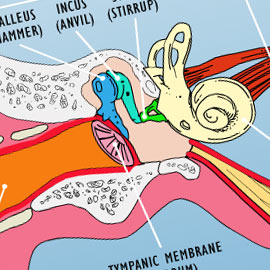 </a>
</a>
Each hair cell has a small patch of stereocilia sticking up out of the top it. Sound makes the stereocilia rock back and forth. If the sound is too loud, the stereocilia can be bent or broken. This will cause the hair cell to die and it can no longer send sound signals to the brain. In people, once a hair cell dies, it will never grow back. The high frequency hair cells are most easily damaged so people with hearing loss from loud sounds often have problems hearing high pitched things like crickets or birds chirping.
2Thank You